
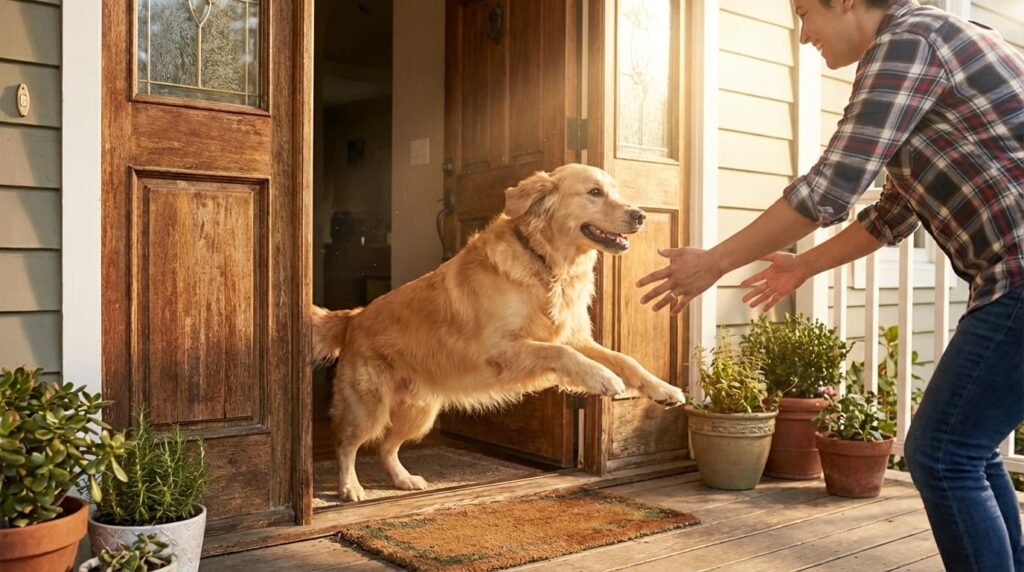
Few things are more awkward than watching your dog launch himself at a guest like a furry rocket the moment the front door opens. If you want to learn how to stop a dog from jumping on guests when they arrive, the good news is that this is one of the most trainable behaviors there is. Dogs jump because jumping works — it gets them the attention they crave. Once you teach them that a calm greeting earns even better rewards, the lunging stops and polite hellos take its place. This guide walks you through a practical, reward-based plan you can start today, no matter how enthusiastic your jumper is.
Why Your Dog Jumps on Guests in the First Place
Understanding the “why” makes training far easier. Dogs do not jump to be rude or dominant. They jump for three simple reasons:
- Excitement: A visitor is the most thrilling event of the day. Jumping burns off that explosive energy.
- Attention: Even being pushed off and scolded is attention, and to an excited dog, any attention beats none.
- Reinforcement history: If jumping ever earned a laugh, a pet on the head, or an excited greeting, your dog learned the behavior pays off.
The doorbell adds fuel to the fire. If your dog also loses his mind at the sound of the bell itself, it is worth tackling that trigger separately — calm entries are much easier when the bell does not cause a frenzy. Our guide to stopping a dog from barking at the doorbell pairs well with this training plan.
The core principle to remember: jumping is a self-rewarding habit. Your job is not just to stop the jump, but to replace it with a behavior that earns an even bigger reward.
Set Up the House Before Guests Arrive
Training works best when you control the environment. Before inviting anyone over for practice sessions, put these management tools in place:
- A leash on the dog for the first weeks of training, even indoors. Step on the trailing end so jumping becomes physically impossible — your dog cannot practice the bad habit.
- A baby gate between the entryway and the living room, so you can manage distance while your dog is still learning.
- High-value treats (small pieces of cheese, chicken, or freeze-dried meat) stashed near the front door in a jar so you are never scrambling.
- A designated spot — a mat, bed, or rug a few feet from the door — where the dog will eventually learn to wait.
Management is not cheating. It prevents your dog from rehearsing jumping while the new calm behavior is still fragile.
The 10-Step Training Plan for Calm Greetings
Follow these steps in order. Each one builds on the last, and most dogs move through the full plan in two to four weeks of short daily practice.
- Teach a rock-solid sit first. Jumping cannot happen while a dog is sitting. Practice sit in boring, distraction-free rooms until your dog drops into a sit on the first cue, every time, without a visible treat in your hand.
- Add duration to the sit. Ask for a sit, pause two seconds, then reward. Gradually stretch the pause to ten seconds. You are building impulse control, the exact muscle your dog needs at the door.
- Practice fake arrivals. With your dog on leash, have a family member knock on the front door from inside. Ask for a sit as soon as the dog orients toward the noise, and reward the sit — not the excitement.
- Open the door without a guest. Ask for a sit, then open the front door a crack. If your dog holds the sit, reward generously. If he breaks, close the door calmly and reset. The door opening itself must become a cue for calm.
- Introduce a helper “guest.” Ask a friend who understands the plan to come over. Instruct them ahead of time: walk in calmly, arms crossed, eyes off the dog, and completely ignore jumping — no talking, touching, or eye contact.
- Cue the sit before the jump happens. The moment the helper enters, ask your dog to sit. Reward the instant his rear touches the floor. Timing is everything — you are rewarding the choice not to jump.
- Let the guest reward the sit. Once the dog is sitting calmly, the helper can toss a treat at his feet or offer a brief, calm pet. The lesson: four paws on the floor makes the wonderful stranger pet me; jumping makes them turn into a boring statue.
- Repeat in short sets. Do five to eight arrivals per session, then quit while you are ahead. End with a success, not a meltdown. Three short sessions a day beat one long frustrating one.
- Raise the difficulty gradually. Start with one calm, predictable guest. Then try two guests, then guests who arrive talking and laughing, then children. Each new level is a new lesson.
- Fade the food, keep the routine. Once your dog sits for greetings eight or nine times out of ten, start rewarding with treats only every other success, then randomly. But keep the guest interaction itself as the built-in reward — calm dogs get to say hello, jumpers do not.
Trainer tip: The single most powerful move is coaching your guests. Most jumping survives because visitors accidentally reward it — they laugh, push the dog, or pet him while he is airborne. A thirty-second briefing before anyone enters (“please ignore him completely until he sits”) does half your training work for you.
Three Calm-Greeting Methods Compared
The ten-step plan above uses a sit-for-greetings method, but you have options. Here is how the three most popular approaches compare so you can pick the one that fits your dog.
The Mat Method (Best for Very Excitable Dogs)
Train your dog to run to a mat and lie down whenever the doorbell rings, and stay there until released. Pros: gives the dog a clear job that is incompatible with jumping; works beautifully for large, powerful dogs. Cons: takes the longest to teach well — reliable distance stays need two to three weeks of dedicated practice.
The Sit-for-Greetings Method (Best All-Rounder)
The dog sits near the door and is only greeted while holding the sit — the approach in this guide. Pros: simple to teach, easy for guests to understand, and uses a cue most dogs already know. Cons: very bouncy adolescent dogs may need a few extra weeks before they can hold the sit through a real arrival.
The Ignore-and-Redirect Method (Best for Attention-Seekers)
Everyone turns their back and withdraws all attention the instant paws leave the floor; attention returns only when all four paws are down. Pros: requires almost no formal training sessions. Cons: fails when guests “cheat” and pet the jumping dog anyway, and the behavior often gets worse before it gets better (an “extinction burst”), which surprises owners.
Running Real Arrivals: Your Door Script
When the doorbell rings for real, follow the same script every single time. Consistency is what turns a trick into a habit.
- Leash your dog before opening the door, and keep treats within reach.
- Cue a sit a few feet back from the door, where excitement is lower.
- Open the door while rewarding the held sit.
- Brief the guest on entry: “He is training — please ignore him until he sits.”
- If paws leave the floor, the guest turns away; you calmly reset the sit.
- The instant the sit holds, the guest greets him calmly and low-energy.
- Keep the first greeting short, then guide the dog to his bed with a stuffed chew toy while you chat.
It helps to rehearse this with scheduled visitors rather than surprise drop-ins. A couple of cooperative friends and a few weeks of rehearsals will change the pattern permanently.
Mistakes That Keep the Jumping Alive
If progress stalls, one of these common errors is usually the culprit:
- Kneeing or pushing the dog. From the dog’s perspective, a knee to the chest or hands pushing him down is physical contact — a reward for an attention-hungry jumper.
- Scolding with excitement in your voice. “No! Down! Stop it!” shouted in a high, animated tone sounds like joining the party.
- Inconsistency between people. If everyone in the house enforces the rule but one family member lets the dog jump “because he is cute,” the behavior will survive indefinitely.
- Rewarding after the jump. Petting the dog to calm him down right after he jumps teaches him that jumping earns petting. Reward the calm behavior instead, even if it comes second.
- Skipping exercise. A dog with an hour of unspent energy is a jumping machine. A tired dog can think; a wired dog cannot. A brisk walk or a solid game of fetch before expected guests makes training dramatically easier. (Loose-leash practice also builds the same impulse control — see our 8-step guide to stop leash pulling.)
- Punishing instead of redirecting. Choke chains, shock collars, and alpha rolls create fear and anxiety around guests — and fearful dogs bite. Positive methods are not just kinder; they are more reliable.
Special Cases: Puppies, Big Dogs, Kids, and Rescues
Puppies
Puppies jump more than any other age group because jumping was cute when they were eight weeks old and three pounds. The same training applies, but keep sessions to two or three minutes and expect slower progress — a puppy’s brain is still developing impulse control. Start now anyway: every jump you prevent at four months is ten jumps you never have to fix at four years.
Large and Powerful Breeds
An eighty-pound dog jumping is a safety issue, not just an annoyance. Use the leash management step religiously, train the mat method for distance, and never let practice sessions happen with guests who cannot safely stand their ground. Consider a front-clip harness for better physical control at the door.
Homes With Children or Elderly Visitors
Jumping that is merely embarrassing with adults can knock over a toddler or injure a frail grandparent. Until training is solid, put the dog behind a baby gate or in another room when vulnerable guests visit. There is no shame in management — safety comes first, training second.
Rescue and Rehomed Dogs
Rescues may jump from anxiety rather than joy, or because previous owners accidentally encouraged it. Give a new rescue at least two weeks to settle in before starting formal door training, and pair the mat method with calm, predictable routines so the dog learns the house is a safe, orderly place.
Troubleshooting: When Progress Stalls
Plateaus are normal. Work through this checklist before deciding your dog is “untrainable” (he is not):
- Lower the difficulty. If he sits for one guest but explodes for three, you advanced too fast. Go back to one calm guest and rebuild.
- Check your treat value. Dry biscuits lose to a visitor’s excitement every time. Switch to real meat or cheese for door sessions.
- Audit your guests. Nine times out of ten, the leak is a visitor who pets the jumper. Re-brief everyone, or practice only with trained helpers until the behavior is solid.
- Look at the whole day. Dogs that jump chronically are often under-exercised, under-trained in general obedience, or both. More daily exercise and a five-minute daily sit/stay practice session will accelerate door progress.
- Consider separation. Some dogs are so aroused by arrivals that no training sticks at first. Having the dog wait in another room with a stuffed food toy for the first five minutes — greeting guests only after the excitement wave passes — is a legitimate strategy, not a failure.
If you have applied consistent training for six to eight weeks with zero improvement, consult a certified professional dog trainer (look for CPDT-KA or IAABC credentials) who uses reward-based methods. A single in-person session can reveal timing mistakes you cannot see yourself.
Frequently Asked Questions
How long does it take to stop a dog from jumping on guests?
Most dogs show clear improvement within two to three weeks of consistent daily practice, and the habit is usually replaced within six to eight weeks. Puppies and extremely excitable breeds may take longer. Consistency across every person in the household matters more than the number of sessions.
Should I punish my dog for jumping on visitors?
No. Punishment like yelling, kneeing, or leash jerks usually backfires — it adds excitement or fear to an already emotional moment. Instead, remove what the dog wants (attention) when he jumps, and generously reward the calm behavior you want. Redirection outperforms punishment for greeting behavior.
Why does my dog only jump on some guests and not others?
Dogs jump most on people who react the most. A guest who laughs, talks excitedly, or pushes the dog away is accidentally rewarding the behavior, while a calm guest who ignores the dog gets polite behavior. This is why briefing your visitors is one of the most important parts of training.
Is it okay to just put my dog in another room when guests arrive?
Yes — management is a valid strategy, especially with children, elderly visitors, or while training is still in progress. It is not giving up; it prevents your dog from practicing jumping and keeps everyone safe. Many owners combine management with ongoing training until the calm greeting is reliable.
My dog jumps even though I taught him to sit. What am I doing wrong?
Usually one of three things: the sit is not yet reliable under excitement (practice sits with increasing distractions), someone is accidentally rewarding the jump (audit your guests and family), or you are training only during real arrivals instead of rehearsing with planned practice sessions. Lower the difficulty and rebuild.
Can old dogs learn to stop jumping on guests?
Absolutely. Senior dogs learn new habits just as well as young ones — they often learn faster because they have better impulse control and less frantic energy. The same reward-based steps apply, with lower-impact practice sessions suited to an older dog’s stamina.
The Calm Greeting Is a Habit, Not a Trick
Stopping your dog from jumping on guests is not about one magic correction. It is about rehearsing a better alternative — sit, mat, or calm four-on-the-floor — until it becomes your dog’s automatic response to the doorbell. Set up the environment, coach your guests, reward every calm choice, and be patient through the extinction bursts. Within a few weeks, the furry rocket launches will be replaced by the kind of polite greeting that makes visitors compliment your dog instead of dodging him.













2 thoughts on “How to Stop a Dog from Jumping on Guests: 10 Proven Tips”
Comments are closed.