
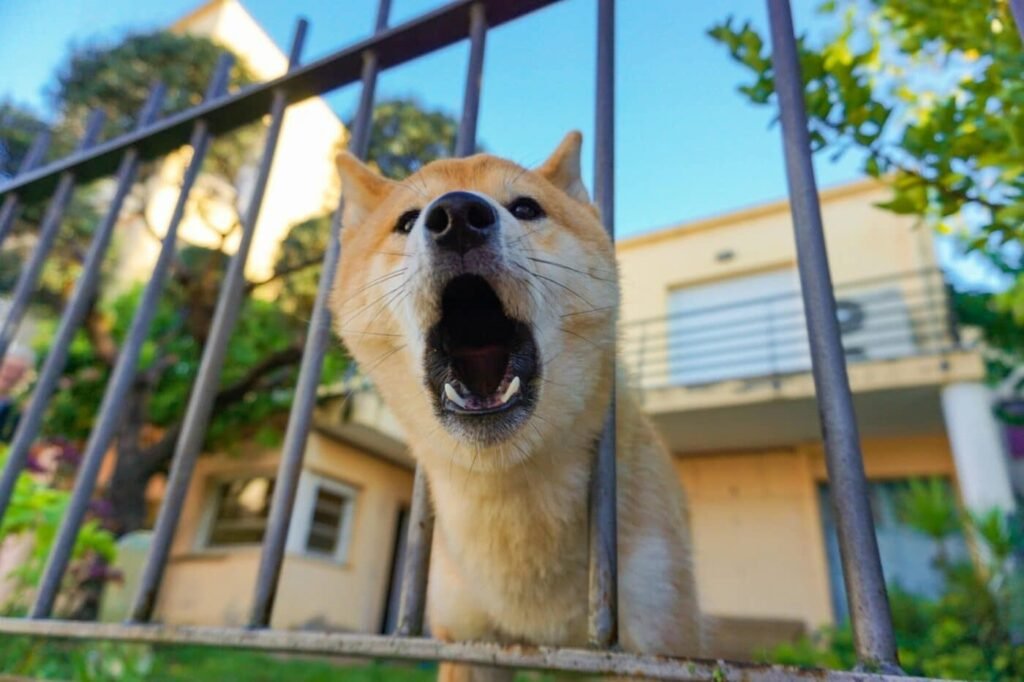
Learning how to stop your dog from barking at the mailman without punishment starts with understanding one simple truth: your dog is not being naughty. From your dog’s point of view, barking works. A stranger approaches the house, your dog barks, and the stranger leaves. In your dog’s mind, the barking drove the intruder away, so the behavior gets stronger every single day. The good news is that you can break this cycle without scolding, startling, or frightening your dog. With patience, management, and reward-based training, most dogs can learn to stay calm when the mail arrives.
This guide walks you through a complete, punishment-free plan. You will learn why the mail carrier triggers such intense barking, how to manage the environment so your dog practices calm behavior instead of frantic barking, and how to teach a reliable quiet response step by step. You do not need special equipment, and you do not need to be a professional trainer. You just need consistency, good treats, and a few minutes of practice each day.
Why Dogs Bark So Much at the Mailman
Dogs bark at the mail carrier for a mix of instinct and learned habit. Dogs are territorial animals, and the area around the front door feels like the heart of their territory. When a stranger walks up to that boundary, barking is a natural alarm response. Some breeds were developed specifically to guard property or alert their owners to visitors, so they are even more likely to sound off at every delivery.
The mail carrier’s routine makes the problem worse. Unlike a guest who comes inside and stays for a while, the mail carrier arrives, lingers near the door, and then leaves quickly. Every delivery teaches your dog the same lesson: bark loudly, and the stranger goes away. This pattern repeats six days a week, which makes mailman barking one of the most deeply practiced habits a dog can have. It is not spite, dominance, or a desire to be difficult. It is a behavior that has been rewarded hundreds of times.
Other factors can raise the intensity. Dogs that are bored, under-exercised, or anxious tend to bark more. Dogs that spend long hours watching the front window with nothing else to do treat every passerby as an event. Puppies that were never gently introduced to visitors may grow into adults that treat every stranger at the door as a threat. Understanding these causes matters because the fix is not to suppress the bark. The fix is to change how your dog feels about the mail carrier and to give your dog a better behavior to perform instead.
What Not to Do: Why Punishment Backfires
It is tempting to yell, spray water, or use a device that startles your dog into silence. These approaches may stop the barking for a moment, but they rarely solve the problem, and they often make it worse. A dog that is barking out of fear or excitement does not learn to feel calm when it is frightened. It learns that the arrival of the mail carrier predicts something unpleasant from its owner as well as a stranger at the door. That double stress can turn noisy barking into growling, lunging, or biting.
Yelling is especially counterproductive. To your dog, your raised voice sounds like you are barking along with it. Instead of calming the situation, shouting adds energy and confirms that something exciting or alarming is happening. Repeated scolding also damages trust. A dog that is afraid of being punished may stop barking in your presence but bark twice as hard when you are in another room, or it may suppress warning signals entirely and go straight to a bite without warning.
Positive, reward-based training works differently. Rather than punishing the bark, you teach your dog that the mail carrier predicts wonderful things, and you reward calm behavior until calm becomes the habit. This approach takes a little longer than a quick scolding, but the results last, and your dog stays happy and trusting throughout the process.
Step 1: Manage the Environment First
Training works best when your dog is not practicing the old behavior dozens of times while you are trying to change it. Management is not cheating. It is the foundation that makes training possible. Start by reducing your dog’s access to the front window and door during delivery hours.
If your dog guards the front window, block the view with frosted window film, a baby gate, or closed curtains during the usual delivery window. If your dog charges the door, keep it behind a gate in another room when the mail is due, and give it a long-lasting chew or a stuffed food toy there. The goal is simple: fewer rehearsals of frantic barking, and more chances for your dog to succeed.
Ask your mail carrier for a small favor if you see them regularly. Many carriers are happy to toss a treat over the fence or drop a biscuit through the gate, but only do this if your dog is friendly and the carrier is comfortable. Never ask a carrier to interact with a dog that lunges, snaps, or shows aggression. Safety comes first, for both your dog and the delivery person.
Exercise matters too. A dog that has had a good walk, a play session, or a training game before delivery time is far more likely to settle than a dog full of pent-up energy. Plan a walk or a game of fetch earlier in the day so your dog is in a calmer state when the mail arrives.
Step 2: Teach a Quiet Cue Away From the Door
Do not start training at the front door during a real delivery. That is the hardest possible setting. Start in a quiet room where your dog can focus, and teach the behavior you want before you ask for it under pressure. The simplest version is a “quiet” cue paired with a reward for silence.
Begin by teaching your dog to bark on cue if it does not already offer barking readily, or simply wait for a natural pause. The practical approach most owners use is this: let your dog bark a few times at a mild trigger, such as a knock on a table, then hold a tasty treat near its nose. Most dogs stop barking to sniff. The moment there is silence, say “quiet” in a calm voice, then give the treat. Repeat this in short sessions of five minutes, several times a day, until your dog begins to pause when it hears the word.
Next, teach a “go to your place” behavior. Choose a mat or bed a short distance from the door. Lure your dog onto the mat with a treat, reward it for lying down, and gradually build up the time it stays there. Add the cue “place” once your dog goes to the mat reliably. This gives your dog a job to do when the doorbell rings. A dog that is lying on its mat earning treats cannot simultaneously charge the door barking.
Keep early sessions easy and fun. End each session while your dog is still succeeding, and use high-value rewards such as small pieces of chicken, cheese, or soft training treats. Dry kibble rarely competes with the excitement of a visitor, so save the best treats for door training.
Step 3: Change How Your Dog Feels About the Mail Carrier
The most powerful part of this plan is desensitization and counter-conditioning. In plain language, this means exposing your dog to the mail carrier in small, manageable doses while pairing that exposure with great rewards, so your dog’s emotional response shifts from alarm to anticipation.
Start at a distance where your dog notices the trigger but can still think and eat treats. For some dogs, that means watching the street from inside the house with the door closed. For others, it means standing at the far end of the yard. The moment your dog sees the mail carrier, or hears the truck, start feeding a steady stream of small treats. When the carrier leaves, the treats stop. Repeat this pattern every day, and your dog will begin to associate the carrier with good things rather than a threat.
Gradually reduce the distance as your dog stays relaxed. Signs of relaxation include a soft body, a loose wagging tail, ears in a neutral position, and the ability to take treats gently. Signs that you have moved too fast include stiffening, fixated staring, raised hackles, lunging, or refusing treats. If you see those signs, calmly increase the distance and try again at an easier level. Progress is rarely a straight line. Some days will feel like setbacks, and that is normal.
You can also practice with a helper. Ask a friend to play the role of the mail carrier: walk up to the door, knock softly, and leave, while you reward your dog for staying calm on its mat. Start with a gentle knock and a quick departure, then slowly build up to a realistic delivery. Practicing with a helper lets you control the difficulty in a way that real deliveries do not.
For a deeper look at teaching polite greetings, see this guide on how to stop a dog from jumping on guests, which uses the same reward-based approach for door excitement. The principles are identical: manage the environment, reward the behavior you want, and practice in small steps.
Step 4: Add Mental Enrichment to Lower Overall Barking
A bored dog barks more. Dogs that spend the day with nothing to do treat the mail carrier as the main event. Adding daily enrichment lowers arousal across the board and makes training easier. Puzzle feeders, snuffle mats, and food-dispensing toys turn mealtimes into brain work. Short training games, such as teaching a new trick for five minutes, tire a dog out mentally without needing a long walk.
Rotate toys so old favorites feel new again, and give your dog a safe chew during the hours when deliveries usually happen. Scent games are especially powerful: hide a few treats around a room and let your dog search for them. Ten minutes of sniffing can be as tiring as a much longer walk. If you want simple no-cost enrichment ideas, this article on how to keep a cat entertained indoors without buying toys shows the same principle at work for cats, and many of the ideas, such as rotation and food puzzles, translate well to dogs.
Putting It Together on Delivery Day
Once your dog knows the mat behavior and is making progress with desensitization, combine the pieces into a delivery routine. Before the usual delivery time, settle your dog on its mat with a chew. When the carrier approaches, calmly reward your dog for staying on the mat. If your dog barks, do not shout. Wait for a brief pause, cue “quiet,” and reward the silence. If your dog loses control, calmly move it farther from the door and try again at an easier distance the next day.
Consistency across the household matters enormously. If one person rewards calm behavior and another yells at barking, your dog gets mixed messages and progress stalls. Agree on one plan, one cue word, and one reward system, and make sure every family member follows it.
Common Mistakes to Avoid
- Moving too fast: asking for calm at the open front door before your dog can succeed at a distance.
- Training only during real deliveries, when excitement is highest and you cannot control the situation.
- Using low-value treats that cannot compete with the thrill of a visitor.
- Rewarding barking by accident, for example by opening the door or giving attention while your dog is still barking.
- Giving up after a few days: deeply practiced barking habits often take several weeks to change.
- Inconsistency between family members, which confuses your dog and slows learning.
When to Get Professional Help
Most mailman barking improves with the plan above, but some cases need a professional. Contact a certified force-free trainer or a veterinary behaviorist if your dog growls, snaps, or tries to bite visitors, if barking is paired with destructive behavior or self-harm, or if the behavior suddenly worsens without an obvious cause. Sudden behavior changes can sometimes reflect pain or illness, so a veterinary check is a sensible first step in those cases. A professional can tailor the plan to your dog and keep everyone safe.
FAQ
How long does it take to stop a dog barking at the mailman?
Most dogs show noticeable improvement within two to four weeks of daily practice, but deeply ingrained habits can take two to three months to fully change. Progress depends on how long the behavior has been practiced, your consistency, and your dog’s temperament. Short daily sessions beat occasional long ones.
Should I let my dog bark a few times before asking for quiet?
One or two alert barks are normal and can be allowed if you prefer. The goal is not total silence but a dog that alerts briefly and then settles on cue. Letting your dog bark endlessly, however, rehearses the habit you are trying to change, so always follow a brief alert with a calm cue and a reward for settling.
Will blocking the window make my dog more frustrated?
Blocking the view usually reduces barking rather than increasing frustration, because it removes the trigger your dog is reacting to. Pair the blocked view with enrichment, such as a chew or puzzle toy, so your dog has something pleasant to do instead of patrolling the window.
Can I use a citronella collar or an ultrasonic device instead?
These devices still rely on startling or punishing your dog, and they carry the same risks as other punishment-based tools: increased fear, damaged trust, and a dog that suppresses barking without learning calm. Reward-based training addresses the underlying emotion and produces longer-lasting results without those side effects.
What if my dog only barks when I am not home?
Barking when alone often signals separation anxiety or boredom rather than territorial behavior. Try leaving enrichment, such as a food puzzle, and consider a camera to see what triggers the barking. If the barking is intense and paired with pacing, drooling, or destruction, consult a trainer or veterinarian about separation anxiety specifically.
Does the mail carrier need to cooperate for training to work?
Carrier cooperation helps but is not essential. You can make excellent progress with management, mat training, and practice sessions using a helper who plays the carrier’s role. Real deliveries then become a test of skills your dog has already learned, rather than the only training opportunity.













1 thought on “How to Stop Dog Barking at the Mailman Without Punishment”
Comments are closed.