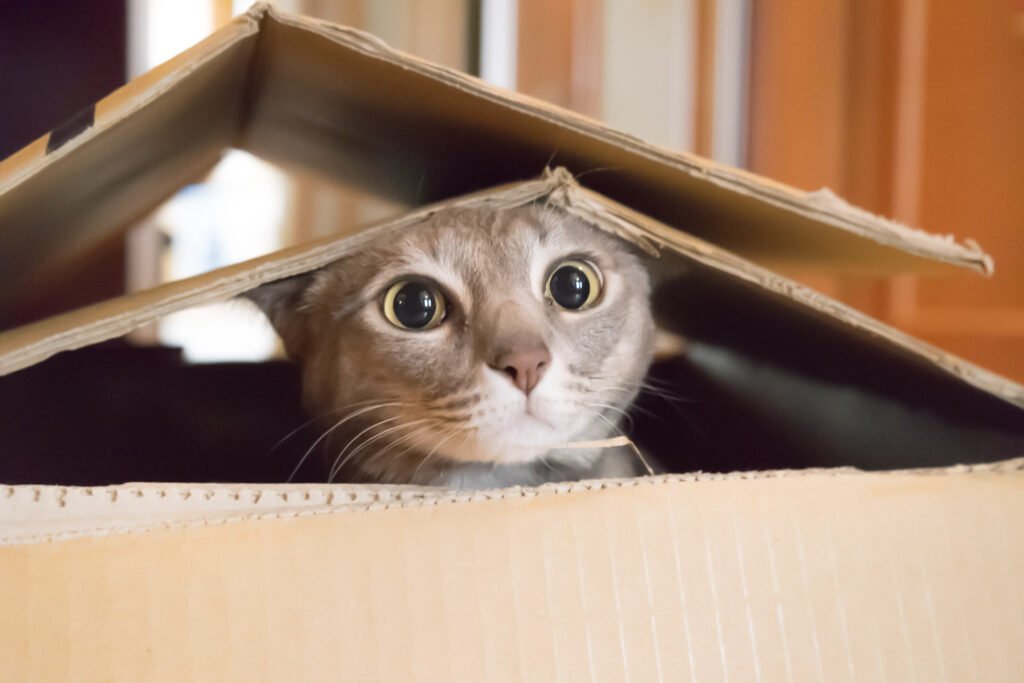
Wondering how to keep a cat entertained indoors without buying toys? You do not need a shopping trip or a stack of feather wands. Cats are entertained by texture, scent, movement, and the thrill of the hunt, and your home is already full of all four.
Indoor cats live longer and safer lives than outdoor roamers, but without stimulation they can develop boredom behaviors: overeating, scratching furniture, knocking things off counters, or waking you at 3 AM with a personal opera performance. The fix is not expensive. It is about understanding how a cat’s brain works and giving it a job to do every day.
Why Indoor Cats Get Bored (And Why It Matters)
Cats evolved as crepuscular hunters. Their brains are wired for a cycle: stalk, chase, pounce, eat, groom, sleep. An indoor cat that eats from a bowl and naps all day never completes this cycle, and the unused energy turns into trouble.
Under-stimulated cats commonly show these signs:
- Aggression during petting sessions that were fine before.
- Over-grooming, creating bald patches on the belly or legs.
- Nighttime zoomies and loud vocalizing.
- Destructive scratching on furniture instead of posts.
- Food obsession and rapid weight gain.
Regular play that mimics hunting resolves most of these within a week or two.
The 15-Minute Daily Play Routine
This is the single most important thing on this list. Schedule two 10 to 15 minute play sessions daily, ideally in the morning and evening, ending about 30 minutes before meals. Play before food mirrors the natural hunt-eat sequence and helps your cat settle afterward.
You do not need store-bought toys. The best free cat toys include:
- A crumpled paper ball. The sound alone triggers most cats. Toss it down a hallway.
- A shoelace or string. Drag it under a rug or around furniture corners so it disappears and reappears. Never leave string unattended; cats can swallow it.
- An empty cardboard box. Cut a few holes in the sides and dangle the string through them. Instant puzzle box.
- A toilet paper roll. Bat it across a hard floor and most cats chase it like prey.
- A sock filled with dried rice or beans. Tie it off and you have a kicker toy cats can wrestle.
The secret to good play is not the object but the movement. Move toys like prey: erratic, stopping, hiding behind obstacles, never marching directly at the cat. Let your cat catch the toy regularly. A hunt that never succeeds is frustrating, not fun.
Turn Your Home Into a Cat Playground
Vertical space
Cats feel safest and most confident when they can climb. Clear the top of a sturdy bookshelf, rearrange furniture so the cat can hop between heights, or leave a cleared closet shelf with a blanket. Height is entertainment in itself: a cat surveying the room from above is engaged, not bored.
The window station
A window with a view of birds, squirrels, or even passing cars is a free nature documentary. Place a chair or cat-sized cushion at the sunniest window. If you have a bird feeder outside that window, even better. Many cats will watch for an hour or more.
Box and bag mazes
Save delivery boxes and arrange several on the floor with their flaps open, creating a tunnel maze. Add a paper bag with the handles cut off (handles are a strangulation risk) for variety. Rotate the arrangement weekly so it stays novel.
Foraging: Make Every Meal a Puzzle
In the wild, cats work for food. Recreate this for free:
- Muffin tin puzzle. Drop kibble into a muffin tin and cover some cups with tennis balls or crumpled paper. Your cat must fish out each piece.
- Toilet paper roll feeder. Fold one end of a toilet paper roll shut, drop in a few treats, and fold the other end. The cat bats and bites it open.
- Scatter feeding. Instead of a bowl, scatter dry food across a clean rug or hide small piles in different rooms. This turns dinner into a hunt that can take 20 minutes instead of two.
- The bottle spinner. Cut holes slightly larger than kibble in a clean plastic bottle, add food, and let the cat roll it to earn each piece.
Foraging games tire cats out mentally, which is just as valuable as physical play, especially for senior or less athletic cats.
Scent Games and Sensory Enrichment
Cats live in a world of smell. Bring the outdoors in:
- Bring home a fallen branch, pinecone, or a handful of leaves in a paper bag and let the cat investigate it for a day, then discard.
- Rub a tiny bit of olive on your hands before play, or offer a whiff of safe herbs like catnip, valerian root, or silver vine if you have them.
- Leave a worn T-shirt in the cat’s bed. Your scent is comfort enrichment.
- Rotate blankets between rooms. A blanket from a different room carries new smells that spark investigation.
Teach Your Cat Tricks
Training is not just for dogs. Cats learn fast with food rewards, and a five-minute training session is excellent mental exercise. Start with these:
- Touch the target. Hold out a fingertip; when the cat boops it, reward with a treat. Most cats learn this in a day or two.
- High five. Hold a treat above the cat’s paw level so it lifts its paw, then reward. Shape it into a high five over several sessions.
- Come when called. Say the cat’s name, reward arrival, and gradually increase distance. This one is genuinely useful.
Keep sessions short, always end on a success, and never punish a cat for not participating. Training builds the bond between you and gives a shy cat confidence.
Match the Game to Your Cat’s Personality
Not every cat is entertained by the same things. Tuning the activity to your cat’s temperament multiplies the fun.
- The hunter. Obsessed with moving targets. Focus on wand-style play with a shoelace, feather-on-a-string substitutes like a crumpled tissue tied to yarn, and games where the toy vanishes behind furniture. End with a catch and a treat every time.
- The thinker. Ignores fast toys but studies everything. Puzzle feeders, muffin tin games, and treat trails through the house are their love language. Increase difficulty gradually by adding more covered cups or longer trails.
- The climber. Lives on top of the fridge. Rearrange shelves and furniture into a vertical circuit, place treats at each level, and rotate which level holds the jackpot. Window perches at different heights keep them watching for hours.
- The cuddler. Prefers you over objects. Grooming sessions with a soft brush, gentle training games with treats, and interactive play where you are part of the game matter most. Your attention is the toy.
Most cats are a blend. Experiment for a week and note which activities produce the relaxed, satisfied flop afterward versus the restless pacing that means the game missed the mark.
Weekend Projects: Free Enrichment Upgrades
When you have an hour on the weekend, these builds cost nothing and pay off daily:
- The cardboard castle. Tape three or four large boxes together, cut doorways between them, and add a few lookout holes on top. Most cats claim it within minutes and use it for weeks.
- The digging box. Fill a shallow box with crumpled newspaper or shredded paper, then bury a few treats inside. Digging is a natural foraging behavior that indoor cats rarely get to practice.
- The scent garden. Pot a small tray of cat grass from seed, which costs very little at any garden center and grows on a windowsill. Cats nibble it, rub against it, and nap beside it.
- The hallway racetrack. Clear one long hallway, place a crumpled paper ball at one end, and let gravity and hard floors do the work. Some cats will fetch, bringing the ball back again and again.
Rotate or rebuild one project every week or two. Novelty is the engine of feline interest, and a fresh arrangement of familiar materials feels like a brand-new toy.
Mistakes to Avoid
- Playing with your hands. Wrestling with hands teaches kittens that biting human skin is a game. Redirect to a toy every single time.
- One long play session. Cats hunt in short bursts. Three five-minute sessions beat one twenty-minute session.
- Never rotating the setup. The same box in the same corner becomes furniture. Rearrange weekly.
- Ignoring the evening session. Cats are most active at dawn and dusk. Skipping the evening play session is the most common cause of midnight zoomies.
For more feline problem-solving, our guides to keeping a cat off the kitchen counter without a spray bottle and walking a dog that pulls on the leash apply the same principle: work with the animal’s instincts instead of against them.
Frequently Asked Questions
How many hours of play does an indoor cat need?
Aim for at least 20 to 30 minutes of active play per day, split into two or three sessions. Kittens and young adults often need more, while senior cats do well with gentler, shorter sessions plus foraging puzzles.
Is it okay for a cat to never go outside?
Yes. Indoor-only cats live significantly longer on average and avoid traffic, predators, parasites, and disease. The key is providing enough enrichment indoors, which is exactly what this guide covers.
What household items are dangerous for cats to play with?
Avoid rubber bands, hair ties, string left unattended, plastic bags with handles, small items that can be swallowed, and anything with sharp edges. Always supervise play with string-like toys and put them away afterward.
My cat ignores toys. What should I do?
Most toy-ignoring cats are bored with the presentation, not the toy. Try moving it like prey (away from the cat, with pauses), play during dawn and dusk, and end sessions with a small meal. Also try different textures: some cats prefer crinkly, others prefer soft.
Can I leave my cat alone all day with no entertainment?
Cats sleep 12 to 16 hours a day, so alone time is fine if the home offers enrichment: a window perch, puzzle feeders, scratching posts, and a morning play session before you leave. A second cat is also excellent company for a social, young cat.
Do cats get bored of the same toys?
Yes, novelty matters. Keep a small rotation: put half the toys away for a week, then swap them. Old toys become interesting again after a break.