
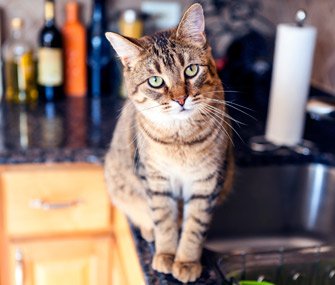
If you are asking how to keep a cat off the kitchen counter without a spray bottle, you are already thinking about the problem the right way. Spray bottles may interrupt the moment, but they rarely teach a cat what to do instead. Many cats simply learn to avoid the counter when you are watching and return when the kitchen is quiet. A better approach combines humane deterrents, smarter management, and positive reinforcement so the counter becomes boring while a better option becomes irresistible.
Why Cats Are Drawn to Kitchen Counters
Cats do not jump on counters to annoy you. They do it because counters meet several strong feline needs at once. The surface is high, often warm, close to interesting smells, and connected to the busiest room in the home. Once a cat learns that jumping up leads to a reward, the behavior becomes a habit. Understanding the motivation makes it much easier to choose a solution that actually works.
Height Means Safety and Control
Many cats feel calmer when they can observe a room from above. A high perch gives them a wide view, a quick escape route, and distance from dogs, children, loud appliances, or unfamiliar visitors. Counters are especially attractive because they are often higher than tables, close to family activity, and easy to reach from nearby chairs or appliances. If your cat lacks a tall, approved lookout, the kitchen counter fills that gap.
Warmth, Smells, and Movement
Counters also appeal to a cat’s senses. Warm appliances, sunlight, food smells, running water, and movement near the sink can all draw attention. Even a spotless counter can be interesting if it offers a view of food preparation or a warm place to rest. Cats are also curious by nature, so a new grocery bag, package, or dish can turn the counter into an exciting exploration zone.
Humane Deterrents That Do Not Require a Spray Bottle
Deterrents work best when they make the counter uncomfortable or unrewarding without frightening or harming the cat. The goal is not punishment. The goal is to change the cat’s opinion of the surface while you build a better habit elsewhere. Use deterrents consistently and combine them with training for the fastest results.
Make the Surface Feel Wrong Under Their Paws
Cats choose resting and walking surfaces carefully. Most prefer soft, warm, stable footing and dislike sticky, uneven, or crinkly textures. You can temporarily change the feel of the counter using safe, removable options.
- Place double-sided pet-safe sticky tape in strips along the edges and landing spots. Most cats dislike the tacky feeling and will jump down quickly.
- Use a washable plastic carpet runner with the nubby side up, cut to fit the counter sections where the cat usually lands.
- Try a loosely placed baking sheet, silicone mat, or tray with an unfamiliar texture. Remove anything that could slide dangerously or create sharp edges.
- Avoid anything that could trap a paw, overheat, cause a fall, or leave residue on food preparation areas.
Texture deterrents are most useful during training. They give the cat immediate feedback even when you are not nearby, which prevents the habit from continuing in secret. Always remove them before preparing food and clean the counter thoroughly.
Use Scent Strategically, Not Overpoweringly
Many cats dislike strong citrus smells, but scent deterrents must be used carefully in a kitchen. Do not spray strong essential oils or cleaners near food, dishes, utensils, or cooking surfaces. Instead, use mild, food-safe options in a limited way.
- Wipe the counter edges with a cloth lightly dampened with diluted lemon water, then rinse the surface before food preparation.
- Place fresh citrus peels in a bowl near the usual jumping spot rather than directly on food areas.
- Use a small herb plant such as rosemary near the counter if your cat dislikes the smell, while keeping it out of reach of food.
- Stop using a scent immediately if the cat shows sneezing, drooling, pawing at the face, or avoidance of the whole kitchen.
Scent alone rarely solves the problem, but it can make the counter less appealing while texture deterrents and training do the heavier work. Never use concentrated essential oils, mothballs, ammonia, bleach, or other harsh substances around cats.
Motion-Activated Deterrents That Work When You Are Away
Cats are excellent at learning your schedule. If jumping only gets interrupted while you are home, many cats will simply wait until you leave the room. Motion-activated deterrents solve this problem by responding every time, not just when a person is watching.
- A motion-activated burst of air can startle a cat off the counter without physical contact.
- A motion-activated mat that emits a mild static pulse can discourage repeat visits, although some cats learn to jump over it.
- A small motion sensor that triggers a sound, such as a beep, may work for sound-sensitive cats.
Choose a deterrent that startles rather than terrifies. The cat should decide that the counter is unpredictable and not worth the effort. If the cat becomes fearful of the entire kitchen, hides for long periods, stops eating normally, or becomes aggressive, remove the device and rely more on management and positive reinforcement.
Positive Reinforcement: Teach the Behavior You Want
Deterrents tell a cat where not to go. Positive reinforcement teaches the cat where to go instead. This part is essential because cats still need height, comfort, and stimulation. If you remove the counter without offering a better option, the cat will usually find another forbidden surface.
Choose a legal high place near the kitchen or in a nearby room. A tall cat tree, sturdy shelf, window perch, or cleared top of a bookcase can work well. Make it more attractive than the counter by adding a soft bed, a familiar blanket, treats, and interactive play nearby. Reward the cat immediately for using it. A treat, praise, or short play session tells the cat that the approved perch pays better than the counter.
Timing matters. Reward the desired behavior within a few seconds so the cat connects the reward to the perch. You can also use a clicker or a consistent marker word, then follow it with a treat. Practice short sessions throughout the day rather than one long session. If your household includes more than one species, household-wide consistency matters just as much; our guide to introduce a new cat to a dog safely explains how to manage shared spaces and routines without creating new conflicts.
Remove the Rewards That Keep Pulling Them Up
Many counter-jumping habits continue because the counter sometimes pays off. A piece of chicken, a lick of butter, a drink from the faucet, or even attention can reinforce the behavior. Cats remember successful outcomes, so occasional rewards can keep the habit alive for months.
- Store food in sealed containers and clean crumbs, grease, and spills promptly.
- Do not leave dirty dishes, thawing meat, butter, or snacks unattended.
- Keep the sink empty or covered if the cat drinks from the faucet.
- Push small appliances back from the edge so they cannot be used as stepping stones.
- Move chairs, stools, trash cans, and boxes away from the counter launch zones.
- Provide fresh water in a cat fountain or bowl away from the kitchen.
Management is not giving up. It is training support. When the counter stops offering food, warmth, water, or fun, the cat’s motivation drops. Combined with an attractive alternative perch, management makes the right choice easy and the wrong choice unrewarding.
Step-by-Step Training Plan
Use this simple plan for two to four weeks. Most cats show improvement much sooner when every person in the home follows the same rules.
- Set up the legal perch first. Place a tall cat tree or window perch near the kitchen and make it comfortable before you start discouraging counter use.
- Remove food and launch points. Clear counters, secure trash, store food properly, and move chairs or boxes that help the cat jump up.
- Add temporary texture deterrents. Use sticky tape, nubby mats, or another safe texture on the cat’s favorite landing spots.
- Reward the alternative immediately. When the cat uses the perch, offer a treat, praise, or play within seconds. Repeat many times daily.
- Redirect calmly. If you see the cat heading for the counter, guide or lure the cat to the perch with a toy or treat instead of yelling.
- Use motion deterrents for unsupervised times. If the cat jumps up when no one is watching, add a motion-activated option temporarily.
- Keep sessions short and positive. Train in brief moments throughout the day, especially before meals when food rewards are most motivating.
- Fade deterrents gradually. Once the cat consistently chooses the perch, remove one deterrent at a time and watch for setbacks.
If progress stalls, look for hidden rewards. A family member may be feeding scraps, the cat may be finding water in the sink, or the alternative perch may be too short, unstable, or in a noisy location. Fix the setup before assuming the cat cannot learn.
Common Mistakes That Slow Down Training
Counter training fails most often because of inconsistency, not because the cat is stubborn. These mistakes are common and easy to correct.
- Only enforcing the rule sometimes. If one person allows the cat on the counter while another discourages it, the cat learns that jumping is sometimes rewarding.
- Using fear as the main strategy. Loud yelling, chasing, or throwing objects can damage trust and cause anxiety without teaching an alternative.
- Removing the counter but offering no perch. Cats need vertical space. Without a legal high spot, they will choose another table, shelf, or appliance.
- Leaving food out during training. Even occasional access to food can undo weeks of progress.
- Expecting instant perfection. Habits take time to change. Celebrate small improvements and stay consistent.
Household rules should be clear for every animal. Inconsistent rules confuse animals of every species; for example, a household that tolerates one pet jumping or chewing may accidentally reward another pet for pushing boundaries, which is why the same steady approach used to stop a puppy from biting shoes and clothes also helps cats learn counter rules faster.
Frequently Asked Questions
Why does my cat only jump on the counter when I am not looking?
Cats quickly learn patterns. If jumping leads to attention, food, or even a fun chase while you are away, the behavior continues in secret. Motion-activated deterrents, better management, and a more rewarding legal perch are usually the solution.
Is it okay to use aluminum foil on the counter?
Some cats dislike the sound and texture of foil, while others ignore it or enjoy playing with it. Foil can also be unsafe if a cat chews or swallows pieces. Safer texture options include pet-safe sticky tape, washable nubby mats, and removable silicone surfaces.
Will my cat ever learn if I do not punish the behavior?
Yes. Cats learn very well through consistent consequences and rewards. Making the counter boring and the approved perch rewarding is often more effective than punishment because it teaches the cat what to do instead of only what to avoid.
How long does counter training usually take?
Many households see major improvement within one to three weeks when deterrents, management, and positive reinforcement are used together. Strong habits, inconsistent rules, or continued access to food can make training take longer.
What should I do if my cat jumps on the counter for water?
Provide fresh water in another location and make the sink less appealing. A cat water fountain, a wide bowl away from food, and daily fresh water can reduce sink visits. If the behavior continues, ask a veterinarian whether the cat’s water intake seems normal.













1 thought on “How to Keep a Cat Off the Kitchen Counter Without a Spray Bottle”
Comments are closed.