
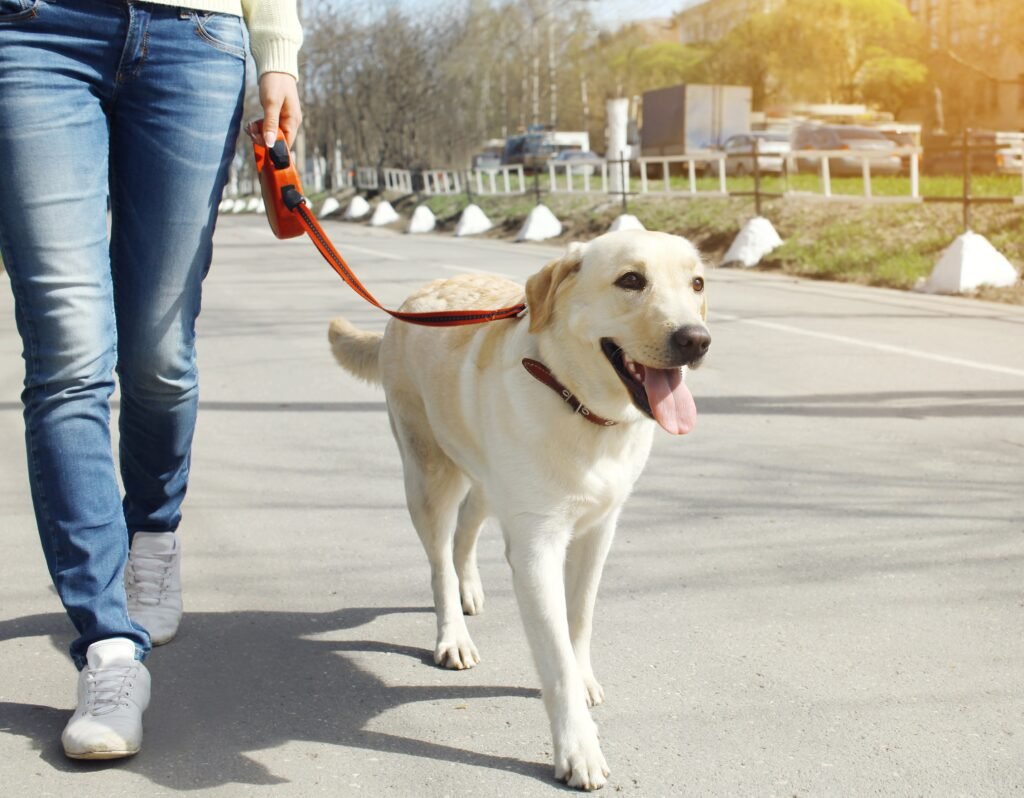
Learning how to stop a dog from pulling on the leash without a choke collar is one of the most rewarding training projects you can take on, because it transforms walks from a tug-of-war into the enjoyable outing they should be. Dogs pull mainly because pulling works: every step forward while the leash is tight rewards the dog with progress toward something interesting. The humane solution is to flip that equation so that a loose leash earns forward movement and rewards, while a tight leash earns nothing. This guide covers the equipment, the core techniques, and the practice routine that produce a dog that walks politely beside you.
Why Dogs Pull and Why Choke Collars Are Not the Answer
Pulling is natural for dogs. They walk faster than humans, they are excited by smells and sights, and they have never been taught that staying close pays off. A dog that pulls is not being stubborn or dominant; it is simply doing what has always worked. Recognizing this changes the training approach completely: instead of correcting the dog for pulling, you teach it that walking near you is the most rewarding place to be.
Choke collars and other pain-based tools suppress pulling by making it uncomfortable, but they do not teach the dog what to do instead, and they carry real risks. Pressure on the neck can injure the trachea, damage the thyroid, and increase anxiety and reactivity, especially in dogs that pull toward other dogs or people. A dog that learns to associate other dogs with neck pain may become more reactive, not less. Force-free methods avoid these risks entirely and build a dog that walks well because it wants to, not because it fears a correction.
Choose the Right Equipment First
A well-fitting front-clip harness is the best starting equipment for a puller. Unlike a back-clip harness, which can actually encourage pulling by giving the dog something to lean into, a front-clip harness attaches at the chest. When the dog pulls, the attachment gently turns the dog back toward you, which interrupts the forward momentum without any pain. Most dogs adjust to a front-clip harness within a few walks.
Fit matters. The harness should be snug enough that the dog cannot slip out, but loose enough that you can fit two fingers under every strap. Check the fit after the first few walks, since straps settle and may need adjusting. Pair the harness with a standard leash about six feet long. Retractable leashes are a poor choice for training because they teach the dog that constant tension is normal, which is the exact opposite of the lesson you want.
Head halters are another option for strong pullers, but they require careful, gradual introduction with treats, since many dogs dislike the feeling on their muzzle at first. A flat collar is fine for a dog that already walks reasonably well, but for a dedicated puller, a front-clip harness gives you the most control with the least risk. Whatever you choose, introduce it indoors with treats first so the dog associates the gear with good things before you ever step outside.
Technique 1: Be a Tree
The be-a-tree method is the foundation of loose-leash training. The moment the leash goes tight, stop walking completely. Stand still, stay calm, and wait. The dog will eventually turn back, step toward you, or loosen the leash on its own, and the instant the leash goes slack, praise and walk forward again. The lesson is simple and powerful: pulling stops the walk, and a loose leash starts it.
This method requires patience, especially in the first sessions. A dog that is used to dragging its owner forward may take several minutes to figure out that stopping works differently. Keep sessions short, five to ten minutes, and practice in a low-distraction area such as a quiet street or an empty yard before trying a busy park. Celebrate small wins: a few steps of loose leash deserve a treat and praise, even if the dog pulls again a moment later.
Consistency is essential. If pulling sometimes works because a family member keeps walking, the dog learns that persistence pays off. Everyone who walks the dog should follow the same rule: tight leash means stop, loose leash means go. Mixed messages are the most common reason this method seems to fail.
Technique 2: Change Direction
Changing direction is a great complement to be-a-tree, and it works well for dogs that get frustrated by stopping. When the dog pulls ahead, calmly turn and walk the other way, encouraging the dog to follow with a cheerful voice or a treat lure. The dog learns that it must pay attention to you, because you might change direction at any moment, and that staying close keeps it from being left behind.
Use smooth, predictable turns rather than sudden jerks. A gentle U-turn or a turn into a side path is enough. Reward the dog when it catches up and walks beside you, so the turn becomes a game rather than a punishment. Over time, the dog starts checking in with you voluntarily, glancing up to see where you are going, which is exactly the habit you want.
Combine the two techniques as needed. Be-a-tree works best when the dog is pulling toward a specific exciting thing, while direction changes work best when the dog is simply forging ahead out of habit. Both teach the same core lesson, and alternating between them keeps training interesting for the dog.
Reward the Position You Want
Many owners only react when the dog pulls, which means the dog gets attention for pulling and nothing for walking well. Flip that pattern by rewarding the dog frequently for being in the right position. Every few steps of loose-leash walking, deliver a treat at your side, at the dog’s nose height, so the dog learns that the area beside your leg is the rewarding zone.
Start with a high rate of reinforcement: a treat every few steps in the early stages. As the dog improves, gradually space the treats out, rewarding every ten steps, then every twenty, then at random intervals. Random, unpredictable rewards actually keep behavior stronger than a treat every time, so this fading process builds a durable habit rather than a dog that only walks well when it sees a treat in your hand.
Use treats the dog truly values, especially in distracting environments. Ordinary kibble may work in the living room but fail at the park, where smells and other dogs compete for attention. Small, soft, smelly treats such as bits of cheese or cooked chicken are worth the extra effort for outdoor training. Keep treat sessions short and fun, and end on a success rather than pushing until the dog is tired or frustrated.
Build Up Distractions Gradually
A dog that walks beautifully in a quiet yard may fall apart at a busy park, and that is completely normal. Training should follow a gradual ladder: quiet yard first, then a quiet street, then a busier street, then a park at a quiet time, and finally a park at a busy time. Move up a step only when the dog succeeds at the current level most of the time.
When you introduce a new distraction, increase your rate of rewards again temporarily. If the dog struggles, increase distance from the distraction rather than forcing it closer. A dog that can walk calmly past another dog at thirty feet can learn to do it at twenty feet, but only if it is not overwhelmed first. Patience at each stage pays off in a dog that is reliable everywhere, not just in easy settings.
Short, frequent sessions beat long, exhausting ones. Three ten-minute sessions spread through the day teach more than one thirty-minute session where both dog and owner become tired and frustrated. If a walk goes badly, do not treat it as failure; it is information about which distraction level needs more practice.
Common Mistakes That Slow Progress
The most common mistake is inconsistency, especially when different family members walk the dog differently. Another is training only in one location and expecting the skill to transfer everywhere. Dogs do not generalize well, so a behavior learned in the yard must be re-taught, step by step, in each new environment.
Yanking the leash back, even gently, is counterproductive because it adds tension and excitement to an already tense situation. Wrapping the leash around your hand for a better grip is also a bad idea, since a sudden lunge can injure your hand or pull you off balance. Hold the leash with a relaxed grip and let the harness do the work.
Another mistake is expecting too much too soon. A young, high-energy dog may need weeks of practice before walks look polished, and that is normal. Progress often looks uneven, with good days and bad days, especially during adolescence. Celebrate the trend rather than any single walk.
Related dog behavior challenges respond to the same patient, reward-based approach. A dog that jumps on visitors, for example, needs to learn that keeping four paws on the floor earns attention, just as a loose leash earns forward movement, which is the approach behind guides such as how to stop a dog from jumping on guests. And a dog that barks at passersby needs calm, rewarded alternatives to barking, as explained in how to stop a dog from barking at the mailman without punishment. The pattern is always the same: reward the behavior you want, remove the reward for the behavior you do not, and stay patient.
A Sample Two-Week Practice Plan
In the first few days, practice indoors and in the yard with the front-clip harness, rewarding every few steps of loose leash and using be-a-tree whenever the leash tightens. Keep sessions to five or ten minutes and end with play. By the end of the first week, most dogs can manage a short, quiet street walk with frequent treats.
In the second week, add direction changes, lengthen the stretches between treats, and try slightly busier routes. If the dog regresses at a new distraction level, drop back to the previous level for a day and rebuild. By the end of two weeks, most owners see a clear difference, and by a month of consistent practice, loose-leash walking often becomes the dog’s default.
Remember that training never truly ends; it just becomes maintenance. Occasional treats for good walking, even months later, keep the habit strong. A dog that walks politely is a dog that gets more walks, more outings, and more freedom, which is a reward for both of you.
This article is for informational purposes only; if pulling is severe, sudden, or accompanied by aggression, fear, or other behavior changes, consult a veterinarian or a certified professional dog trainer for guidance tailored to your dog.
Frequently Asked Questions
How long does it take to stop a dog from pulling on the leash?
Most dogs show clear improvement within two to four weeks of consistent daily practice, and many walk politely within a couple of months. Strong, high-energy, or adolescent dogs may take longer, and progress is usually uneven, with good days and setbacks along the way.
Is a front-clip harness better than a back-clip harness for pulling?
Yes, for most pullers a front-clip harness works better because it redirects the dog toward you when it pulls, instead of giving it something to lean into. A back-clip harness can actually make pulling stronger, which is why it is not recommended for training a dedicated puller.
Should I use treats forever when walking my dog?
No, but you should fade them gradually rather than stopping suddenly. Start with frequent treats, then space them out over weeks until the dog walks well with only occasional rewards. Occasional treats even after training help keep the habit strong.
What if my dog only pulls when it sees other dogs?
That is usually excitement or reactivity rather than general pulling. Increase distance from other dogs, reward calm behavior at a distance the dog can handle, and gradually decrease the distance over many sessions. A certified trainer can help if reactivity is intense.
Can older dogs learn to walk on a loose leash?
Absolutely. Dogs of any age can learn loose-leash walking with patience and rewards. Older dogs may even learn faster than puppies because they have better impulse control, although a long-established pulling habit takes time to replace.
Is it okay to stop and wait every time the leash goes tight?
Yes, that is exactly how the be-a-tree method works, and consistency is what makes it effective. It can feel slow at first, but dogs learn quickly that pulling stops the walk, and walks soon become much smoother.













1 thought on “How to Stop a Dog Pulling on Leash Without a Choke Collar”
Comments are closed.