
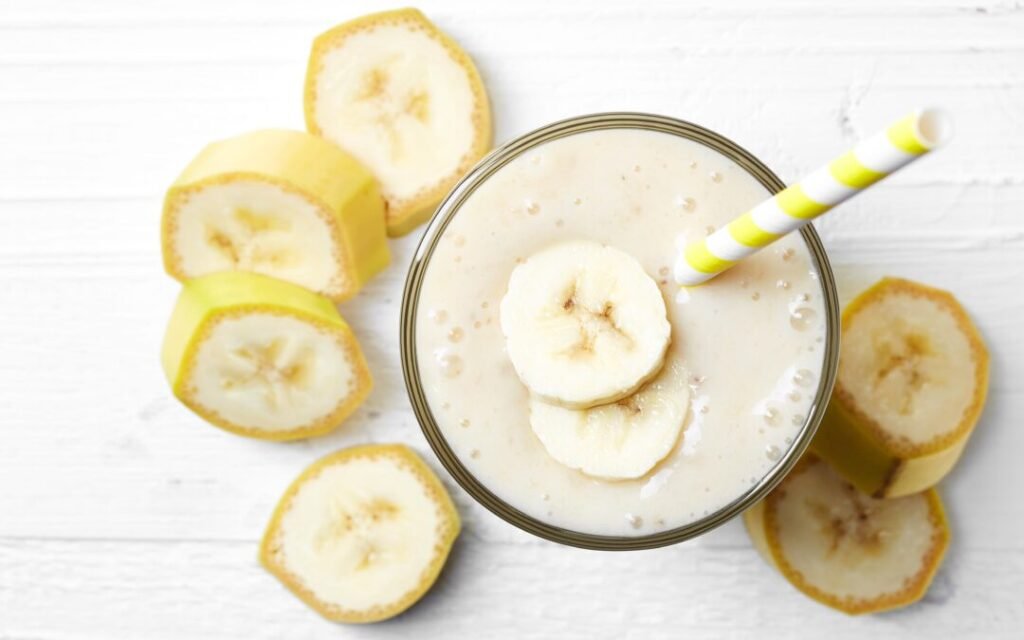
Nothing ruins a grab-and-go breakfast like opening the fridge to find last night’s smoothie turned an unappetizing brown. Here is how to keep bananas from browning in a smoothie overnight, so your make-ahead breakfast still looks and tastes fresh in the morning.
Browning is natural and harmless — but it changes the flavor slightly and makes the smoothie look spoiled. The good news: a few simple tricks at blend time and the right storage container keep an overnight banana smoothie looking creamy and tasting bright for 12 to 24 hours.
Why Bananas Turn Brown in Smoothies
Bananas brown because of enzymatic browning. When banana flesh is exposed to air, an enzyme called polyphenol oxidase reacts with oxygen and turns the fruit’s phenolic compounds brown. Blending makes it worse: the blender whips tiny air bubbles throughout the mixture, giving the enzyme far more oxygen to work with than a sliced banana on a plate ever sees.
You cannot stop this reaction completely without cooking the fruit (which would ruin the smoothie), but you can slow it dramatically. Every method below works by doing one of three things: blocking oxygen, slowing the enzyme with acid or cold, or both.
Method 1: Add Citrus or Acid at Blend Time (Most Effective)
Acid is the single best browning fighter. Polyphenol oxidase works fastest at a neutral pH; dropping the pH with citrus juice slows the enzyme to a crawl. You only need a little:
- Lemon juice: 1 teaspoon per banana. The most effective option, though it adds a noticeable tang in plain banana smoothies. In smoothies with berries, mango, or pineapple, you will not taste it at all.
- Lime juice: same amount as lemon, with a slightly different flavor profile that pairs well with tropical smoothies.
- Orange juice: use 2–3 tablespoons as part of your liquid base. Milder acid, milder protection, but it blends invisibly into almost any smoothie.
- Pineapple juice or chunks: naturally acidic and adds sweetness; a quarter cup of pineapple does double duty as flavor and preservative.
Add the acid to the blender with the banana, not after. The goal is to coat the banana particles in acid the instant they are exposed to air. Blending the citrus in distributes it evenly through the whole mixture, which is far more effective than stirring it in later.
Method 2: Use Frozen Banana Instead of Fresh
Frozen banana is the overnight-smoothie maker’s best friend, for two reasons. First, cold temperatures slow enzymatic browning dramatically — a smoothie that starts near freezing browns far more slowly than a room-temperature one. Second, frozen banana makes the smoothie thicker and creamier, so you need less ice and get better texture after a night in the fridge.
To freeze bananas for smoothies: peel ripe bananas, slice into 1-inch coins, spread on a parchment-lined tray, freeze until solid (about 2 hours), then transfer to a freezer bag. Pre-sliced coins blend easily without thawing and portion perfectly — about half a cup of coins equals one banana. Label the bag with the number of bananas inside so you can grab exactly what a recipe needs without counting coins at 6 a.m.
Use bananas at peak ripeness for freezing: yellow with a few brown speckles. Overripe bananas are sweeter but their enzymes are already highly active, so they brown faster even when frozen. Underripe bananas freeze fine but taste starchy and bland.
Method 3: Store It Airtight With Zero Headspace
Oxygen is the other half of the browning equation, so storage technique matters as much as ingredients:
- Fill the container to the very top. Less air in the jar means less oxygen reacting with the smoothie. Use a jar sized to your portion — a pint jar for a pint of smoothie, not a quart jar half full.
- Press plastic wrap directly on the surface. Before sealing the lid, lay a piece of plastic wrap right against the smoothie surface to block air contact. This old restaurant trick works remarkably well.
- Use a jar with a tight seal. Mason jars with two-piece lids or quality flip-top bottles beat loosely covered glasses or shaker cups.
- Refrigerate immediately. Do not leave the smoothie on the counter while you clean up. Cold slows the enzyme; every minute at room temperature costs you freshness hours later.
A smoothie stored this way — with acid, in a full airtight jar, refrigerated immediately — easily stays fresh-looking for 12 hours and usually 24. The same airtight principles work for other produce too; for example, the storage tricks in how to keep lettuce fresh for a week rely on the same idea of controlling air and moisture. If you regularly meal-prep breakfasts, keep a dedicated set of pint-size mason jars just for smoothies — having the right-size container on hand removes the temptation to use whatever oversized jar is closest.
Method 4: Add Ingredients That Mask or Slow Browning
Some smoothie ingredients naturally fight or hide browning:
- Yogurt or kefir: mildly acidic (helps slow the enzyme) and their creamy white color lightens the overall mixture, making any slight browning far less visible.
- Vitamin C powder or a crushed vitamin C tablet: ascorbic acid is a powerful antioxidant that directly interrupts browning. A quarter teaspoon of pure ascorbic acid powder per blender batch is tasteless and extremely effective — a favorite trick of serious meal preppers.
- Dark berries: blueberries, blackberries, and açai give the smoothie a deep purple color that completely hides any browning. If appearance is your main concern, a berry-banana smoothie is the easiest win.
- Cocoa or cacao powder: a tablespoon turns the smoothie chocolate-brown on purpose, making enzymatic browning invisible while adding rich flavor.
- Honey: contains small amounts of compounds that mildly inhibit browning enzymes, plus it sweetens. Not a standalone solution, but a nice supporting player.
The Best Overnight Banana Smoothie Formula
Combine the methods for a smoothie that genuinely tastes freshly blended in the morning:
- Blend 1 frozen banana (sliced coins) with 1 teaspoon lemon juice or 2 tablespoons orange juice
- Add your other fruits, greens, protein powder, or nut butter
- Add liquid and blend until completely smooth — under-blended chunks brown faster
- Pour into a jar filled to the brim, press plastic wrap on the surface, seal tightly
- Refrigerate immediately, and drink within 24 hours for best quality
In the morning, give the jar a hard shake. Some separation is normal overnight — it is just fiber and liquid settling, not spoilage. If the smoothie thickened too much, stir in a splash of milk or water. Taste before adding sweetener; overnight rest actually mellows flavors and the banana tastes sweeter. If you prepped the smoothie in a mason jar, you can drink straight from it — one less dish to wash on a busy morning.
Mistakes That Guarantee a Brown Smoothie
Using overripe, already-browning bananas
A banana that is brown going into the blender will only get browner. Those nearly-black bananas are perfect for banana bread, not for overnight smoothies. Use yellow bananas with light speckling for the best color and flavor.
Blending warm ingredients
A smoothie blended with room-temperature banana, room-temperature milk, and no ice starts warm — and warm means fast browning. At least one component should be frozen (banana, berries, or a handful of ice) to bring the starting temperature down.
Storing in a half-empty container
A smoothie in a container that is half air is a smoothie marinating in oxygen all night. Size the container to the portion. This is the most common mistake and the easiest to fix.
Adding the acid after blending
Stirring lemon juice into an already-blended smoothie helps a little, but the browning reaction starts the instant the banana hits the air in the blender. The acid needs to be in the blender from the first second to protect every particle as it is exposed.
Keeping it longer than 24 hours
Even with every trick, a banana smoothie degrades after about a day: texture thins, flavors flatten, and browning creeps in. For meal prep, blend a fresh batch every evening rather than making two or three days’ worth at once. If you batch-prep breakfasts for the week, overnight oats with banana added fresh in the morning is a better multi-day option — and getting kids on board with healthy breakfasts is easier than you think, as these tips for getting kids to eat vegetables without a fight show about building healthy eating habits generally.
Is a Brown Smoothie Still Safe to Drink?
Yes. Enzymatic browning is a cosmetic and flavor issue, not a safety issue. A brown banana smoothie that smells normal and has been refrigerated continuously is perfectly safe within 24 hours. Trust your nose over your eyes: sour, fizzy, or off smells mean fermentation or spoilage — discard it. But plain brown color with a normal smell just means the enzymes did their thing, and it is fine to drink (though the flavor may be slightly flatter).
Frequently Asked Questions
How long does a banana smoothie last in the fridge?
Up to 24 hours when stored properly — with added acid, in an airtight container filled to the top, refrigerated immediately. For the best taste and texture, drink it within 12 hours. After 24 hours, separation and flavor loss become noticeable even if it is still safe.
Does lemon juice really stop bananas from browning in smoothies?
It significantly slows browning by lowering the pH, which inhibits the polyphenol oxidase enzyme responsible for the color change. One teaspoon per banana, blended in from the start, is enough. In fruit-heavy smoothies you will not taste it.
Can I make a banana smoothie the night before without it browning?
Yes. Blend with frozen banana and a teaspoon of lemon juice or orange juice, pour into a jar filled to the brim, press plastic wrap on the surface, seal, and refrigerate immediately. It will look and taste fresh in the morning.
Why did my overnight smoothie separate?
Separation is normal and harmless — fiber, fruit solids, and liquid settle at different rates overnight. A hard shake in the morning recombines everything. Thicker smoothies (with frozen banana, yogurt, or nut butter) separate less than thin, watery ones.
Is it better to use fresh or frozen banana for overnight smoothies?
Frozen banana is better for overnight smoothies. The cold slows browning enzymes, it creates a thicker creamier texture that holds up in the fridge, and pre-sliced frozen coins portion easily. Freeze ripe (yellow with light speckles) bananas for the best results.
Can I freeze a blended smoothie instead of refrigerating it?
You can, and it keeps for up to a month. Freeze in a jar with an inch of headspace (liquid expands), then thaw overnight in the fridge and shake well. The texture will be slightly thinner than fresh-blended, but the color stays good because freezing halts browning almost entirely.










1 thought on “How to Keep Bananas From Browning in a Smoothie Overnight”
Comments are closed.