

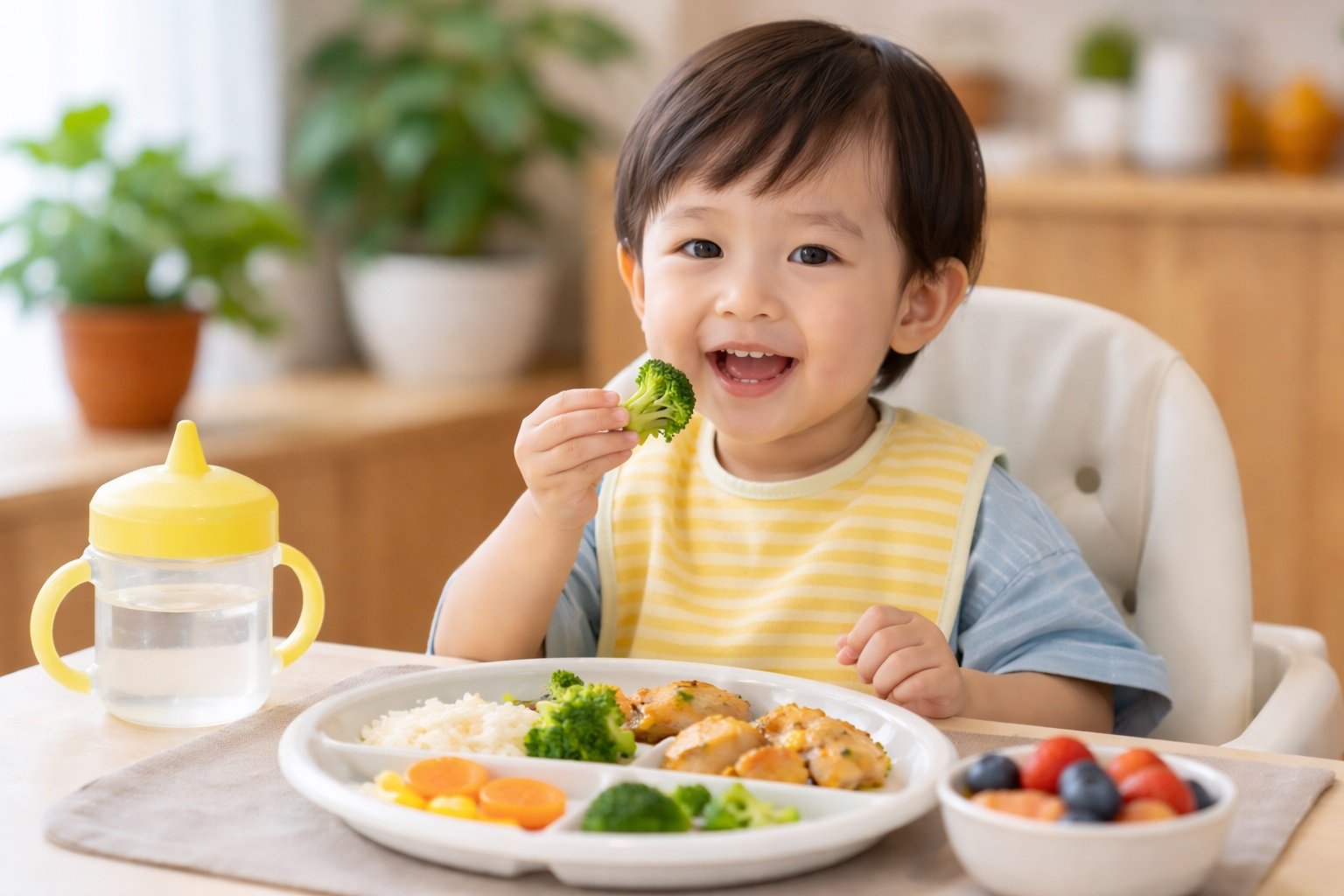
Dinner is on the table, you have put real effort into a balanced meal, and your child has pushed the vegetables to the very edge of the plate like they are radioactive. If you are searching for how to get kids to eat vegetables without a fight, you are far from alone — nearly every parent hits this stage. The good news is that vegetable resistance is almost always a normal phase, not a failure, and it responds beautifully to the right approach. No force, no bribes, no tears. Just smart, pressure-free strategies that actually change what lands in your child’s mouth over time.
Why Kids Resist Vegetables in the First Place
Before you can fix the problem, it helps to understand that your child is not being difficult on purpose. Several very real forces are working against those veggies.
Biology Is Stacked Against Them
Children taste bitterness more intensely than adults do. Many vegetables — especially cruciferous ones like broccoli, cauliflower, kale, and Brussels sprouts — contain bitter compounds that genuinely taste stronger to a young palate. Evolution wired kids to reject bitter flavors because, in the wild, bitterness can signal toxicity. Your child’s refusal is an ancient survival instinct doing its job, not defiance.
Food Neophobia Is Normal
Around the toddler and preschool years, most children go through food neophobia — a natural suspicion of new foods. One day your baby ate pureed peas happily, and the next your two-year-old acts like a pea is a personal insult. This is developmental, predictable, and temporary. Children in this stage need far more exposure to a new food than parents expect before they accept it.
The Power Struggle Is the Real Enemy
Here is the uncomfortable truth: the more pressure you apply, the less vegetables your child eats. Studies on feeding behavior consistently show that pressuring, forcing, or bribing kids with dessert creates negative associations with the very foods you are promoting. The dinner table turns into a battleground, and your child learns to dislike vegetables on principle — because eating them now feels like surrendering control.
The Right Mindset: Your Job vs. Their Job
One of the most liberating ideas in feeding research is the division of responsibility: your job is to decide what, when, and where food is served. Your child’s job is to decide whether and how much to eat. That is it. When you stay in your lane, pressure leaves the table.
This means no bribes (“eat your broccoli and you can have ice cream”), no threats (“no dessert until those peas are gone”), and no force. Bribing teaches your child that vegetables are the punishment you endure to earn the real prize — dessert. Threats teach them that mealtimes are unsafe. Both backfire over the long run, even if they produce one clean plate tonight.
Accepting that your child might eat zero vegetables on a given night takes practice, but it is the single fastest way to end the fighting. When dinner stops being a negotiation, your child can finally relax enough to get curious about food again.
15 Proven Strategies That Actually Work
1. Use the 10-15 Exposure Rule
Research shows that children may need to see a food 10 to 15 times — sometimes more — before they are willing to taste it, let alone like it. Most parents give up after three or four rejections, which is right before things start working. Keep putting the same vegetable on the table calmly, with no comment and no pressure. Exposure counts even when your child just looks at it, touches it, or licks it. Every uneventful appearance normalizes the food.
2. Roast Instead of Steam
Cooking method changes everything. Steaming preserves nutrients but often leaves vegetables soft, sulfurous, and bland — exactly what kids hate. Roasting at high heat caramelizes the natural sugars in vegetables, making them sweeter, crispier, and far more appealing. Roasted carrots, sweet potato wedges, and crispy cauliflower florets taste like entirely different foods compared to their steamed versions. A little olive oil and salt at around 425 degrees works wonders.
3. Serve Family-Style Meals
When you plate your child’s food for them, the vegetable feels like a sentence. When everyone serves themselves from shared bowls in the center of the table, vegetables become just another option — equal in status to everything else. Kids who choose their own portions eat more vegetables and complain less. It also removes you from the role of food enforcer and puts control back where it belongs: with your child.
4. Let Kids Help With Shopping, Cooking, and Gardening
Children are dramatically more willing to eat food they helped choose or prepare. Take them to the market and let them pick one vegetable for the week. Let them wash the greens, tear lettuce, stir the pan, or press the button on the blender. Even a small container garden or a single tomato plant on a balcony gives a child ownership of food in a way no lecture can. Just like learning any new life skill, teaching new habits with patience, as with tying shoes, works best when kids practice hands-on rather than being told what to do.
5. Make Vegetables Fun — Without Gimmicks
There is a line between playful and desperate. Arrange veggies into a rainbow plate, cut them into fun shapes, or serve a “color challenge” where kids try to eat something red, orange, and green. But skip the heavy disguises: if you always hide vegetables under cheese or shaped into cartoon characters, your child never learns to accept the actual food. Fun should invite tasting, not trick the tongue.
6. Put Dips on the Table
Dips are the single easiest upgrade for vegetable acceptance. Hummus, guacamole, ranch-style yogurt dip, peanut butter for celery and apples — dipping gives kids control, adds flavor, and makes the whole experience interactive. Many children who refuse plain cucumber will happily eat cucumber with dip, and over time the dip becomes optional. Keep the dips reasonably healthy, but do not stress about perfection.
7. Try the Two-Bite Rule
Instead of demanding a clean plate, ask for a “taste bite.” The rule: you have to taste it, but you do not have to finish it. Often the first bite is the hardest, and the second one follows naturally. Frame it kindly — “taste it and tell me what you think” — rather than as a command. Over time, “taste bites” become genuine preferences. Never force the bite, though; forced tasting is just another pressure tactic.
8. Model the Eating You Want to See
Your child watches you more than they listen to you. Eat the same food, at the same table, with obvious enjoyment. Comment on what you like — “these roasted carrots are so sweet” — without aiming the comment at your child. If vegetables are mysteriously absent from your own plate, or you eat a separate “adult” meal, your child notices the double standard instantly.
9. Avoid the “Kids Menu” Trap
Children do not biologically require chicken nuggets, plain pasta, and fries. The “kids menu” is a cultural invention, and leaning on it shrinks your child’s palate. Serve one family meal and include at least one “safe” food alongside the vegetables so nobody goes hungry. When the same dinner lands in front of everyone, vegetables stop being a kid-specific chore and become simply what the family eats.
10. Serve Snack Plates for Lunch
A muffin-tin lunch, bento box, or simple snack plate is magic for picky eaters. Fill small compartments with a variety of vegetables, fruits, crackers, cheese, and a dip. The novelty, the small portions, and the freedom to graze remove all mealtime pressure. Many kids who reject vegetables at dinner will nibble through a snack plate while playing. Rotate the contents so vegetables keep appearing in a no-stakes context.
11. Pack Vegetables Into School Lunches Strategically
School lunches are a low-pressure opportunity: nobody is watching your child eat, so there is no audience for the battle. Include vegetables your child already tolerates, add a dip, and occasionally slip in something new. Crunchy vegetables travel best — carrot sticks, snap peas, cucumber rounds, cherry tomatoes. Do not pack a huge pile of an unfamiliar food; a small amount alongside favorites keeps it positive.
12. Find Your Calm Routine for the Hard Nights
Consistency and calm reduce power struggles far more than any single tactic. Establish a predictable mealtime rhythm — food at the same times, everyone seated together, no screens — so eating becomes routine rather than negotiation. Gentle, predictable routines defuse battles in the same way consistent bedtime routines help toddlers sleep without a fight: when children know what to expect, they stop testing boundaries and start cooperating.
13. Be Honest About What Is in the Food
Blending vegetables into sauces, smoothies, and muffins is a fine way to boost nutrition, but do it openly. Say “there are carrots in this sauce” without apology. Hiding food teaches distrust — when your child discovers the deception, they trust you less at the next meal. The goal is not to smuggle vegetables past them; it is to teach them that vegetables taste good in real dishes. Use hidden veggies as a supplement to honest exposure, never as a substitute for it.
14. Know What to Do When They Refuse Dinner
It will happen: your child eats nothing, or only the bread. Stay calm. The division of responsibility says you do not need to fix it. Do not make a separate meal — that is short-order cooking, and it teaches your child that refusal earns a better offer. You can offer one predictable backup, like plain toast or a banana, if you are worried about bedtime hunger, but serve the same dinner to everyone. Most kids self-correct at the next meal or snack. One skipped vegetable serving is not a nutritional emergency.
15. Handle Grandparents and Restaurants With Grace
Grandparents who slip cookies and restaurants with fries menus are realities, not enemies. Talk to grandparents calmly and separately — frame it as “we are working on peaceful mealtimes” rather than criticizing their love. At restaurants, order a side of vegetables without fanfare, share from your plate, or simply let one meal be imperfect. A single restaurant dinner will not undo months of calm, pressure-free eating at home. Save your energy for the 95 percent of meals you control.
When to Consider Sensory Sensitivities
For most kids, vegetable refusal is a phase that responds to the strategies above. But if your child gags, vomits, or shows extreme distress at certain textures, temperatures, or food groups — not just vegetables, but many foods — or if their accepted foods keep shrinking over time, trust your instincts. Severe sensory aversions, extreme rigidity around food, or weight and growth concerns are signs to talk to your pediatrician and possibly a pediatric feeding therapist. Getting professional help early is a sign of good parenting, not failure.
Mistakes to Avoid
- Pressuring and forcing: “just one more bite,” hovering, or physically pushing food toward your child. Pressure is the number one driver of long-term vegetable refusal.
- Short-order cooking: preparing a separate meal when your child rejects dinner. It rewards refusal and guarantees the cycle continues.
- Dessert as a reward: “finish your vegetables and you get dessert.” This makes vegetables the punishment and dessert the prize, permanently ranking veggies last.
- Hiding everything: if every vegetable is disguised, your child never learns to accept visible vegetables — and discovering the trick destroys trust.
- Labeling your child: calling them “picky” in front of them, even jokingly. Children live up to the labels they hear; “you are a picky eater” becomes a self-fulfilling identity.
- Giving up too soon: dropping a vegetable after three rejections. Remember the 10 to 15 exposure rule — most parents quit right before the breakthrough.
- Restricting treats harshly: completely banning sweets often makes children fixate on them more. Neutral, moderate treatment of all foods keeps vegetables from becoming the “enemy.”
Frequently Asked Questions
How many times should I offer a vegetable before giving up?
Plan for 10 to 15 calm exposures — sometimes more — before deciding a child truly dislikes a food. Exposures do not need to involve tasting; seeing, touching, or helping prepare the vegetable all count. Most parents quit after a handful of rejections, which is usually right before acceptance begins.
Should I make my child sit at the table until they eat their vegetables?
No. Forcing a child to sit with food they must eat turns dinner into a punishment and deepens the power struggle. Serve one family meal, let them choose what to eat from it, and let them leave the table when done. A calm, brief mealtime beats a long, miserable one every time.
Is it okay to hide vegetables in my child’s food?
It is fine as a nutrition boost, but do it openly rather than secretly. Tell your child the vegetables are there, and keep serving visible vegetables alongside hidden ones. The long-term goal is a child who knowingly eats vegetables, not one who has been tricked into it.
What if my child eats no vegetables at all?
First, do not panic — fruit still delivers many of the same vitamins, fiber, and phytonutrients. Keep offering vegetables without pressure, and consider the gentler entry points: dips, roasted vegetables, snack plates, and vegetables mixed openly into familiar dishes. If refusal is extreme or spreading to many food groups, talk to your pediatrician.
Should dessert be withheld until vegetables are eaten?
No. Using dessert as a reward teaches children that vegetables are the chore and dessert is the real food, which lowers vegetable intake over time. Serve a small dessert with the meal or after it, regardless of what was eaten. Counterintuitively, children who are not bribed with dessert eat more vegetables.
Do vitamin supplements replace vegetables?
Supplements can fill specific gaps, but they do not teach eating habits, provide fiber, or train the palate. They are a safety net, not a solution. Keep working on pressure-free exposure while using supplements only as your pediatrician recommends — never as an excuse to stop serving real vegetables.