There is nothing quite as frustrating as slicing fresh strawberries on a board that still smells of last night’s garlic. If you want to know how to stop a cutting board smelling like onion and garlic, the answer is a mix of cleaning it properly right after use, deodorizing it when a smell has already settled in, and caring for the board so odors cannot sink deep into the material. The method differs slightly for wood and plastic, but the principle is the same: odor lives in residue and moisture, so remove both and the smell goes with them.
It helps to understand why the smell lingers. Onions and garlic contain strong sulfur compounds that cling to surfaces and soak into tiny cuts, scratches, and pores. Wood is porous, so an unsealed or dry board absorbs these compounds deep into its fibers. Plastic is less porous, but knife scars create grooves where juices collect and dry. A quick rinse under the tap moves the visible mess but leaves the compounds behind in those grooves, which is why the board can smell clean when wet and still smell of onion when dry.
Clean It Properly Right After Use
The single most effective habit is cleaning the board promptly, before juices dry. Scrape off food scraps with a bench scraper or the back of a knife, then wash the board with hot water and dish soap, scrubbing along the grain on wood or in circles on plastic. Pay attention to the knife grooves, where residue hides. A stiff brush or a non-scratch scouring pad reaches into grooves better than a soft sponge.
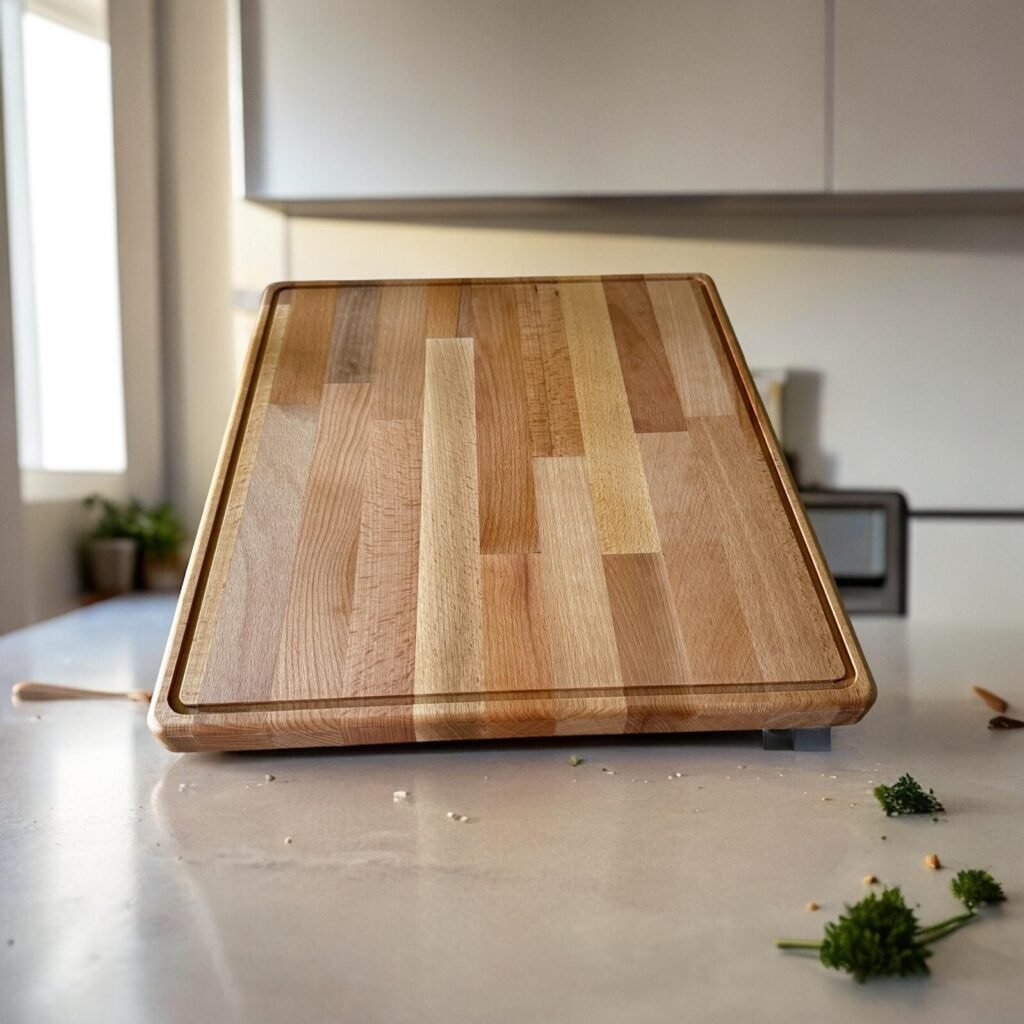
Rinse well and dry the board upright, not flat on a counter. A board left lying wet traps moisture underneath, which keeps odors alive and, on wood, encourages warping and cracking. Stand it on its edge in a dish rack or lean it against a wall where air can reach both faces. A board that dries quickly smells fresher and lasts longer.
One common mistake is soaking a wooden board in the sink. Wood swells when soaked, the joints can loosen, and the board absorbs more odor, not less. A wooden board should be washed and dried promptly, never left submerged. Plastic boards can be soaked briefly if needed, but even they benefit from a prompt wash. If you need a reminder of why prompt cleaning matters elsewhere in the kitchen, the same principle applies to getting rid of fruit flies in the kitchen without apple cider vinegar, where removing the food source promptly beats any trap.
Deodorize With Lemon and Salt
When a smell has already settled in, lemon and salt are the classic fix, and they work for a reason. Cut a lemon in half, sprinkle coarse salt generously over the board, and rub the cut side of the lemon over the salted surface. The salt acts as a gentle abrasive that lifts residue from knife grooves, and the lemon juice is acidic enough to break down sulfur compounds while leaving a fresh scent behind.
Let the lemon and salt sit on the board for five to ten minutes, then scrape off the paste and rinse with hot water. For a stubborn smell, repeat the process or leave the lemon halves face down on the worst spots for a little longer. This method is safe for both wood and plastic, and it will not damage the surface the way harsh chemicals can.
Baking soda is another reliable deodorizer. Make a thick paste of baking soda and a little water, spread it over the board, and leave it for ten to fifteen minutes before scrubbing and rinsing. Baking soda neutralizes acids and absorbs odors rather than covering them up. For plastic boards with deep grooves, a baking soda paste worked into the scars with a brush is particularly effective.
White vinegar can help too, but use it with care on wood. A quick wipe with undiluted white vinegar, left for a few minutes and then rinsed, cuts through onion and garlic residue well. Do not soak wood in vinegar, and always rinse thoroughly, because lingering vinegar can dry the wood and leave its own sharp smell.
Use Sunlight and Fresh Air
Sunlight is an underused tool for deodorizing a cutting board. Ultraviolet light and fresh air break down odor compounds and dry the board thoroughly. On a dry day, stand the board outside in direct sun for an hour or two after washing. Many cooks find that a board which still smelled faintly of garlic after washing comes back from the sun smelling neutral.
This works best as a finishing step after cleaning, not as a substitute for it. Sun will not remove dried food residue, and leaving a board out in rain or intense heat for days can crack or warp it. A short spell in the sun, followed by bringing the board back inside, is the right balance. Indoors, storing the board upright in a well-ventilated spot, rather than flat in a damp cupboard, gives the same drying benefit day to day.
Seal and Maintain a Wooden Board
Long-term odor prevention for a wooden board comes down to sealing it. A board that is regularly treated with food-grade mineral oil absorbs far less juice, because the oil fills the pores that would otherwise soak up onion and garlic. Apply a generous coat of mineral oil, let it soak in overnight, wipe off the excess, and repeat until the wood stops absorbing. Most boards need this treatment every few weeks with regular use, or whenever the surface starts to look dry and pale.
After oiling, a board butter made from mineral oil and beeswax adds a slightly tougher surface layer. Warm a small amount, rub it in, and buff off the excess. This is not a permanent seal, and it needs reapplying, but it makes the board much easier to clean and much less likely to hold smells.
Never use cooking oils, such as olive or vegetable oil, to treat a board. Cooking oils go rancid over time and add their own stale smell to the board, which defeats the purpose. Only food-grade mineral oil, which does not go rancid, or a purpose-made board oil should be used. This is one of those small details that makes a real difference over months of use.
For plastic boards, there is no oiling step, but there is a replacement rule. Once a plastic board is so deeply scarred that scrubbing cannot reach the bottom of the grooves, no amount of deodorizing will fully refresh it. At that point the board is not just smelly, it is also harder to sanitize, and replacing it is the sensible choice. A good plastic board is inexpensive, and replacing a worn one is cheaper than the food waste from tainted flavors.
Prevent the Smell in the First Place
The easiest prevention is to keep strong-smelling prep separate. If you have more than one board, use one for onions, garlic, and other pungent foods, and another for bread, fruit, and delicate items. This is also good food hygiene, since it reduces cross-contamination between raw and ready-to-eat foods. Even a thin, flexible cutting mat used only for onions and garlic can protect your main board.
If you only have one board, wash it between tasks. A quick hot, soapy wash after onions and before fruit takes less than a minute and prevents the flavor transfer that ruins a fruit salad or a sandwich. It is tempting to skip this when you are in a hurry, but it is exactly the step that saves you from a board that smells for days.
Chopping technique helps too. A sharp knife crushes fewer onion and garlic cells than a dull one, which means less juice released onto the board. Keeping your knife sharp is good for the board as well, since clean cuts create shallower grooves than the tearing action of a blunt blade. The same attention to basics that produces perfect hard-boiled eggs with no green ring applies here: a small technique detail, done consistently, gives a noticeably better result.
Mistakes That Keep the Smell Coming Back
The biggest mistake is relying on scented sprays or dish soap with a strong fragrance to mask the odor. These products cover the smell while the board is wet and leave it untouched underneath, so the onion smell returns as soon as the board dries. Deodorizing means removing or neutralizing the compounds, not perfuming over them.
Another mistake is putting a wooden board in the dishwasher. The long, hot, wet cycle warps wood, cracks it, and opens up new pores for odors to enter. Even plastic boards can warp in a dishwasher over time, though most are labeled dishwasher safe. Hand washing is gentler and gives you the chance to scrub the grooves properly.
Storing a board flat against a damp surface, or stacked wet with other boards, is another odor trap. Boards stored this way never dry fully, and the trapped moisture keeps smells alive and can encourage mold in the grooves. Always store boards upright and dry.
Finally, do not ignore the edges and the handle area of a board. Juices run to the edges during chopping, and the junction between a handle and the board can collect residue. When you deodorize, treat the whole board, edges included, not just the center where you chop.
When to Replace a Board
Some boards reach the end of their useful life, and no cleaning method will save them. Replace a wooden board if it has deep cracks, a split, a loose joint, or a smell that survives repeated lemon, salt, and baking soda treatments followed by oiling. Replace a plastic board if the grooves are so deep that food residue stays visible after scrubbing, or if the surface has warped so it rocks on the counter. A board that cannot be cleaned properly is a hygiene problem, not just a smell problem, and fresh boards are a small price for food that tastes as it should.
For most boards, though, the routine in this guide is enough. Wash promptly, dry upright, deodorize with lemon and salt or baking soda when needed, and keep wood sealed with mineral oil. A board treated this way will stay neutral-smelling for years, and the next time you chop garlic, you will not still be tasting it in tomorrow’s fruit.
FAQ
Why does my cutting board still smell after washing?
Onion and garlic compounds soak into knife grooves and wood pores, where a quick wash cannot reach them. Scrubbing the grooves and using a deodorizer like lemon and salt or baking soda removes the compounds instead of just rinsing the surface.
Is lemon and salt safe for wooden cutting boards?
Yes. Lemon juice and coarse salt are gentle enough for wood when rinsed off after a few minutes. Do not leave lemon on the board for hours, and re-oil the board afterwards if the surface looks dry.
Can I use bleach to remove cutting board smell?
Bleach sanitizes but is not the best deodorizer, and it can damage wood and leave its own chemical smell. Lemon, salt, and baking soda remove onion and garlic odors more effectively and are safer for food-contact surfaces.
How do I stop a board smelling between uses?
Wash it promptly after chopping strong foods, dry it upright, and use a separate board or mat for onions and garlic. Keeping wood sealed with mineral oil also stops juices from soaking in.
Does sunlight really help deodorize a cutting board?
Yes, a short spell in direct sun after washing helps break down odor compounds and dries the board thoroughly. Use it as a finishing step after cleaning, not as a replacement for washing.
How often should I oil a wooden cutting board?
Oil it whenever the surface looks dry or pale, typically every few weeks with regular use. A well-oiled board absorbs less juice, which means less odor and easier cleaning.