
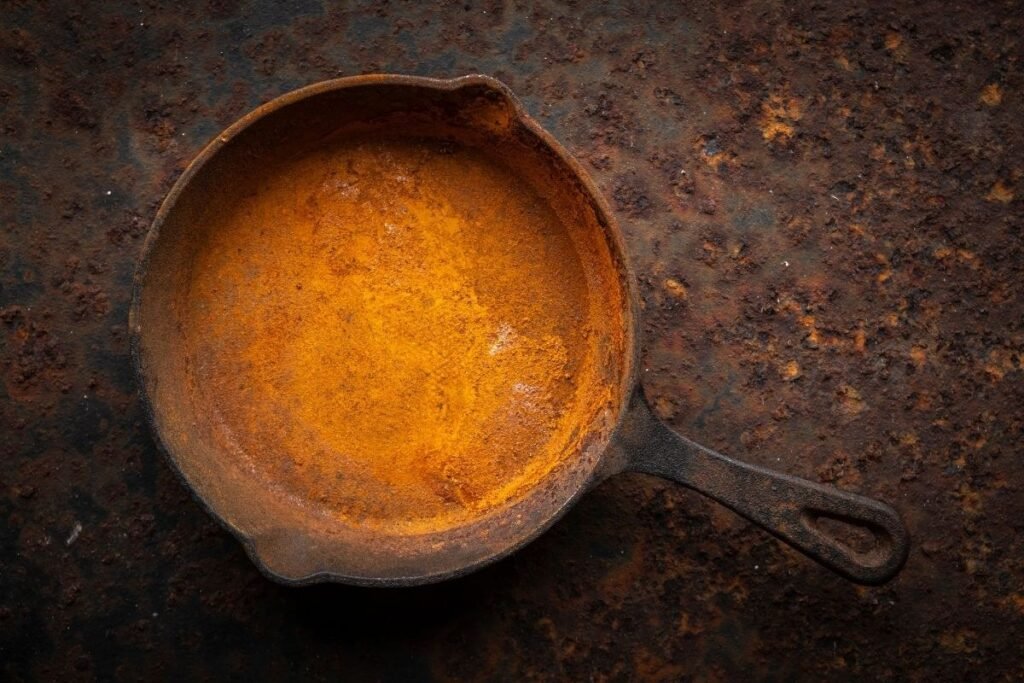
Learning how to remove rust from a cast iron skillet without damaging the seasoning is easier than most people think, and a rusty pan is almost never ruined. Cast iron is remarkably forgiving. Rust forms when bare iron meets moisture and air, usually after a pan sits damp in a sink, lives in a humid cabinet, or goes through a dishwasher. The good news is that surface rust can be removed with gentle methods that leave the good seasoning underneath intact, and even a heavily rusted pan can usually be brought back to life. This guide shows you how to judge how bad the rust is, clean it safely, and re-season the pan so it cooks beautifully again.
Before you start, it helps to understand what seasoning actually is. Seasoning is a thin layer of oil that has bonded to the iron through heat, forming a hard, slick coating. It protects the pan from moisture and gives it nonstick qualities. Light surface rust sits on top of this layer or in small bare spots. Heavy, flaky rust may mean the seasoning in that area is already gone. The cleaning method you choose should match the damage: gentle for light rust, stronger for serious rust. Starting gentle is always the right move, because you can repeat a mild treatment, but you cannot undo an overly harsh one.
First, Judge How Bad the Rust Is
Look at the pan in good light and run your fingers lightly over the rusty areas. Light surface rust looks like a faint orange dust or a few small speckles. The cooking surface underneath still feels fairly smooth, and the rest of the pan’s seasoning looks dark and intact. This kind of rust is the most common, and it usually comes from a pan that was put away slightly damp or left on a drying rack overnight.
Moderate rust covers larger patches, feels rough or bumpy, and may show orange staining when you wipe it with a dry cloth. The seasoning in those patches is damaged, but the surrounding seasoning may still be healthy. Heavy rust is different: thick, flaky, or crusty layers, sometimes with pitting in the iron underneath. A pan with heavy rust has usually been neglected for a long time, stored outdoors, or soaked for hours. Heavy rust needs a full restoration, which means stripping and re-seasoning the whole pan. That is still very doable, but it is a bigger job than the gentle spot treatment described below.
Check the whole pan, not just the cooking surface. Rust often hides on the outside bottom, around the handle joint, and on the rim. Also check for cracks. A cracked pan, especially a crack through the cooking surface or handle, is not safe to restore for cooking, no matter how good the rest of it looks. If the pan is only rusty, though, keep going. Rust alone is not a death sentence for cast iron.
What You Will Need
For light to moderate rust, gather a few simple supplies: coarse kosher salt, a neutral cooking oil such as grapeseed or canola, a non-metal scrub pad or a stiff brush, a clean cotton cloth or paper towels, white vinegar, and a potato or a halved lemon if you like the classic gentle method. Avoid steel wool for light rust. Steel wool is aggressive and will strip healthy seasoning along with the rust. Save stronger abrasives for a full restoration only.
You will also need a stovetop and an oven for the re-seasoning step, plus an old towel to protect your counter. Work over a sink when possible, because rusty water stains. Wear an apron or old clothes, since rust can mark fabric. None of this requires special equipment, and the whole gentle process usually takes under an hour, plus oven time.
Step 1: Wash and Dry the Pan
Start by rinsing the pan under hot water and scrubbing lightly with a non-metal scrub pad to remove loose dust, old food, and flaky rust. A small amount of mild dish soap is fine for this cleaning stage, despite the old myth that soap ruins cast iron. Modern mild soap will not harm a well-seasoned pan, and this pan needs cleaning before you can judge the rust properly. Rinse well, then dry the pan immediately and completely. Towel-dry it first, then set it over low heat on the stovetop for a few minutes until every drop of water has evaporated. This drying step matters: leaving the pan damp now would just invite new rust.
Step 2: Scrub Gently With Salt and Oil
For light surface rust, the salt-and-oil scrub is the kindest effective method. Pour a generous handful of coarse kosher salt into the dry pan, add just enough oil to make a thick paste, and scrub in small circles with a cloth or paper towel, focusing on the rusty spots. The salt acts as a mild abrasive, and the oil keeps the surface lubricated so you are polishing rather than gouging. You will see the paste turn orange-brown as it lifts rust. Wipe it out with a clean cloth, and repeat with fresh salt and oil if orange residue remains.
For slightly more stubborn spots, try the potato method. Cut a potato in half, dip the cut side in dish soap or salt, and rub it over the rust. The mild acid in the potato helps dissolve surface rust while the flesh conforms to the pan’s shape. A halved lemon dipped in salt works similarly. Both methods are gentle enough to preserve surrounding seasoning, which is exactly what you want when the rust is only on the surface.
Work patiently and check your progress often. Wipe the area clean and look at it before scrubbing again. Stop as soon as the orange color is gone and the iron looks grey or dark again. Over-scrubbing a clean spot will wear through good seasoning for no benefit. If a spot refuses to budge after several gentle attempts, it may need the vinegar soak described below rather than harder scrubbing.
Step 3: Use a Short Vinegar Soak for Stubborn Spots
If gentle scrubbing leaves rust behind, a short vinegar soak can finish the job without stripping the whole pan. Mix equal parts white vinegar and water, and soak only the rusty area if possible. For a rusty cooking surface, you can pour the mixture into the pan and let it sit. Check the pan every hour. Light spots often clear within one to three hours. Never leave cast iron soaking in vinegar for a full day, because prolonged acid exposure will eat into the iron itself and create a rough, pitted surface that is harder to season.
After the soak, scrub the softened rust away with a non-metal pad, rinse thoroughly, and dry the pan immediately on low stovetop heat. The iron will look dull grey where the rust was removed. That is normal. Those bare patches simply need re-seasoning, which is covered below. If rust remains after a short soak and a scrub, repeat the soak once more rather than switching to a harsh abrasive. Patience protects the pan.
Step 4: Re-Season the Bare Spots
Once the rust is gone and the pan is bone dry, it is time to rebuild the protective layer. Rub a very thin coat of neutral oil over the entire cooking surface, including the spots you cleaned. The key word is thin. Wipe the oil on, then wipe it off with a clean cloth until the pan looks almost dry, with no pools or drips. Too much oil is the most common seasoning mistake, and it leaves a sticky, gummy surface instead of a smooth one.
Place the pan upside down in an oven heated to just above the oil’s smoke point, and bake it for about an hour. Let the pan cool in the oven before handling it. One coat is enough for light spot repairs, but you can repeat the thin-coat-and-bake cycle two or three times for a tougher finish. The pan will darken with each coat as the seasoning builds. A little smoke during this process is normal, so turn on the range hood or open a window.
After re-seasoning, cook something fatty in the pan as a first meal, such as fried chicken, sauteed vegetables in oil, or cornbread. Avoid highly acidic foods like tomato sauce for the first few uses while the new seasoning hardens. With regular cooking, the seasoning will keep improving on its own. A well-used skillet often ends up better than a brand-new one.
When a Full Restoration Is the Right Call
Some pans are beyond spot treatment. If rust covers most of the pan, flakes off in sheets, or sits alongside thick, gummy buildup, a full strip and re-season will give a better result than patching. Full restoration usually involves a lye bath or an oven self-clean cycle to strip old seasoning, followed by a vinegar soak and several seasoning coats. It is more work and requires care, but it can rescue pans that look hopeless.
Be honest about whether the pan is worth that effort. A common, inexpensive skillet with deep pitting and a wobbly base may not repay hours of work. A quality vintage pan or a skillet with sentimental value almost always does. Either way, the decision is about effort and value, not about rust being permanent. Cast iron does not wear out from rust alone.
How to Keep Rust From Coming Back
Preventing rust is much easier than removing it. The single most important habit is drying the pan completely after every wash. Towel-dry it, then heat it briefly on the stovetop until the water is gone. Never let a cast iron pan soak in the sink, and never put it in the dishwasher. Store it in a dry place, and if you stack pans, place a paper towel between them to absorb moisture and protect the seasoning.
After washing, a very light wipe of oil on the cooking surface adds protection, especially in a humid kitchen. You do not need to drown the pan in oil. A thin film is enough. Cook with the pan regularly, too. Regular use keeps seasoning healthy, because every fatty meal adds a little more bonded oil to the surface. A pan that sits unused in a damp garage will rust far faster than a pan used every week.
If your kitchen is very humid, a small silica packet or a dry paper towel inside the pan during storage can help. Check stored pans every month or so, and wipe away any early orange dust before it becomes a bigger problem. Catching rust early is the secret to never needing a major restoration again.
Common Mistakes to Avoid
- Scrubbing light rust with steel wool, which strips healthy seasoning along with the rust.
- Soaking in vinegar for too long, which pits the iron and creates a rough surface.
- Leaving the pan to air-dry, which invites fresh rust within hours.
- Applying thick coats of oil during seasoning, which turns sticky instead of slick.
- Putting the pan in the dishwasher or leaving it soaking in the sink.
- Cooking highly acidic foods immediately after re-seasoning, before the new layer has hardened.
- Throwing away a rusty pan that is structurally sound, when a gentle cleaning would save it.
Once your skillet is restored, put it to work. A good first test is a simple stovetop dish, and this guide to how to cook perfect rice on the stove without a rice cooker pairs well with a freshly seasoned pan for a one-pan meal. For another stovetop classic, see how to make restaurant-quality stir-fry at home without a wok, which also relies on a hot, well-seasoned cooking surface. And for a gentle first breakfast in your restored pan, try perfect hard-boiled eggs with no green ring.
FAQ
Is it safe to cook in a pan that had rust?
Yes, once the rust has been cleaned off and the pan has been washed, dried, and re-seasoned. Rust itself is iron oxide, and small traces are not a reason to discard a pan, but you should always remove visible rust and restore the seasoning before cooking, rather than cooking over a rusty surface.
Will dish soap ruin my cast iron seasoning?
No. Mild dish soap will not remove well-bonded seasoning. The old warning comes from a time when soaps were harsh lye-based products. Wash with mild soap when needed, rinse well, and dry the pan completely, and the seasoning will be fine.
How do I know if I have removed all the rust?
Wipe the cleaned area with a dry white cloth. If the cloth comes away clean, with no orange or brown transfer, the surface rust is gone. If orange residue still appears, repeat the gentle scrub or a short vinegar soak until the cloth stays clean.
Can I use olive oil for seasoning?
You can, but neutral oils with a higher smoke point, such as grapeseed, canola, or refined avocado oil, tend to produce a harder, less sticky seasoning layer. Whatever oil you choose, the thin-coat technique matters more than the exact oil.
Why is my pan sticky after seasoning?
Stickiness almost always means too much oil was left on the surface during baking. Strip the sticky layer with hot water and a scrub pad, dry the pan, and re-season with a much thinner coat, wiping the oil until the pan looks nearly dry before baking.
How often should I re-season a cast iron skillet?
There is no fixed schedule. Re-season when food starts sticking more than usual, when the surface looks dull and patchy, or after cleaning rust or heavy buildup. A pan used regularly for fatty cooking may go months without needing a dedicated seasoning session.












1 thought on “Remove Rust From a Cast Iron Skillet Without Ruining It”
Comments are closed.