
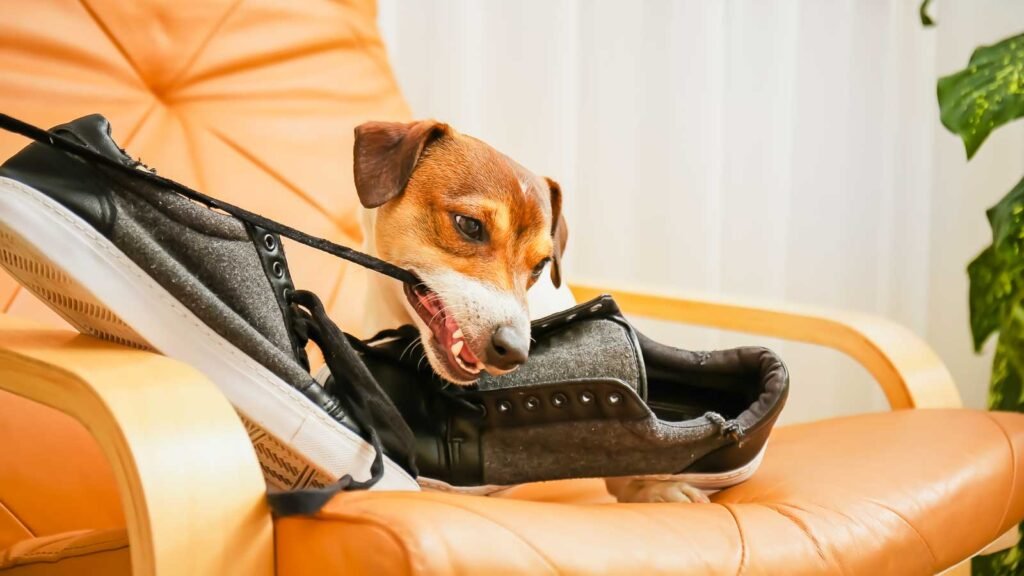
Figuring out how to stop a dog from chewing shoes without bitter spray is a common challenge for dog owners, and the good news is that bitter sprays are rarely the best solution anyway. Many dogs simply chew through the taste, lick it off, or learn to target shoes that were never sprayed. A lasting fix comes from understanding why your dog chews shoes, giving them better things to chew, and making shoes boring and hard to reach. With a consistent routine, most dogs improve noticeably within a few weeks.
This guide covers the reasons behind shoe chewing, a step-by-step training plan, safe chew alternatives, and the management habits that prevent relapse. It works for puppies and adult dogs, and it does not rely on punishment or unpleasant-tasting products.
Why Dogs Chew Shoes
Shoes are almost perfectly designed to attract a dog. They smell strongly of their owner, which is comforting, especially for a dog that feels anxious when left alone. They are soft enough to bite into but firm enough to resist, which makes them satisfying to gnaw. Laces, soles, and padded insoles give a dog different textures to explore with its mouth.
Puppies chew for additional reasons. Teething puppies chew to relieve sore gums, and young dogs explore the world with their mouths the way toddlers do with their hands. Adult dogs may chew out of boredom, excess energy, anxiety, or simply because chewing feels good and relieves stress. A dog that chews shoes when you leave the house may be dealing with separation anxiety rather than mischief. Knowing the reason matters, because the fix for a bored dog is different from the fix for an anxious one.
It also helps to know that chewing itself is a normal, healthy dog behavior. The goal is not to stop your dog from chewing altogether. The goal is to redirect that chewing onto things you approve of, while shoes become unavailable and uninteresting.
Step 1: Make Shoes Unavailable
Management comes before training. Every time your dog successfully chews a shoe, the behavior gets rewarded, because chewing feels good. The fastest way to break the habit is to remove the opportunity.
Start with a shoe routine for the whole household. Shoes go in a closed closet, on a high shelf, or inside a lidded basket the moment they come off. This is the single most effective step in the whole plan, and it needs buy-in from everyone in the home. One family member leaving sneakers by the door can undo days of progress.
Use baby gates or closed doors to block access to entryways and bedrooms where shoes tend to pile up. When you cannot supervise your dog, use a crate or a puppy-proofed room with no shoes in it. This is not punishment: it is simply preventing practice of the unwanted behavior while training takes effect.
Keep a pair of old, sacrificial shoes out of reach for training purposes only, as described below. Do not give your dog an old shoe to chew on purpose. Dogs cannot tell the difference between an old shoe you offered and a new shoe you value, so offering any shoe teaches them that shoes in general are fair game.
Step 2: Give Your Dog Better Things to Chew
A dog that has nothing satisfying to chew will find something, and shoes are often the easiest target. Stock up on a variety of approved chews and rotate them so they stay interesting.
Choose the Right Chews
Different dogs prefer different textures. Offer a mix and watch what your dog returns to. Good options include rubber chew toys that can be stuffed with food, natural rubber bones, nylon chews sized for your dog, and long-lasting edible chews such as bully sticks. For teething puppies, a rubber toy chilled in the refrigerator can soothe sore gums. Frozen stuffed toys are another excellent choice: fill a hollow rubber toy with kibble and peanut butter made for dogs, freeze it overnight, and give it to your dog when you leave the house.
Always match the chew to your dog’s size and chewing strength. A toy rated for small dogs can break apart dangerously in the mouth of a powerful chewer. Supervise your dog with any new chew until you know how they handle it, and remove pieces that break off.
Rotate Chews to Keep Them Exciting
Dogs get bored with the same toy lying around all day. Keep three or four chews in rotation: put one or two out, keep the rest in a cupboard, and swap them every few days. A toy that disappeared for a week feels new again when it returns. This simple rotation trick keeps your dog interested in approved chews instead of hunting for shoes.
Step 3: Teach the Swap Game
The swap game teaches your dog that giving up an item leads to something even better. It is the foundation of stopping shoe chewing, and it works far better than chasing your dog or scolding them.
Start with a low-value item, not a shoe. Offer your dog an approved chew, let them settle with it, then hold out a high-value treat near their nose. When they drop the chew to take the treat, say a cue word such as “drop it” or “trade,” praise them warmly, and then give the chew back. Repeating this teaches your dog that dropping things is safe and rewarding, because they get the treat and their toy back.
Once your dog reliably drops low-value items, practice with more tempting objects, and eventually with a shoe under controlled conditions. Set up a training session: place a shoe on the floor while your dog is on a leash, and the moment they sniff or mouth it, redirect them to an approved chew and reward them for choosing the chew. If they grab the shoe, stay calm, offer the trade, and praise the drop. Never chase your dog to retrieve a shoe, because chasing turns the whole thing into an exciting game and teaches your dog to grab shoes and run.
Practice in short sessions of five minutes, a few times a day. Dogs learn best from frequent, low-pressure repetitions, not from one long frustrated session.
Step 4: Tire Out the Chewer
A tired dog is much less likely to chew destructively. Many shoe-chewing problems shrink dramatically once a dog gets enough physical exercise and mental stimulation each day.
Physical exercise needs vary by breed and age, but most adult dogs benefit from at least one good walk plus a play session daily. Puppies need shorter, more frequent bursts of play rather than one long outing. Fetch, tug with rules, and off-leash play in a safe area all burn energy effectively.
Mental stimulation is just as important and often overlooked. A dog that is physically tired but mentally bored will still chew. Food puzzles, snuffle mats, scatter feeding, and short training sessions all tire a dog’s brain. Teach a new trick once a week, hide treats around a room for a scent game, or feed part of a meal from a puzzle feeder instead of a bowl. Ten minutes of nose work can tire a dog as much as a much longer walk.
Pay special attention to the times your dog usually chews shoes. If the damage happens right after you leave for work, give your dog a frozen stuffed toy and a puzzle feeder just before you walk out the door. If it happens in the evening, add a play session before dinner. Matching the enrichment to the problem time prevents the chewing before it starts.
Step 5: Handle Separation Anxiety Chewing
If your dog only chews shoes when left alone, and also shows other signs such as pacing, whining, barking, drooling, or toileting indoors despite being house-trained, separation anxiety may be the real cause. In that case, chew training alone will not fix the problem, because the chewing is a symptom of distress.
Start by making departures boring and arrivals calm. Pick up your keys, put on your shoes, and sit down again several times a day without leaving, so those cues stop triggering panic. Practice very short absences: step outside for a few seconds, return before your dog panics, and gradually build up the time. Leave a worn item of clothing that smells like you in your dog’s resting area, and consider calming background sound such as talk radio or a white noise machine.
Do not punish a dog for anxiety-driven chewing after the fact. The dog will not connect your anger with a shoe chewed hours earlier, and punishment only adds to their stress. If the anxiety is severe, talk to your veterinarian or a certified dog behavior specialist. Some dogs need a structured desensitization plan or short-term support to learn that being alone is safe.
What to Do in the Moment
When you catch your dog chewing a shoe, stay calm and quiet. Walk over without rushing, offer a high-value trade, and praise the drop. Then redirect to an approved chew and praise the chewing of that item. This sequence teaches two lessons at once: shoes get traded away, and approved chews earn praise and attention.
Avoid the common mistakes that make shoe chewing worse. Do not yell, clap loudly, or spray water at your dog: startling a dog may stop the chewing for a second, but it does not teach them what to chew instead, and it can damage trust. Do not punish a dog for a shoe you discovered chewed after the fact. Do not chase your dog to get a shoe back. And do not assume one good week means the habit is gone: keep shoes put away and chews available for several months while the new habit becomes solid.
A Simple Daily Routine That Prevents Shoe Chewing
Putting the pieces together, a prevention routine might look like this. In the morning, give your dog a walk and a puzzle feeder before you leave, and put out a frozen stuffed toy as you go. Keep all shoes behind closed doors all day. In the evening, add a play session and a short training game, then rotate in a fresh chew. Before bed, do a quick shoe check: every pair off the floor and out of reach.
Families with children need one extra rule: kids’ shoes go in the same closed storage as adult shoes. Children often kick shoes off wherever they land, so a shoe basket with a lid by the door, used by everyone, is worth the small effort. For more puppy-specific guidance, our guide on how to stop a puppy from biting shoes and clothes for good covers teething-age strategies in detail, and if you are bringing a second dog into the home, see how to introduce a puppy to an older dog without fights for a calm first meeting.
FAQ
How long does it take to stop a dog chewing shoes?
Most dogs show clear improvement within two to four weeks of consistent management, chew rotation, and swap training. Puppies may take longer because teething lasts for months. Keep shoes out of reach for several months after the chewing stops to make sure the new habit sticks.
Why does my dog only chew my shoes and not other people’s?
Your shoes carry the strongest scent of the person your dog is most attached to, which makes them comforting to chew, especially when you are away. Dogs also learn from success: if your shoes were the first ones they chewed, they may simply prefer them.
Should I give my dog an old shoe to chew instead?
No. Dogs cannot distinguish between old shoes and new ones. Giving them any shoe teaches them that shoes are acceptable chew toys, which makes the problem much harder to fix.
Is bitter spray harmful to dogs?
Bitter sprays are generally marketed as safe, but many dogs ignore the taste, and some dogs chew the sprayed item anyway or develop an aversion to the sprayed area rather than learning to chew approved items. Training and management address the cause, while spray only masks the symptom.
What if my dog swallows part of a shoe?
Small pieces of fabric or laces often pass through, but larger pieces, insoles, or hard parts can cause blockages. Watch for vomiting, loss of appetite, lethargy, or straining to pass stool, and contact your veterinarian promptly if you see any of these signs.
Does crate training help with shoe chewing?
Yes, when used correctly. A crate prevents unsupervised chewing while you are away and gives your dog a safe resting space. Keep crate sessions reasonable, never use the crate as punishment, and combine it with chew training so your dog learns what to chew when they are out of the crate too.













1 thought on “How to Stop a Dog From Chewing Shoes Without Bitter Spray”
Comments are closed.