
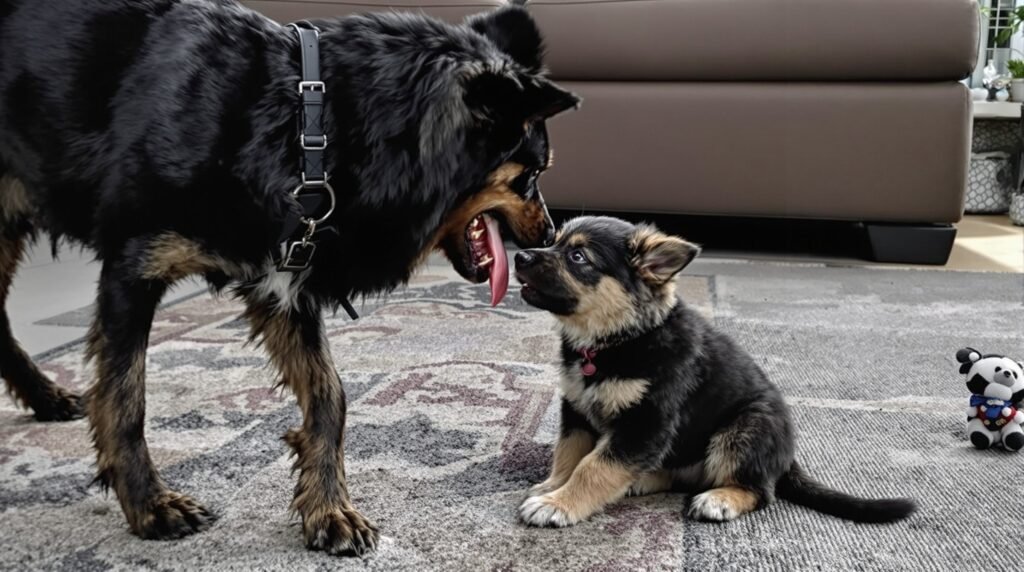
Bringing home a new puppy is exciting, but the first meeting with your older dog can decide whether the two become friends or rivals. Learning how to introduce a new puppy to an older dog without fights starts before the puppy ever walks through your front door. With the right preparation, a neutral first meeting, and a calm settling-in plan, most dogs learn to coexist happily within a few weeks.
Why First Introductions Between Dogs Go Wrong
Most fights between a puppy and an older dog are not about aggression. They are about stress, territory, and miscommunication. Your older dog has ruled the house for years. Suddenly a bouncy newcomer smells different, moves fast, and has zero manners. The older dog corrects the puppy with a growl or snap, the puppy gets scared or overexcited, and a cycle of tension begins.
Common triggers for first-meeting problems include:
- Territory: Introducing the dogs inside your home makes the older dog feel invaded.
- Overexcitement: A puppy that rushes straight at the older dog looks threatening, even when it is just playing.
- Guarded resources: Food bowls, toys, and favorite beds can spark conflict if both dogs are near them too soon.
- Owner tension: Dogs read your stress. If you are nervous about the meeting, both dogs will be too.
The good news is that nearly all of these are preventable with planning. Here is exactly how to do it.
Step 1: Prepare Your Older Dog Before the Puppy Arrives
Tire Out Your Older Dog First
On introduction day, give your older dog a long walk or an extended play session before the meeting. A dog with burned-off energy is far more patient than one bouncing with unspent energy. Aim for a solid 30 to 45 minutes of exercise, then let your dog rest for a bit.
Remove High-Value Items From Shared Spaces
Before the puppy arrives, pick up your older dog’s favorite toys, chews, and food bowls from any area the puppy will explore. Resource guarding is one of the top causes of early fights. You can reintroduce these items later, one at a time, once the dogs are comfortable.
Brush Up on Basic Obedience
Spend the week before arrival reinforcing “sit,” “stay,” and “leave it” with your older dog. These commands give you a control handle during introductions. A reliable “leave it” alone can prevent half of all first-meeting problems.
Step 2: Meet on Neutral Ground
The single most important rule: do not introduce the dogs inside your house. Choose a neutral location like a quiet park, a neighbor’s yard, or the end of your street. Your older dog will not feel territorial on ground it does not own.
The Parallel Walk Method
The safest first introduction is a parallel walk:
- Have two people handle the dogs — one per dog, each on a loose leash.
- Start with the dogs about 20 to 30 feet apart, walking in the same direction.
- Walk calmly for five to ten minutes. Let both dogs sniff the ground and relax.
- Gradually shorten the distance if both dogs stay relaxed — neutral body, loose tail, soft eyes.
- Let the dogs approach each other in a curve, not head-on. Head-on approaches feel confrontational to dogs.
- Allow a brief three-second sniff of each other’s rear, then cheerfully call them apart and reward calm behavior with treats.
- Repeat the short greetings a few times, then walk together again.
Short, positive, and separated beats long and forced every time. If either dog stiffens, freezes, or stares hard, calmly increase the distance and try again later.
Step 3: Enter the Home Together
After a calm parallel walk, head home — but lead both dogs in together rather than bringing the puppy into the older dog’s domain. Keep leashes on indoors for the first day so you can separate them quickly if needed.
Set Up Separate Spaces
Give the puppy a confined area — a crate, a playpen, or a gated room — where it can rest without invading the older dog’s space. Your older dog should keep access to its usual spots. This arrangement prevents the puppy from pestering the older dog during the adjustment period, which is when most snap incidents happen.
Step 4: Manage Feeding, Toys, and Attention
For the first two to three weeks, manage resources carefully:
- Feed separately. Different rooms or opposite sides of a barrier. Remove bowls after meals.
- Supervise all toy access. Put toys away when you cannot watch both dogs.
- Give the older dog priority. Greet, feed, and pet the older dog first. This reassures the senior that its status has not dropped and reduces jealousy.
- Match attention fairly. While the older dog gets priority greetings, make sure both dogs get one-on-one time with you every day.
Managing resources early is one of the core principles of bringing any new pet into a home — the same gradual approach works when introducing a new cat to a dog safely, and dogs respond to it even better.
Reading Body Language: Good Signs vs. Warning Signs
Good Signs
- Loose, wiggly body posture and soft eyes
- Play bows — front end down, rear end up
- Taking turns in play, with pauses
- Shaking off (like shaking water off fur) after an interaction — this means “that was intense, now I am fine”
- Choosing to rest near each other voluntarily
Warning Signs
- Stiff, frozen body or hard staring
- Tail held high and rigid, or tucked tight
- Lip licking, yawning, or turning the head away repeatedly — these are stress signals
- One dog cornering the other with no escape route
- Growling over space, food, or resting spots
A growl is communication, not failure. It means “I am uncomfortable.” The correct response is to calmly increase distance and give both dogs a break — never punish the growl. Positive, reward-based approaches work better for conflict than corrections; the same philosophy that helps when teaching a dog to stop barking without punishment applies here too.
The First Two Weeks: A Daily Plan
Days 1 to 3: Parallel Lives
Keep the dogs mostly separate. Feed in different rooms, walk them together at a distance, and allow only short, supervised greetings. Let the puppy nap in its pen while the older dog enjoys its normal routine. Boring is good — boring means no fights.
Days 4 to 7: Short Shared Time
Gradually increase supervised time together in the same room, always with both dogs leashed or drag-leads on. Practice calm coexistence: both dogs chewing separate bones at a distance, or resting while you watch television. Reward moments of ignoring each other — that is the foundation of peace.
Weeks 2 and Beyond: Loosening Up
Once both dogs greet each other calmly and walk past without fixation, you can drop the leashes indoors during supervised time. Keep resources managed for at least a full month. Many households reach a comfortable rhythm by week three or four.
Common Mistakes That Cause Fights
- Introducing inside the home on day one. This is the top mistake. Neutral ground changes everything.
- Letting the puppy pester the older dog. Constant face-biting and body-slamming will eventually earn a hard correction. Give the older dog breaks.
- Punishing growls. Punishing a warning removes the warning, leaving the bite as the next option.
- Leaving them unsupervised too soon. Even friendly pairs should be separated when you leave the house until you have months of trust.
- Assuming size means safety. A small older dog can injure a puppy, and a large puppy can hurt a small senior. Manage all pairings carefully.
When to Slow Down or Get Help
If either dog shows escalating aggression — snapping that makes contact, chasing with intent to harm, or guarding you or spaces aggressively — separate them and slow the timeline. Go back to parallel walks and distance work for another week. If tension does not improve, consult a certified professional dog trainer or a veterinary behaviorist before things escalate. There is no shame in getting expert help; it is far cheaper than a vet bill.
Frequently Asked Questions
How long does it take for an older dog to accept a new puppy?
Most dogs reach a comfortable coexistence within two to four weeks, though true friendship can take two to three months. Older dogs often take longer than younger ones, so patience is the most important tool you have.
Should I let my older dog correct the puppy?
Mild corrections like a brief growl or a turned-away head are normal dog communication and help teach the puppy manners. Step in if the correction is intense, prolonged, or involves making contact with teeth — that is too much.
Is it better to introduce dogs on leash or off leash?
On leash, with plenty of slack. A tight leash creates tension and frustration. Loose-leash greetings on neutral ground are the safest option for the first meeting.
What if my older dog ignores the puppy completely?
That is actually a great sign. Ignoring means the older dog is not stressed by the puppy’s presence. Reward the calm indifference and let a relationship develop at the older dog’s pace.
Can I introduce the dogs without a second person?
It is much harder alone. If you have no helper, use a long fence line — dogs on opposite sides can sniff and observe safely while you manage one at a time, or ask a neighbor to hold one leash for ten minutes.
Should the puppy sleep with the older dog right away?
No. Give the puppy its own crate or pen for sleeping for at least the first month. Shared sleeping happens naturally later, once trust is established, and forcing it early can create conflict over resting spaces.













1 thought on “How to Introduce a Puppy to an Older Dog Without Fights”
Comments are closed.