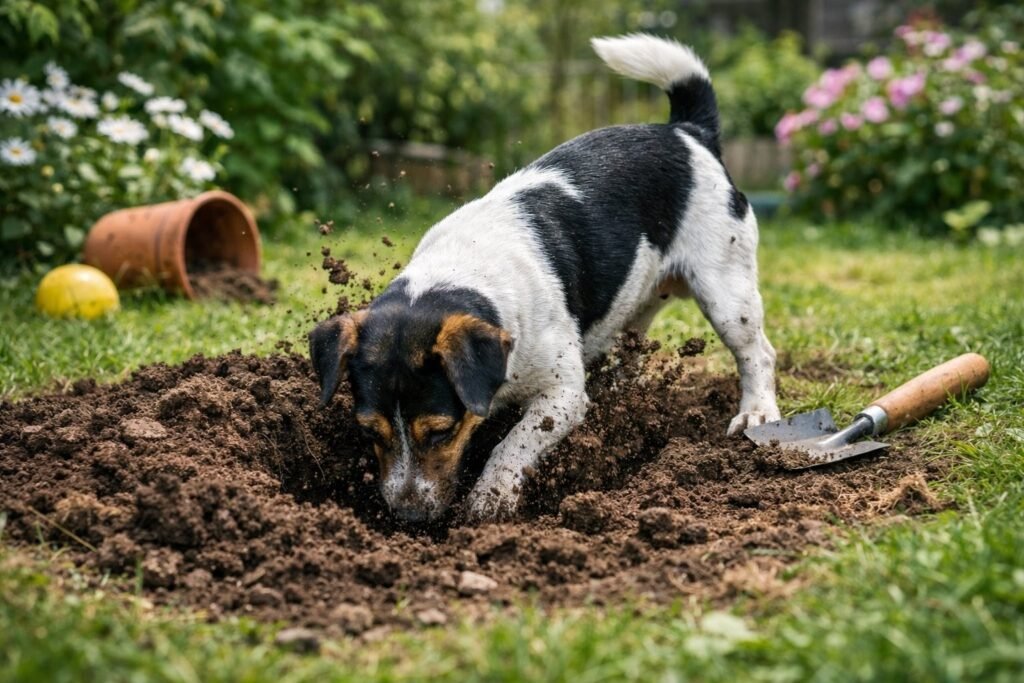
A yard full of craters is one of the most common complaints from dog owners, and the usual advice, fence the dog out of the garden, is not always possible or practical. Learning how to stop a dog digging holes in the yard without fencing is about understanding why your dog digs and then giving that urge a better outlet. Digging is a normal dog behavior, not disobedience, and it rarely stops just because a dog is scolded. It stops when the dog no longer needs to dig in the wrong places, because the need behind the digging has been met another way.
Dogs dig for several different reasons, and the fix depends on which one applies to your dog. Some dig out of boredom or excess energy. Some dig to find a cool spot on a hot day, or a warm, sheltered spot when it is cold. Some dig to bury bones and toys, following an old instinct to store food. Some dig because they smell or hear something underground, such as roots, grubs, or a neighbor’s pet. And some, especially puppies and certain breeds, dig simply because it is fun and rewarding in itself. Watching when and where your dog digs will tell you a lot. A dog that digs by the fence is often trying to get out or to reach something beyond it. A dog that digs in one shady corner on hot days is making a cool bed. A dog that digs everywhere, all the time, is usually bored or under-exercised.
Give Digging a Legal Outlet
The most reliable approach is not to ban digging outright, but to redirect it. Set up a designated digging zone, a patch of loose soil or a sandpit, where digging is allowed and rewarded. Choose a spot that is easy to reach and, ideally, one your dog already likes. Loosen the soil, mix in some sand so it is easy to dig, and bury a few toys and treats shallowly in it to make the zone interesting from the start.
Then teach the dog that the zone is the place to dig. When you see your dog start to dig elsewhere, interrupt calmly, walk the dog to the digging zone, and encourage digging there. When the dog digs in the zone, praise it and let it find the buried treats. This works because you are not fighting the instinct, you are steering it. Most dogs learn the distinction surprisingly quickly, especially when the zone is more rewarding than the rest of the yard.
Keep the zone maintained. If it becomes compacted, hard, or boring, your dog will go back to the softer, more interesting soil elsewhere. Turn the soil over regularly, bury new surprises, and keep it in a spot that is comfortable in the weather. A digging zone in full sun will be abandoned on hot days, so a partly shaded spot is ideal. This kind of redirection is similar to the calm, reward-based approach that helps stop a dog barking at the mailman without punishment, where replacing the behavior works better than scolding it.
Fix Boredom and Excess Energy First
For many dogs, digging is simply what happens when energy and curiosity have nowhere else to go. A dog that spends long hours alone in a yard with nothing to do will invent its own entertainment, and digging is an obvious choice. Increasing exercise and mental stimulation often reduces digging dramatically on its own.
Build a daily routine that includes a proper walk, not just a quick trip around the block, plus play that tires the dog out, such as fetch, tug, or a flirt pole. Add mental work too: puzzle feeders, snuffle mats, scatter feeding, and short training sessions all tire a dog in a way that physical exercise alone does not. A dog that has used its brain is far less likely to spend the afternoon excavating the lawn.
Rotate toys so the yard does not become stale. A toy that has sat in the same spot for weeks is invisible to a dog. Bringing out a different toy every few days, or a food puzzle stuffed with part of the dog’s daily meals, keeps the environment interesting. If your dog is alone for long periods, a midday visit from a walker or a neighbor can break up the day and burn off the energy that would otherwise go into digging.
Make the Wrong Spots Less Appealing
While you build up the digging zone, you can make the rest of the yard less attractive for digging, without fences or punishment. Dogs dislike digging through certain textures. Laying flat stones, large pebbles, or chicken wire flat on the soil surface in a favorite digging spot makes it uncomfortable to dig there. Cover the wire with a thin layer of soil so it is not a hazard, and remove it once the habit has shifted. Never use anything sharp or anything that could injure paws.
Some owners have success with scent deterrents, such as citrus peels or a vinegar solution sprinkled on a digging spot, but results vary widely between dogs, and scents wash away in rain. Use them as a short-term aid while training, not as the main strategy. A more reliable deterrent is removing the reward: if your dog digs for grubs or roots, improving the lawn and reducing grubs removes the reason. If your dog digs to bury food, pick up bones and chews rather than leaving them in the yard.
For a dog that digs along a fence line to escape or reach something beyond it, the answer is usually more exercise and company, not a barrier. A dog that is desperate to get out is telling you something about its life, not its manners. Addressing the underlying need, whether that is more walks, more play, or less time alone, is more effective than any physical block.
Help With Hot and Cold Weather Digging
Some digging is really about temperature. On hot days, dogs dig into cool earth to lie in it. If your dog digs a shallow pit and then lies in it, that is the clue. Provide shade, a cool resting spot, and fresh water, and the digging often stops. A raised bed in the shade, a paddling pool, or a damp towel on a cool surface gives the dog the comfort it was digging for.
In cold weather, some dogs dig to create a sheltered hollow out of the wind. A proper kennel or sheltered spot, with bedding that stays dry, serves the same purpose. Dogs that dig for comfort are not being naughty; they are solving a problem. Solve it for them and the digging loses its point.
Also watch for digging that follows a change in routine, such as a move, a new pet, or a change in the household. Stress and anxiety can show up as digging, just as they can show up as other behaviors. A dog that suddenly starts digging after months of not doing so may be anxious rather than bored, and in that case extra attention, routine, and calm reassurance matter more than yard changes.
Train a Reliable Interruption
Training helps, but the way you interrupt matters. Yelling at a dog mid-dig often just teaches the dog to dig when you are not watching. A better approach is a calm interruption, such as calling the dog’s name or using a trained recall, followed by redirecting the dog to the digging zone or to another activity. Reward the dog for coming to you and for digging in the right place.
Teach a solid recall and a “leave it” cue away from the digging situation first, in easy settings, before you expect them to work in the excitement of the yard. Short, frequent training sessions work better than long ones, and ending on a success keeps the dog keen. This is the same kind of consistent, positive training that underpins how to stop a dog from jumping on guests, where the dog learns what to do instead, rather than just learning what not to do.
Be patient with puppies. Puppies dig because they are exploring the world with their paws, and they will usually grow out of the worst of it with guidance. For a puppy, a digging zone is especially useful, because it lets the puppy practice a natural behavior in a place where it does no harm, while you build the recall and redirection skills you will need later.
Mistakes That Make Digging Worse
Punishing a dog after the fact is the most common mistake. If you come home to a dug-up yard and scold the dog, the dog does not connect the scolding to digging it did an hour ago. It connects it to your arrival, which can make the dog anxious and, ironically, more likely to dig. Corrections only work if they happen during the behavior, and even then, redirection beats scolding.
Another mistake is filling holes with the dog’s own waste, a tip that circulates widely. It rarely works for long, it is unpleasant, and it can create hygiene problems in a yard where children play. Similarly, burying balloons or other startling items to scare the dog can create fear and anxiety without teaching the dog where it should dig instead.
Leaving a dog alone in the yard for very long stretches and expecting training to fix the digging is also unrealistic. Training helps, but it cannot compensate for a dog that is lonely, bored, and full of energy. The yard fixes and the training need to go together with enough exercise and company.
Finally, do not expect overnight results. A habit that has built up over months takes weeks to change. Track progress by the number of new holes, not by whether digging has vanished entirely. A steady reduction, with digging increasingly confined to the zone, is real progress.
When to Get Extra Help
Most digging responds to the steps above, but get professional help if the digging is compulsive, if the dog seems distressed, if it is digging to escape constantly despite more exercise, or if it is accompanied by other worrying changes such as loss of appetite or destructive behavior indoors. A qualified dog trainer or a veterinarian can check whether anxiety, pain, or another issue is driving the behavior. Some dogs, particularly certain terrier and hound breeds, have such a strong digging instinct that a dedicated digging zone is a permanent feature of life with them, and that is fine. A dog that digs happily in its own zone and leaves the rest of the yard alone is a success story.
FAQ
Why does my dog dig holes all over the yard?
Common reasons are boredom, excess energy, seeking a cool or warm spot, burying food or toys, or following scents underground. Watching when and where your dog digs usually reveals the reason, and the fix follows from that.
Will a digging zone really stop my dog digging elsewhere?
Yes, for most dogs, if the zone is rewarding and maintained. Bury toys and treats in loose, easy-to-dig soil, praise digging in the zone, and calmly redirect digging elsewhere to the zone. It takes consistency, but it works because it steers the instinct rather than fighting it.
Is it cruel to stop a dog from digging?
Stopping all digging would be frustrating for a dog, since digging is natural. The kinder approach is to give the dog a place where digging is allowed, while protecting the rest of the yard. That meets the dog’s need without destroying your garden.
Do certain breeds dig more than others?
Yes. Terriers, dachshunds, huskies, and beagles are among the breeds bred to dig or to follow scents underground, so they tend to dig more. For these breeds, a digging zone is often a long-term solution rather than a temporary fix.
How long does it take to stop a dog digging in the wrong places?
Expect several weeks of consistent redirection, exercise, and enrichment. A steady reduction in new holes is progress, even if digging does not stop overnight. Puppies and long-established habits both take time.
Should I punish my dog for digging?
No. Punishment after the fact does not teach the dog anything about digging, and it can increase anxiety. Calm interruption and redirection to the digging zone, with rewards for the right behavior, is far more effective.