
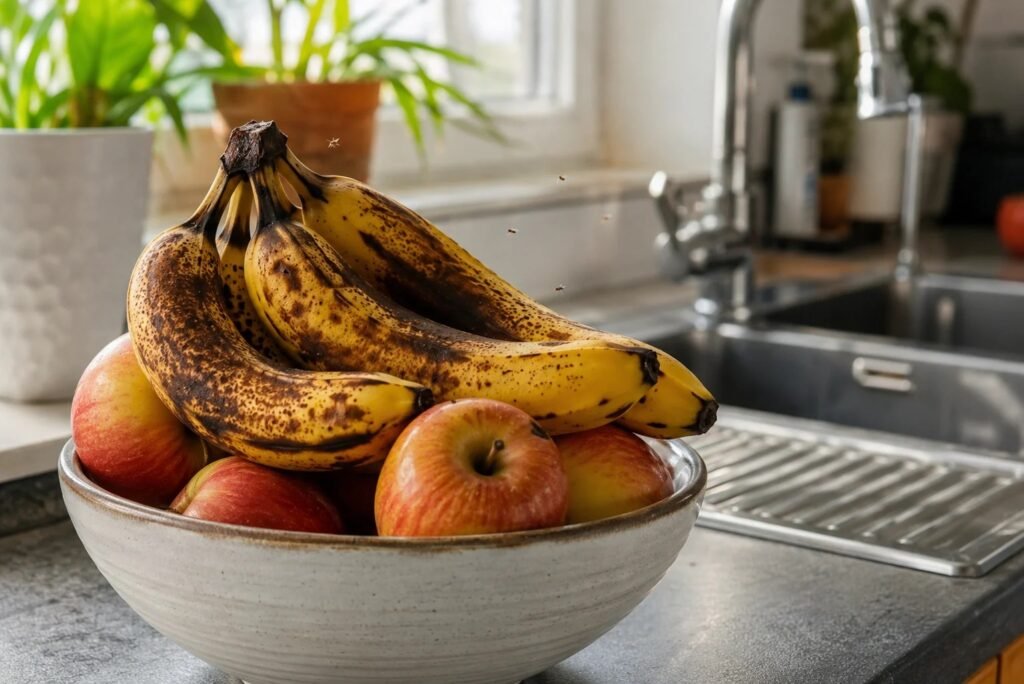
If you want to know how to get rid of fruit flies in the kitchen without apple cider vinegar, you are in good company. Apple cider vinegar traps get recommended everywhere, but plenty of people do not keep it in the pantry, dislike the smell, or simply want an option that works just as well. The good news is that vinegar is not the magic ingredient. Fruit flies are drawn to fermenting food, moisture, and sweet residue, so any method that removes those attractions and catches the adults already flying around will clear an infestation.
Fruit flies are tiny, but they multiply fast. A single female can lay hundreds of eggs on a ripe banana, a damp sponge, or the rim of a trash can, and those eggs can hatch within a day or two in a warm kitchen. That is why a single trap rarely solves the problem on its own. The most reliable approach pairs a few homemade traps with a thorough cleanup of the places where flies breed. Do both, and most kitchens are fly-free within a week.
Why Fruit Flies Invade Your Kitchen
Fruit flies do not appear out of nowhere, even though it can feel that way. They usually ride in on grocery produce, especially bananas, tomatoes, onions, and stone fruit, as nearly invisible eggs or tiny larvae. Once inside, they head straight for anything fermenting or damp: overripe fruit on the counter, a splash of juice in the sink, the garbage disposal, or a recycling bin holding unrinsed bottles.
Warmth speeds everything up. In a warm kitchen, the full life cycle from egg to adult can take barely a week, which means a handful of flies on Monday can become a visible swarm by the weekend. Understanding this cycle matters because it explains why killing the flies you see is only half the job. You also have to remove the breeding spots so the next generation never hatches.
Step 1: Find and Remove the Source
Before setting a single trap, walk your kitchen like a detective. Check the fruit bowl first and throw away anything soft, bruised, or overripe. Move the remaining fruit into the refrigerator until the problem is gone; cold storage stops flies from laying eggs on it. Next, inspect potatoes and onions, which often hide a rotting one in the middle of the bag.
Then check the less obvious spots. Empty the trash and recycling, wipe the inside of the bins, and rinse bottles and cans before they go back in. Clean the garbage disposal by running cold water and ice through it, and scrub the sink drain with a brush, since the slimy film inside drains is a favorite breeding ground. Finally, squeeze out sponges, wash dish rags, and wipe down counters where juice or crumbs may have collected. If you skip this step, new flies will keep replacing the ones your traps catch.
Step 2: Set Traps That Do Not Use Vinegar
You have several effective vinegar-free options, and they all work on the same principle: lure flies in with something sweet or fermented, then stop them from escaping.
The Dish Soap and Wine Trap
Pour a small amount of leftover red wine, beer, or fruit juice into a jar, add a drop of dish soap, and cover the top with plastic wrap. Poke a few small holes in the wrap with a toothpick. Flies crawl in through the holes, drawn by the fermented smell, and the soap breaks the surface tension so they sink instead of landing and flying away. Place one jar near the fruit bowl and one near the sink, and replace the liquid every couple of days.
The Ripe Banana Funnel Trap
Put a piece of very ripe banana in a jar, roll a sheet of paper into a cone with a tiny opening at the bottom, and set the cone into the jar with the narrow end pointing down. Flies fly in through the cone to reach the banana but struggle to find their way back out through the small opening. This trap is a good choice when you have no wine or juice to spare, and it works best overnight when the kitchen is quiet and dark.
The Milk, Sugar, and Pepper Trap
Warm a small amount of milk with a spoonful of sugar and a pinch of ground black pepper, pour it into a shallow dish, and leave it on the counter. As the mixture cools, it gives off a sweet smell that attracts flies, and the pepper and milk combination traps them on the surface. This old-fashioned method is cheap, uses ingredients most kitchens already have, and is worth trying if other traps have not caught much.
Step 3: Break the Breeding Cycle in Drains and Disposals
Even after the fruit is gone, flies can keep breeding in drains, so this step is essential. Pour boiling water slowly down the kitchen sink drain to flush out organic buildup, then scrub the drain opening and the underside of the strainer with an old toothbrush and dish soap. Repeat the boiling water flush daily for several days.
For the garbage disposal, run a tray of ice cubes through it while the cold water runs, which knocks loose food particles stuck to the walls. Follow that with a handful of citrus peels, which freshen the disposal and help dislodge residue. Avoid pouring bleach down the drain as a first resort; it can damage plumbing seals and it does not remove the slime layer as well as scrubbing and hot water do.
Prevention Habits That Keep Them From Coming Back
Once the flies are gone, a few small habits keep your kitchen from becoming attractive again. Store fruit in the refrigerator or in sealed containers, and eat or freeze bananas before they turn soft and speckled. Take out the trash daily during warm weather, and rinse recycling before it goes in the bin.
Wipe counters and the stovetop after cooking, especially after handling fruit, juice, or alcohol. Keep dish sponges wrung out and replace them often, and do not leave dirty dishes soaking in the sink overnight. Wash dish towels regularly, and mop up spills under the sink and around the trash can, since sticky residue in those hidden corners feeds flies long after the visible mess is gone. These habits take only a few minutes a day, and they also make the whole kitchen feel cleaner, much like organizing a cramped space teaches you to use every corner well, as in how to organize a small pantry without buying expensive containers.
Mistakes That Make the Problem Worse
One common mistake is setting a trap and then ignoring the source. Traps catch adults, but if a rotting potato is still sitting in the pantry, new adults will keep hatching. Another mistake is using holes that are too large in a plastic wrap trap cover; flies will simply walk back out. Keep the holes tiny, just wide enough for a fly to squeeze through.
A third mistake is giving up too soon. Because eggs and larvae are already present when you start, you may keep seeing flies for several days even while your traps are working. Stay consistent for at least a week: refresh traps, keep fruit refrigerated, and clean drains daily. If numbers are not dropping after a full week, look harder for a hidden source, such as a forgotten bag of produce, a mop bucket, or a slow leak under the sink.
When to Try a Different Approach
Most kitchen infestations clear up with traps plus cleaning. If flies persist despite a spotless kitchen, check adjoining areas: a compost bin, a pantry shelf with spilled flour or juice, or a damp area near a dishwasher leak. Fruit flies can also breed in the drip tray under a refrigerator or in a rarely used guest bathroom drain, so widen your search if the kitchen itself is clean.
Commercial sticky traps and electric insect traps are also available, and they work on the same lure-and-catch principle as homemade versions. They are worth the small cost if you want a low-maintenance option, but they still cannot replace cleaning. For a persistent problem that resists every home method, a pest control professional can inspect for hidden moisture or plumbing issues, though most households never need to go that far. Similar patience and a step-by-step mindset pay off in other household fixes too, like how to stop your toilet from running without calling a plumber, where finding the real cause matters more than any quick fix.
FAQ
How long does it take to get rid of fruit flies without vinegar?
Most kitchens see a big drop within two to three days of setting traps and cleaning, and full clearance usually takes about a week. That timeline covers the eggs and larvae already present, which keep hatching for a few days after you start.
Do wine and juice traps work as well as vinegar traps?
Yes. Fruit flies are attracted to fermentation, not to vinegar specifically, so wine, beer, fruit juice, and overripe fruit all work as bait. Adding a drop of dish soap is the key detail, since it stops flies from resting on the surface and escaping.
Why do fruit flies keep coming back after I clean?
They are usually breeding somewhere you have not cleaned yet, such as inside a drain, in a garbage disposal, or on a forgotten piece of produce. Recheck drains, bins, and pantry shelves, and keep fruit refrigerated until the flies are fully gone.
Are homemade fruit fly traps safe around pets and children?
Most homemade traps are safe because they use food ingredients, but keep traps out of reach anyway. Small jars of liquid can spill, and wine-based traps should stay where children and pets cannot drink from them.
Can fruit flies breed in a clean kitchen with no fruit out?
They need fermenting matter and moisture, so a truly clean, dry kitchen with no exposed food gives them almost nothing to breed on. Drains, disposals, damp sponges, and trash bins are the usual hidden exceptions, which is why cleaning those spots matters so much.













1 thought on “How to Get Rid of Fruit Flies in the Kitchen Without Vinegar”
Comments are closed.