A small room can feel cramped, cluttered, and hard to relax in, but you do not need to knock down walls to fix it. Learning how to make a small room feel bigger without renovating is about changing what the eye sees: more light, clearer sight lines, less visual clutter, and furniture that fits the space instead of fighting it. Most of these changes cost little or nothing, and several can be done in a single afternoon.
The guiding principle is simple. A room feels bigger when light travels freely, when the floor is visible, when colors stay calm and connected, and when every object earns its place. Work through the ideas below one at a time, starting with the free ones, and stop when the room feels right. You do not need to do everything.
Start With Light: The Fastest Transformation
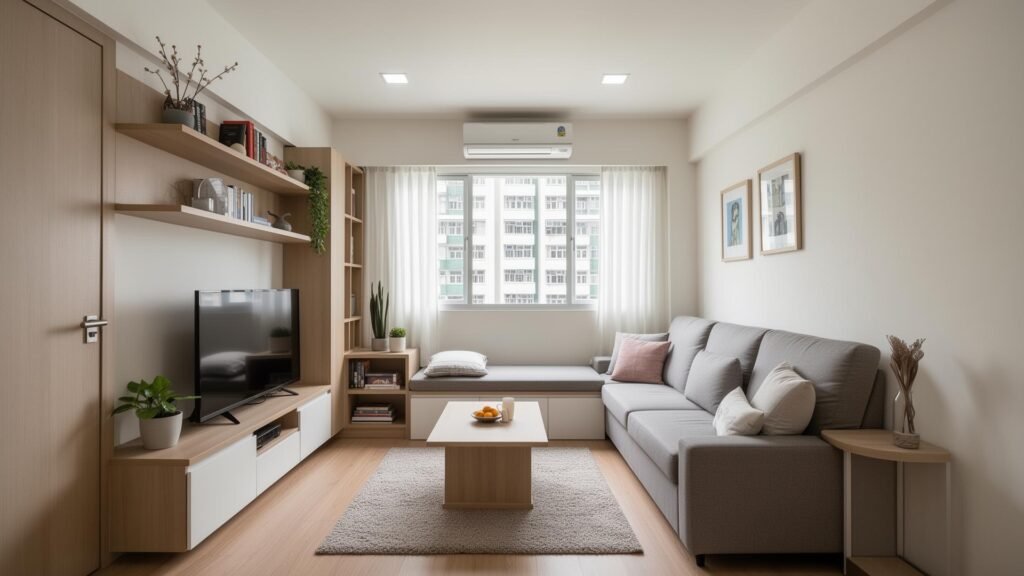
Light is the single most powerful tool for opening up a small room. Start by maximizing natural light: remove heavy curtains and replace them with sheer panels or light-filtering blinds that let daylight through while keeping privacy. Keep windowsills clear and avoid placing tall furniture in front of windows, since blocking a window instantly shrinks a room.
Clean the windows too, inside and out. Dirty glass dulls daylight noticeably. If the room has only one small window, add light artificially: layer three kinds of light, a ceiling light for general brightness, a task lamp for reading or work, and a warm accent light such as a small lamp or string lights for evenings. A room lit from several points feels larger than one lit by a single harsh overhead bulb.
Choose warm-white bulbs in the 2700 to 3000 Kelvin range for living spaces. Cool, clinical light makes small rooms feel stark, while warm light feels welcoming and spacious.
Use Color to Blur the Boundaries
Paint color shapes how big a room feels. Light, neutral colors such as soft white, pale gray, warm beige, and light sage reflect light and make walls feel farther away. You do not need to repaint the whole room to benefit: painting one accent wall in the same light tone as the others, rather than a dark contrasting color, keeps the space visually unified.
The real trick is continuity. When walls, trim, and ceiling are close in tone, the eye does not stop at each boundary, and the room reads as one larger volume. If repainting is not an option, use bedding, curtains, and rugs in light, coordinated tones to get a similar effect. Avoid many competing bold patterns in a small room; one pattern, repeated lightly, feels calmer than five clashing ones.
If you love bold color, use it in small doses: a cushion, a piece of art, or a throw. The room stays light while your personality still shows.
Place Mirrors Strategically
Mirrors are the oldest trick for small rooms because they genuinely work. A large mirror reflects light and doubles the visual depth of a room. Hang one large mirror rather than several small ones, and place it opposite or beside a window so it reflects daylight and the view, not a blank wall or clutter.
A leaning floor mirror works well in bedrooms, and a mirrored panel on a wardrobe door saves wall space entirely. Avoid placing mirrors where they reflect mess, such as an open closet or a crowded shelf, since a mirror doubles whatever it faces, good or bad.
Choose Furniture That Fits the Room
Oversized furniture is the most common reason small rooms feel cramped. A sofa that touches both walls leaves no breathing room and blocks movement. Measure your room and your furniture, and leave at least a few inches of clear space around each piece. Furniture with visible legs, raised off the floor, lets the eye see floor underneath, which makes the room feel larger than furniture that sits flat on the ground.
Prefer multi-purpose pieces: a bed with drawers underneath, an ottoman that stores blankets, a fold-down desk, or a coffee table with a shelf. Each piece that does two jobs removes another piece from the room. Clear furniture, such as a glass coffee table or acrylic chair, also helps, since it takes up almost no visual space.
Scale matters for every item, not just sofas. A huge rug in a tiny room overwhelms it, while a rug that is too small chops the floor into fragments. Choose a rug large enough that the front legs of your main furniture sit on it, which ties the seating area together and makes the floor feel continuous.
Clear the Floor and the Sight Lines
Visible floor equals perceived space. Remove anything that sits on the floor unnecessarily: piles of magazines, extra shoes, storage boxes, and cables. Use wall-mounted shelves instead of floor-standing bookcases, and hang the television on the wall instead of placing it on a bulky stand.
Keep sight lines open. When you stand in the doorway, you should be able to see across the room without your gaze hitting a tall obstacle. Low furniture near the entrance and taller pieces against the far wall create a sense of depth. Long, low storage along one wall feels less imposing than tall cabinets scattered around the room.
Curtains also affect sight lines. Hang curtain rods close to the ceiling and extend them beyond the window frame, so curtains hang beside the window rather than covering it. This makes the window look larger and the ceiling look higher, two instant wins.
Go Vertical and Declutter Ruthlessly
Small rooms often waste their best asset: wall height. Tall, narrow shelving draws the eye upward and uses space that otherwise sits empty. Install shelves above doorways, over desks, and in the upper third of walls for books, plants, and items you use less often. Vertical storage keeps the floor clear while adding real capacity.
Then declutter with a simple rule: if an item has no function and no genuine sentimental value, it leaves the room. Small rooms punish clutter more than large ones, because every extra object competes for the same limited visual field. Start with surfaces: clear tables, dressers, and counters to one or two intentional items each. The difference after a single decluttering session often surprises people more than any purchase.
Small bathrooms face the same challenge in miniature, and the same principles apply there too. If you are short on bathroom storage, these ideas to organize a small bathroom without drilling holes use renter-friendly tricks that keep counters clear without damaging walls.
Fix the Small Annoyances That Shrink a Room
Sometimes a room feels smaller because something in it is irritating rather than because of its size. A wobbling ceiling fan, a squeaky door, or a flickering light draws attention to the room’s flaws and makes it feel less comfortable. Fixing these small annoyances costs little and changes how the room feels to live in.
A ceiling fan, for instance, is a common culprit in small bedrooms, where a wobble is impossible to ignore. Before calling anyone, try the simple fixes in this guide to stop a ceiling fan wobbling without taking it down. A quiet, steady fan makes a small room feel calm and settled rather than restless.
Similarly, oil squeaky hinges, tighten loose handles, and replace buzzing bulbs. A room that works smoothly feels bigger than one that constantly reminds you of its problems.
Layout Tricks That Open Up Space
Try floating furniture away from walls. It sounds backwards, but pulling a sofa even a few inches off the wall creates a shadow gap that makes the room feel deeper. In a bedroom, placing the bed against the longest wall, rather than blocking a window wall, usually opens the most floor.
Use zones instead of walls to define areas. A rug defines a seating zone, a desk lamp defines a work zone, and a bookshelf turned sideways can separate a sleeping area without blocking light. Keep pathways at least two feet wide so movement feels easy rather than squeezed.
Finally, edit ruthlessly after every change. Add one improvement, live with it for a day, and remove anything that now feels unnecessary. Small rooms reward editing more than adding.
Mistakes That Make Small Rooms Feel Smaller
The most common mistakes are dark paint on all walls, heavy curtains that block windows, oversized furniture, cluttered surfaces, and too many small decorative items scattered everywhere. Another is pushing every piece of furniture flat against the walls, which actually makes a room feel boxy rather than spacious.
Avoid filling every wall. One empty wall gives the eye a resting place and makes the room feel calmer and larger. Resist buying furniture before measuring, and resist keeping furniture out of guilt. A room designed for your current life, not your past purchases, always feels better.
Frequently Asked Questions
What is the cheapest way to make a small room feel bigger?
Decluttering, cleaning windows, and rearranging furniture cost nothing and often make the biggest difference. Light curtains and a large mirror are the best low-cost purchases.
Does painting a small room white really help?
Yes, light colors reflect more light and blur wall boundaries, which makes a room feel larger. Soft white, pale gray, and warm beige work best, especially when trim and ceiling match closely.
Should furniture touch the walls in a small room?
Not necessarily. Pulling furniture a few inches off the wall creates depth and shadow that make a room feel larger. Leave clear pathways and avoid blocking windows.
Do mirrors really make a room look bigger?
Yes, when placed well. A large mirror opposite or beside a window reflects light and view, doubling visual depth. Avoid mirrors that reflect clutter.
How do I make a small bedroom feel bigger?
Use light bedding, a bed with storage underneath, wall-mounted shelves instead of floor bookcases, and curtains hung high and wide. Keep the floor visible and surfaces clear.
Can rugs make a small room feel bigger or smaller?
Both. A rug large enough for furniture front legs to sit on unifies the space and makes it feel bigger, while a tiny floating rug chops the floor up and makes the room feel smaller.