
Learning how to organize a small bathroom without drilling holes is one of the most useful skills for renters and anyone who wants to avoid patching walls later. Small bathrooms have the same storage needs as large ones, but far less room to meet them, and drilling into tile or plaster is often off-limits in a rental or simply not worth the damage. The good news is that modern adhesive, suction, tension, and over-door products are strong enough for almost everything a bathroom needs, from towels and toiletries to hair tools and cleaning supplies.
The secret is not buying more containers, but using the surfaces you already have: the door, the inside of cabinet doors, the wall above the toilet, the shower wall, and the narrow gaps beside the sink. With a little planning, a small bathroom can feel calmer, cleaner, and easier to use every single day, without a single hole in the wall.
Start by Decluttering Before You Organize
No storage product can fix a bathroom stuffed with things you do not use. Begin by taking everything out of the medicine cabinet, under-sink cabinet, and any baskets or shelves, and sort it into three groups: daily essentials, occasional items, and things to toss or relocate. Expired medicines, empty bottles, dried-out products, and duplicates all go.
Keep daily items, such as a toothbrush, face wash, and deodorant, within easy reach, and move occasional items, such as a first aid kit or extra supplies, to a less convenient spot. If an item belongs somewhere else in the home, move it there now rather than finding it a bathroom home. A smaller, honest collection of belongings is far easier to organize, and it makes every later step work better. The same declutter-first principle applies to other cramped spaces, as shown in how to organize a small pantry without buying expensive containers.
Use the Door: The Biggest Free Surface
The bathroom door is usually the largest unused surface in the room, and over-door products need no tools at all. An over-door hook rack holds towels, robes, and a bath caddy, instantly freeing wall space and towel bars. Choose a rack with flat, padded hooks so it does not scratch the door or stop it from closing properly.
An over-door organizer with clear pockets is even more useful for small items: hair accessories, grooming tools, cleaning sprays, and first aid supplies all fit neatly in the pockets and stay visible. Hang it on the inside of the door if you want it hidden, or on the outside of a linen closet door if the bathroom door itself gets heavy use. Just check that the door still closes fully and the organizer does not swing loudly or catch on the frame.
Adhesive and Suction Storage That Actually Holds
Adhesive hooks and strips have improved dramatically, and good ones now hold several pounds each on smooth tile, glass, and painted walls. The trick is surface preparation: clean the spot with rubbing alcohol, let it dry completely, press the strip firmly for thirty seconds, and wait the full recommended curing time, often an hour, before hanging anything on it. Skipping the wait is the most common reason adhesive products fall down.
Use adhesive hooks for towels, robes, and light baskets, and adhesive shelves for toiletries near the sink or above the toilet. Suction cups work best on smooth, non-textured tile and glass, making them ideal for shower caddies, soap dishes, and toothbrush holders. Press out all the air, and re-press them every few weeks, since temperature changes can loosen the seal over time. For heavier items, use two hooks or a wider adhesive plate to spread the load, and always check the weight rating before trusting a hook with something breakable.
Organize the Shower Without a Single Screw
The shower is where clutter builds fastest, because every bottle ends up on the floor or balanced on a ledge. A suction-cup shower caddy or a hanging caddy that hooks over the showerhead solves this without tools, keeping shampoo, conditioner, and body wash in one reachable spot. Choose a caddy with drainage holes so water does not pool and products stay clean.
Limit the shower collection to what you actually use each week, and store backups elsewhere. A small suction soap dish keeps bar soap dry between uses, which makes it last longer, and a suction razor holder keeps blades off wet surfaces where they dull faster. If the showerhead hook style does not suit your setup, a tension-pole caddy that wedges between the tub edge and the ceiling is another no-drill option that uses vertical space well.
Make the Most of Cabinets and Under-Sink Space
Cabinet doors are free storage hiding in plain sight. Stick a small adhesive rack or a row of adhesive hooks on the inside of a cabinet door for hair tools, cleaning sprays, or a small trash bag roll. A narrow adhesive basket inside the door holds items that would otherwise pile up on the counter, and it keeps them hidden when the door closes.
Under the sink, use stackable bins, a small turntable, and a tension rod to create order around the pipes. The tension rod is a clever no-drill trick: wedge it across the cabinet and hang spray bottles from it by their triggers, freeing the floor of the cabinet for bins. A turntable makes deep cabinets usable, since you can spin it to reach items at the back instead of pulling everything out. Label bins if you share the bathroom, so everyone puts things back in the right place.
Use Vertical Space and Narrow Gaps
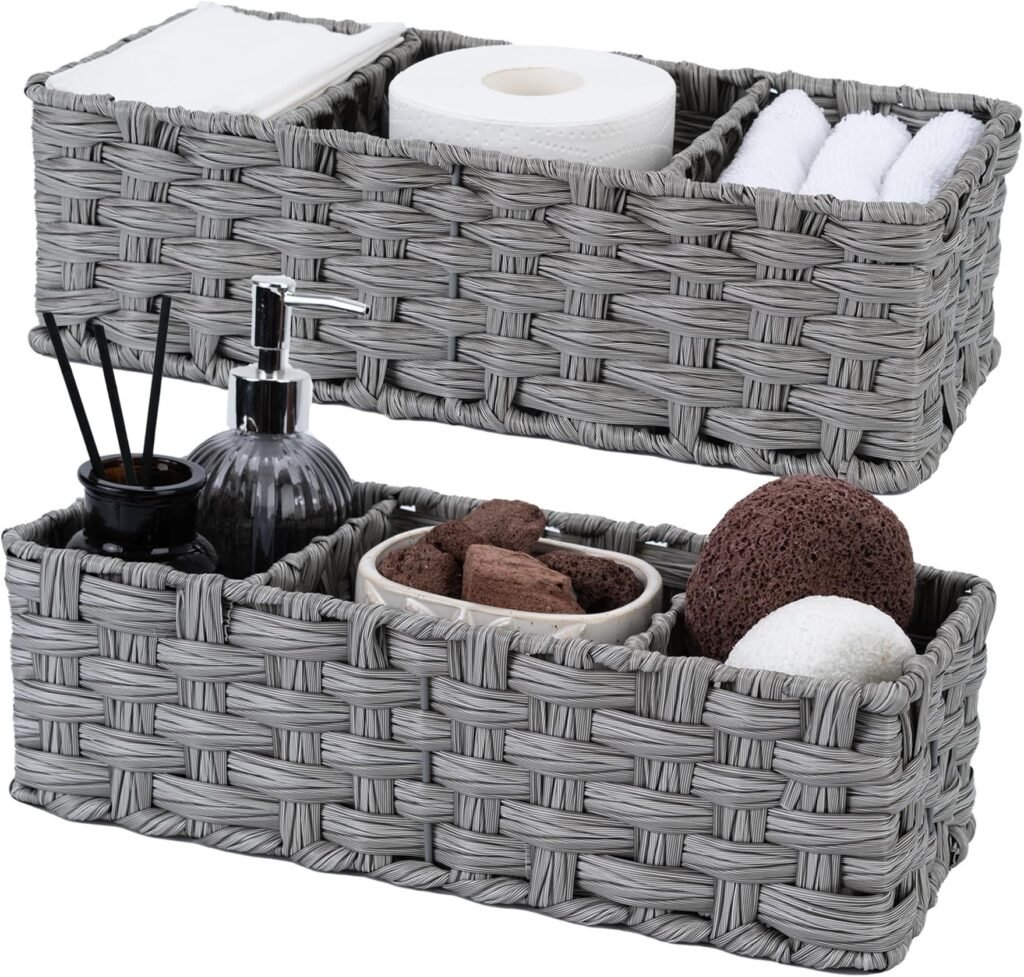
In a small bathroom, the wall above the toilet is prime real estate. An over-toilet shelving unit that stands on the floor and leans against the wall needs no drilling and adds two or three shelves for towels, baskets, and decorative items. If that style does not fit, a single adhesive shelf above the toilet holds a small plant, a candle, or extra toilet paper within reach.
Narrow gaps beside the sink or toilet can hold a slim rolling cart, which slides in and out and keeps cleaning supplies, extra towels, or toiletries accessible without cluttering the counter. A tall, narrow basket in a corner holds rolled towels and looks tidy even when full. Keep the counter itself as clear as possible: a single small tray for daily items, such as hand soap and a toothbrush cup, looks calmer than a counter covered in bottles, and it is far easier to wipe clean.
Keep It Tidy With Simple Daily Habits
Organization only lasts if it is easy to maintain, so build habits that take seconds rather than minutes. Put each item back in its spot after use, wipe the counter while brushing your teeth, and keep a small trash can with a liner so rubbish never piles up on surfaces. Once a week, do a two-minute reset: return stray items, toss empty containers, and wipe shelves and caddies.
Resist the urge to buy more storage for things you could simply own less of. A bathroom that holds only what you use is naturally tidy, and every new product should earn its place by replacing clutter, not adding to it. If something keeps ending up on the counter, that is a sign its home is not convenient enough, so move its spot closer to where you actually use it. Good habits like these also help when traveling, where a little planning goes a long way, as in how to recover from jet lag faster, where small, consistent routines beat one big effort.
Mistakes to Avoid in a Renter-Friendly Bathroom
The biggest mistake is sticking adhesive products onto damp, dirty, or textured surfaces and expecting them to hold. Clean and dry the surface first, wait the full curing time, and respect weight limits, or products will fall and possibly break tiles or bottles. Another mistake is overloading a single hook or shelf; spreading weight across several fixings is safer and looks better.
Avoid suction cups on textured tile, grout lines, or uneven surfaces, where they cannot form a seal and will keep falling. Also be careful with over-door racks on hollow doors that may not support heavy loads, and check that hooks do not dent the top edge of the door over time. Finally, do not drill in secret if your lease forbids it; the repair cost and deposit deduction are almost never worth it when no-drill alternatives work this well.
FAQ
Do adhesive hooks really hold in a humid bathroom?
Yes, if you choose hooks rated for bathroom use, prepare the surface properly, and let them cure before loading them. Clean the surface with rubbing alcohol, press firmly, wait the recommended curing time, and stay within the stated weight limit for reliable results.
What is the best no-drill storage for a very small bathroom?
An over-door organizer combined with an over-toilet shelf unit usually adds the most storage with no tools. Together they use the door and the wall above the toilet, two surfaces that are otherwise wasted, without touching the walls at all.
Can I use suction cups on textured tiles?
Suction cups need a smooth, airtight surface, so they do not work well on textured tiles or grout lines. On those surfaces, use adhesive hooks or strips designed for bathroom use instead, and save suction products for glass and smooth tile.
How do I stop an over-door rack from scratching my door?
Choose a rack with padded or coated hooks, and check that it fits the thickness of your door without forcing it. Adding small felt pads where the hooks meet the door also prevents scratches and stops the rack from rattling.
Will adhesive strips damage paint when I remove them?
Quality removable strips are designed to come off cleanly if you follow the removal instructions, usually pulling slowly downward along the wall. Cheap or overloaded strips are more likely to peel paint, so use reputable products and respect their weight ratings.













2 thoughts on “How to Organize a Small Bathroom Without Drilling Any Holes”
Comments are closed.