
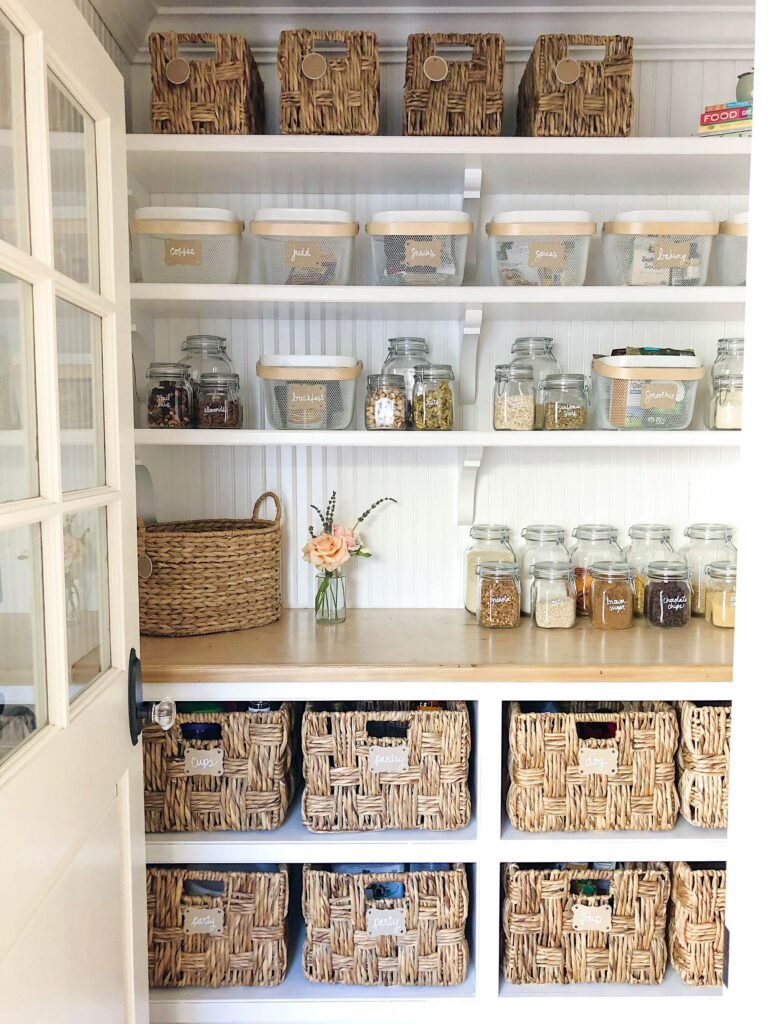
A cramped pantry does not need a shopping spree to become functional. If you are wondering how to organize a small pantry without buying expensive containers, the secret is that the best organizers are probably already in your home: glass jars, sturdy boxes, baskets, and a little bit of planning. This guide shows you how to reset the space, sort everything into logical zones, squeeze storage out of vertical space you are ignoring, and keep it all tidy with a maintenance routine that takes minutes, all without spending more than pocket change.
Start With a Complete Reset
You cannot organize around clutter, so begin by taking everything out of the pantry. Every can, box, spice jar, and mystery bag comes out onto the counter or table. This step feels dramatic, but it is the only way to see what you actually own. Most people discover duplicates they forgot buying, snacks that went stale months ago, and cans hiding behind other cans.
With the shelves empty, wipe them down with a damp cloth and let them dry. Check every item before it goes back: toss anything expired, stale, or damaged, and set aside unopened extras you will never use for a food bank donation. Be honest about the half-used specialty ingredients from recipes you tried once and will never repeat. A small pantry has no room for passengers. Before restocking, it also helps to save money on groceries without using coupons by planning future shopping around what you already have, so the pantry stops refilling with duplicates.
Before you begin, grab a trash bag, a donation box, and a damp cloth. Having them ready keeps the reset moving quickly instead of stalling halfway through. Put on some music, give yourself about an hour, and work shelf by shelf so the kitchen stays usable while you reorganize.
Sort Everything Into Simple Categories
Group the keepers into broad categories before a single item returns to a shelf. Useful groups include grains and pasta, canned goods, baking supplies, breakfast foods, snacks, spices and seasonings, oils and vinegars, and condiments. Do not overthink the categories; six to eight groups cover nearly every household.
Sorting first matters because it reveals the true shape of your inventory. You might find you own nine cans of diced tomatoes but no tomato paste, or three open bags of the same chips. This is also the moment to corral all the small packets, seasoning envelopes, and sauce sachets into one pile. Loose packets are the number one cause of pantry chaos, and they need a dedicated home, which you will build from something you already own in the next step.
Raid Your Home for Free Containers
Expensive matching canisters look nice in photos, but they are completely optional. Walk through your home and gather containers that can do the same job for free. Glass pasta sauce jars, washed and dried, are perfect for rice, lentils, flour, and sugar. Sturdy shoeboxes and shipping boxes, cut down to a low tray height, make excellent shelf bins that keep categories together and slide out like drawers.
Small baskets from around the house can hold snack bars, seasoning packets, and tea bags. A muffin tin or ice cube tray organizes tiny items like spice packets and sauce sachets inside a drawer. Empty egg cartons keep small jars and packets upright so they do not tip over. Even office supplies help: binder clips seal open bags better than twist ties, and a cut-down cereal box becomes a perfect tall bin for wraps, foil, and plastic bags. If your kitchen has a cluttered catch-all drawer too, the same repurposing mindset works there; see how to declutter a junk drawer in 30 minutes for a fast method that applies the same principles.
Zone the Pantry Like a Tiny Store
Stores group similar items together so shoppers find things fast, and your pantry should work the same way. Assign each shelf or section a zone based on how you actually cook. A practical layout puts everyday items at eye level, cooking staples like oils, canned goods, and grains on the middle shelves, baking supplies together on one shelf, and snacks in a single grab-and-go zone.
Place backstock and rarely used items, such as holiday baking supplies or bulk extras, on the highest or lowest shelves where they are out of the daily traffic pattern. If kids pack their own snacks, give them a low basket they can reach without climbing. The rule is simple: the more often you reach for something, the closer it should live to eye level and the front of the shelf. When every category has a zone, putting groceries away takes seconds because each item already has an address.
Make Vertical Space Work Harder
Small pantries usually have plenty of unused air between shelves. Stackable items are the easiest win: cans stack two or three high, and small boxes can sit on top of larger ones. For shelves with tall gaps, create a riser from a sturdy inverted box or a small wooden crate so you get two levels of storage where there was one. Short jars and spice containers can live on the raised level while taller bottles stand underneath.
Do not ignore the inside of the pantry door. A few adhesive hooks or a hanging shoe organizer on the door creates storage for spice packets, wraps, and small tools without touching a single shelf. The side walls of a pantry cabinet can hold narrow items with small hooks as well. Even the floor of a walk-in pantry earns its keep: a low bin or crate there can hold heavy bulk items like large bags of rice or pet food that would be awkward on a shelf.
Visibility Tricks That Cost Nothing
An organized pantry you cannot see into is barely organized at all. Store items with labels facing forward so you can read them without pulling everything out. Decant staples like flour, sugar, rice, and pasta into clear jars so you can see at a glance what is running low; this alone prevents most duplicate purchases. For items you keep in their original packaging, a strip of masking tape and a marker makes a perfectly good label.
Practice first-in, first-out rotation: when you buy new cans or boxes, place them behind the older ones so the oldest gets used first. This simple habit cuts food waste dramatically. For produce and perishables that pass through the pantry area, learning to keep lettuce fresh for a week with proper storage extends the same waste-cutting mindset beyond the shelves. Finally, adopt a one-in, one-out rule for problem categories: a new snack comes in only when an old one is finished, which keeps small shelves from overflowing.
The 15-Minute Weekly Reset
Even the best system drifts without maintenance, but the fix is small. Once a week, ideally before grocery shopping, spend fifteen minutes on this routine:
- Pull forward anything that migrated to the back of a shelf and straighten the rows.
- Toss anything expired and note items that are running low.
- Build the shopping list from the low-stock notes so you buy only what you need.
- Wipe up any spills or crumbs before they attract pests.
- Return any strays, items that ended up on the counter, to their zones.
Fifteen minutes a week is enough to keep a small pantry permanently tidy, because you are correcting drift before it compounds into chaos.
Mistakes That Make a Small Pantry Feel Smaller
- Buying containers before measuring. Nothing wastes money like bins that do not fit the shelves. Organize with what you have first, measure the gaps, and only then consider buying anything.
- Stocking deep instead of wide. Lining up six identical cans in a row hides everything behind the first one. Store two deep at most and keep backstock elsewhere.
- Letting the back of shelves become a black hole. If you cannot see it, you will forget it and buy it again. Risers, bins that pull out, and front-facing labels fix this.
- Keeping expired and mystery items. Every expired can and stale bag occupies space that real food needs. Purge ruthlessly during the reset and spot-check monthly.
- Organizing by size instead of by use. Grouping by category and cooking zone beats lining things up by height. You cook by recipe, not by bottle size.
- Skipping the maintenance routine. A pantry reorganized once and never touched will be chaotic again within a month. The weekly reset is what makes the system permanent.
Frequently Asked Questions
How do I organize a pantry with deep shelves?
Use bins or low boxes that slide out like drawers so you can reach the back without unloading the front. Store only two items deep, keep backstock in a separate spot, and put the least-used items at the very back where they will not block daily essentials.
What if I do not have a pantry and only have cabinets?
The same principles apply on a smaller scale. Dedicate one cabinet to food, zone its shelves by category, use risers and door hooks to add levels, and keep backstock in a closet or under-bed bin. A single well-zoned cabinet beats a sprawling messy pantry every time.
How do I keep track of expiration dates?
Write the expiration date in large marker on the front of cans and boxes when you unpack groceries, so you never have to squint at tiny print. Practice first-in, first-out rotation, and do a quick date check during your weekly reset.
Should I decant everything into jars?
No. Decant only the staples you buy in bulk or use constantly, such as flour, sugar, rice, and pasta, where seeing the level prevents duplicate buying. For everything else, the original packaging with a clear label is fine and saves washing.
How do I stop buying duplicates at the store?
Keep a running low-stock list on your phone, updated during the weekly pantry reset, and shop from that list. Clear jars for staples also let you see exactly what is running low before you leave the house.
How often should I fully reorganize the pantry?
A full take-everything-out reset once or twice a year is plenty if you keep up the fifteen-minute weekly routine. Most pantries only need a complete overhaul when the household’s cooking habits change significantly.













2 thoughts on “Organize a Small Pantry Without Buying Expensive Containers”
Comments are closed.