Knowing how to keep plants alive while on vacation without a sitter takes away one of the most common worries of going away. You do not need to hand your keys to a neighbor or hire help to keep your houseplants healthy. With a little preparation before you leave, most indoor plants can survive a week or two on their own, and hardier plants can manage even longer. The secret is to slow down water loss, give plants a steady supply of moisture, and set up their environment so they need less attention while you are gone.
This guide covers how to prepare your plants before a trip, the best self-watering methods for different trip lengths, and the mistakes that cause most vacation plant losses. Pick the methods that match your plants and your trip, and test them before you leave whenever possible.
Start With a Plant Triage
Before setting up any watering system, take stock of what you actually have. Different plants have very different water needs, and treating them all the same is the most common vacation mistake.
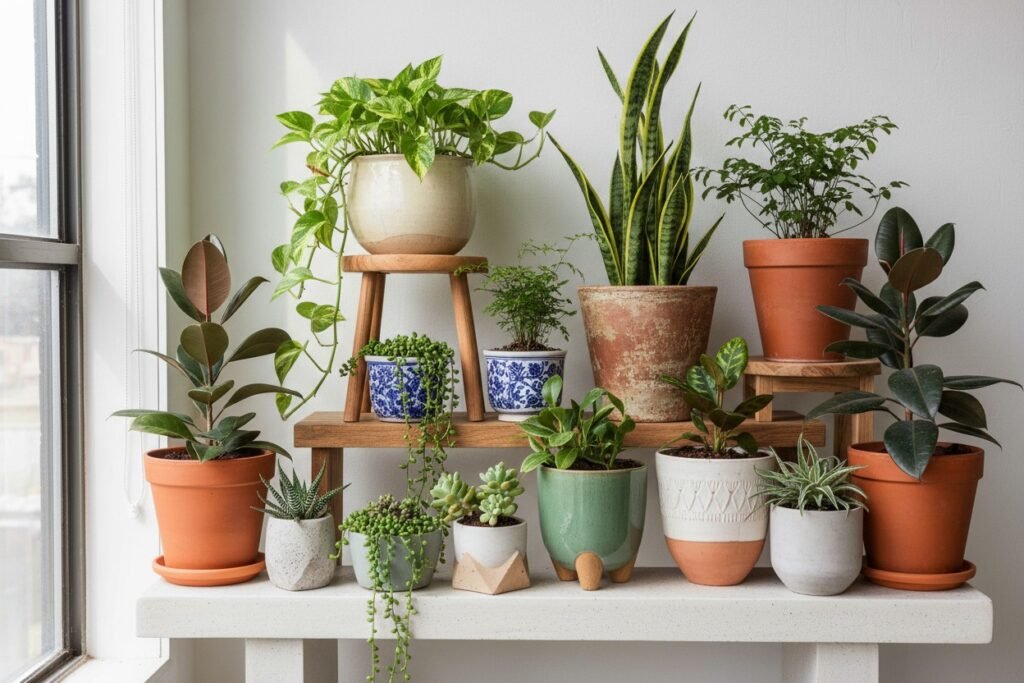
Group your plants by thirst. Succulents, cacti, snake plants, and ZZ plants store water in their leaves or roots and prefer to dry out between waterings. These plants are your easiest vacation companions: most will happily survive two to three weeks with no water at all, as long as they are not in direct hot sun. Tropical plants such as ferns, calatheas, peace lilies, and monstera need consistently moist soil and will suffer first if they dry out. Herbs and vegetables in pots dry out fastest of all, because their pots are small and their leaves are thin.
Check each plant for health problems before you leave. Remove dead or yellowing leaves, since dead foliage invites mold in humid conditions. Check the undersides of leaves for pests, because a small pest problem can explode while you are away. Repot only if a plant is severely root-bound, and do it at least a week before your trip, since repotting stresses plants and they need time to settle.
Water all your plants thoroughly the day before you leave, not the morning of departure. A deep watering gives the soil time to absorb moisture fully and lets excess water drain away, so plants start the trip hydrated but not sitting in a puddle.
Slow Down Water Loss First
Reducing how fast plants lose water is more effective than any watering gadget, because it stretches every drop further. Three changes make the biggest difference.
Move Plants Out of Direct Sun
Move plants a few feet back from sunny windows, or into a room with bright indirect light. Direct sun heats pots, dries soil quickly, and stresses plants. A plant that needs watering every three days in a sunny window might last a full week in indirect light. Do not move plants into a dark closet or bathroom with no light at all, since most plants still need light to stay healthy. Bright indirect light is the sweet spot: enough for photosynthesis, gentle enough to slow evaporation.
Group Plants Together
Cluster your plants together in one spot, with their leaves almost touching. Plants release moisture through their leaves, and a group of plants creates a small pocket of humidity around itself, which slows further water loss. Place a tray of pebbles and water under the group for extra humidity, keeping the pots on the pebbles rather than sitting directly in water. This grouping trick alone can add several days to how long your plants last.
Keep the Room Cool and Stable
Heat is the enemy of vacation plants. If you normally turn off heating or cooling while away, consider leaving the thermostat at a moderate setting so the house does not overheat or chill dramatically. Close curtains on sun-facing windows to block the hottest part of the day, and avoid placing plants near heating vents, radiators, or drafty windows. Stable, moderate temperatures keep soil moisture steady.
Method 1: The Wicking System (Best for One to Two Weeks)
A wicking system uses a simple principle: a cord draws water from a reservoir into the soil slowly and steadily, replacing moisture as the soil dries. It is cheap, reliable, and works for most houseplants.
To set it up, you need a container of water, such as a bucket or large jug, and a length of cotton cord, cotton rope, or strips of cotton fabric. Natural cotton works best, because synthetic fibers do not wick water as well. Soak the cord in water first so it is fully saturated. Place the water container next to your plant, slightly higher than the pot if possible, since gravity helps the wicking action. Push one end of the cord about two inches into the soil, near the center of the pot, and drop the other end into the water container, making sure it reaches the bottom.
Use one wick per small pot and two wicks for larger pots. Fill the container with enough water for your trip, and test the system for two or three days before you leave to confirm the soil stays moist but not soggy. If the soil is too wet, use a thinner cord. If it stays dry, use a thicker cord or add a second wick. A five-gallon bucket can supply several plants for two weeks, making this method ideal for a plant collection.
Method 2: The Plastic Bottle Drip (Best for Short Trips)
For trips of up to a week, a simple bottle drip system works well and costs nothing. Take a clean plastic bottle, poke two or three small holes in the cap with a pin, fill the bottle with water, and push it cap-down into the soil. Water will drip slowly out of the holes as the soil dries.
The hole size controls the flow rate, so test it before your trip. Holes that are too large will empty the bottle in a day and waterlog the plant. Holes that are too small will clog with soil. A bottle with a pointed watering spike attachment, available at garden stores, works more reliably than a plain bottle, because the spike keeps soil out of the holes. Use one bottle per pot, and choose a bottle size that matches the pot: a small bottle for a small pot, a large bottle for a large pot.
This method is best for medium-thirst plants. It is less reliable than wicking for longer trips, because the bottle eventually empties, and it does not adjust to the plant’s needs as well as a wick does.
Method 3: Self-Watering Pots and Globes
Self-watering pots have a built-in reservoir at the bottom and a wick or soil column that draws water upward. If you already own them, simply fill the reservoir before you leave. If you are buying new pots for a trip, choose ones with a visible water-level indicator so you can confirm the reservoir is full.
Watering globes are glass or plastic bulbs that you fill with water and insert into the soil. They release water gradually as the soil dries. They look attractive and work well for a week or so, but they have limits: they hold only a small amount of water, they can clog in dense soil, and they are fragile. Use globes for individual plants that need moderate water, not as your only system for a long trip.
For a longer trip, combine methods. Put your thirstiest plants on a wicking system, use bottles or globes for medium plants, and leave drought-tolerant plants alone with just a pre-trip watering. Matching the method to the plant is more reliable than using one method for everything.
Method 4: The Bathtub and Sink Greenhouse
For a large collection of plants, the bathtub method is a practical all-in-one solution. Line the bathtub with towels, set the plants on top, and add a few inches of water to the tub. The plants will draw water up through their drainage holes, and the enclosed bathroom stays humid, which tropical plants love. Leave the bathroom door open a crack for air circulation, and do not use this method for succulents or cacti, which hate sitting in water.
A similar approach works with a kitchen sink for a smaller group. Place plants in the sink on a towel, add an inch or two of water, and leave a nearby window uncovered for indirect light. Check that your sink drains slowly enough to hold water, or plug it. This method typically covers one to two weeks, depending on the plants and the water depth.
For a low-tech greenhouse effect, you can also cover individual plants with a clear plastic bag supported by stakes, creating a mini greenhouse that traps humidity. Poke a few small holes in the bag for air circulation, and keep bagged plants out of direct sun, since trapped heat can cook them quickly. This method suits ferns and other humidity-loving plants for short trips.
Outdoor Plants and Balcony Gardens
Outdoor plants face wind, sun, and heat, so they dry out much faster than indoor plants. Move potted outdoor plants into the shade and group them together, just like indoor plants. A deep watering the day before departure, plus a layer of mulch on the soil surface, slows evaporation significantly. Mulch with bark chips, straw, or even damp newspaper, which shades the soil and holds moisture in.
For balcony vegetables and herbs, a wicking system with a large reservoir is the most reliable option, since these plants drink heavily. If you grow food plants on a balcony, our beginner guide on how to start a balcony vegetable garden for beginners covers pot sizes and soil mixes that also help plants hold moisture longer. Automatic drip irrigation on a timer is worth considering if you travel often, since it removes the guesswork entirely. A simple battery-powered timer and drip line can water a balcony garden for weeks without attention.
Common Mistakes That Kill Vacation Plants
- Overwatering before you leave. Drowning plants in water before departure causes root rot, which is harder to fix than slight dryness. Water deeply but let excess drain away.
- Moving plants into a dark room. Plants still need light. A dark closet starves them of energy and can cause leaf drop, even if the soil stays moist.
- Using an untested system. Every wicking or drip setup behaves differently. Always test for several days before your trip so you can fix flow rates and placement.
- Treating all plants the same. Succulents that get a wicking system may rot from too much water, while ferns left dry will crisp up. Group by water needs and set up accordingly.
- Forgetting about temperature. A house that overheats while you are away can dry plants out days faster than expected. Keep the thermostat moderate and block harsh sun.
- Leaving plants in standing water. Pots sitting in deep water for weeks develop root rot. Use wicking or reservoir systems that deliver water gradually instead of flooding the pot.
Your Pre-Trip Checklist
Run through this checklist the day before you leave. Water all plants deeply and let them drain. Move plants to bright indirect light and group them together. Set up wicking systems or bottles and confirm they are working. Add mulch to outdoor pots. Close curtains on hot windows and set the thermostat to a moderate temperature. Remove dead leaves and check for pests. Leave succulents and cacti alone after their pre-trip watering, since they prefer dry conditions. Finally, take a photo of your setup, so you can recreate it for your next trip and spot anything you missed.
When you return, resist the urge to flood every plant at once. Check the soil first: water only the plants that are actually dry, and give stressed plants a day or two in indirect light before moving them back to their usual sunny spots. A little patience after the trip helps plants recover from any stress they experienced while you were away.
FAQ
How long can houseplants survive without water?
It depends on the plant. Succulents, snake plants, and ZZ plants often survive two to three weeks without water. Most tropical houseplants last one to two weeks with preparation, and thirsty plants like ferns and herbs may need a self-watering setup after just a few days.
Do wicking systems really work for houseplants?
Yes, when set up correctly. A cotton wick draws water from a reservoir into the soil as it dries, keeping moisture steady. Test the system for several days before your trip to confirm the flow rate suits your plant and pot size.
Should I move my plants to the bathroom while I am away?
A bathroom can help humidity-loving plants, since it stays more humid than other rooms, but only if it has enough natural light. A windowless bathroom is too dark for most plants. The bathtub method works best in a bathroom with a window for indirect light.
Can I use ice cubes to water plants while on vacation?
Ice cubes melt slowly and are sometimes suggested for orchids, but they are unreliable for a vacation. They provide too little water for most plants, melt unevenly in warm rooms, and can shock roots with cold water. A wicking system or bottle drip is a better choice.
What should I do with outdoor potted plants when I travel?
Move them into shade, group them together, water deeply before leaving, and add mulch to the soil surface. For trips longer than a week, set up a wicking reservoir or a timer-based drip system, since outdoor pots dry out much faster than indoor ones.
Will my plants recover if they dry out while I am away?
Often, yes. Many houseplants bounce back from a dry spell once watered and returned to indirect light. Trim dead leaves, water gradually rather than flooding the pot, and give the plant a week or two to show new growth before deciding it is lost.