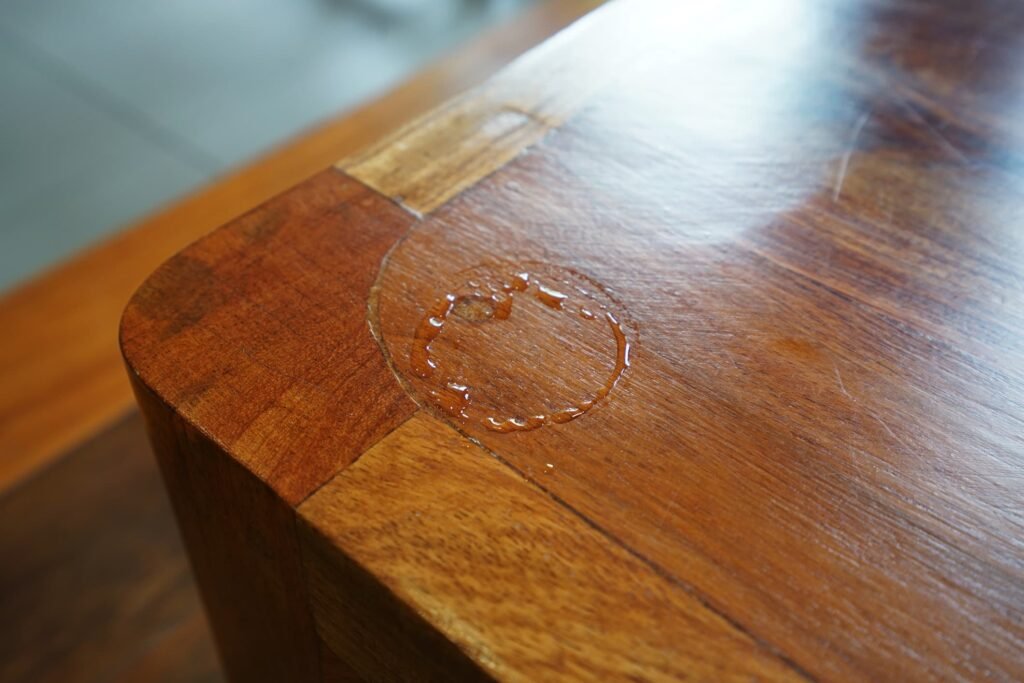
Knowing how to remove water stains from wood furniture without sanding can rescue a favorite table, dresser, or nightstand from what looks like permanent damage. A forgotten glass leaves a pale white ring, a plant pot leaks and leaves a dark blotch, and suddenly a beautiful piece looks ruined. The good news is that most water stains sit in the finish, not deep in the wood, and they can be lifted with gentle household methods. Sanding should be a last resort, because it strips the finish, risks uneven color, and can permanently change the look of the piece. This guide explains how to tell what kind of stain you are dealing with, then walks through the gentlest fixes first, so you can restore the surface without ever reaching for sandpaper.
White Rings vs. Dark Stains: Why the Difference Matters
Not all water stains are the same, and the right treatment depends on which kind you have. White or light-colored rings and cloudy marks are the most common, and they are also the easiest to fix. These marks form when moisture gets trapped in the finish itself, usually the varnish, lacquer, or wax layer on top of the wood. The water turns that finish cloudy, but the wood underneath is usually untouched. Because the damage is shallow, gentle heat, mild abrasives, or oil-based treatments can often clear it completely.
Dark stains, gray marks, or black blotches are a different story. These appear when water soaks through a damaged or worn finish and reaches the wood fibers themselves, sometimes sitting there for days or weeks. A leaking plant pot, a spill that was not wiped up, or a wet item left on a table for a long time can all cause dark stains. These marks are deeper and harder to remove, but many can still be lightened dramatically without sanding, especially if you act patiently and repeat the treatment. A stain that is black, soft, or accompanied by a musty smell may indicate rot or mold, and in that case the piece may need professional restoration.
Before treating any stain, identify the finish if you can. Rub a small amount of denatured alcohol on a hidden spot, such as the inside of a leg or the underside of a tabletop. If the finish softens or comes off on the cloth, it is likely shellac. If it does not react, it is probably varnish, lacquer, or polyurethane. This matters because some treatments, especially those involving heat or alcohol, behave differently on shellac. When in doubt, always test your chosen method on a hidden area first and wait to see the result before treating the visible stain.
First Steps Before Any Treatment
Start by cleaning the surface gently. Dust and grime can interfere with treatment and even get rubbed deeper into the finish. Wipe the area with a soft, slightly damp cloth and a drop of mild dish soap, then dry it immediately with a clean cloth. Never leave the wood wet during cleaning, since added moisture is exactly what caused the problem.
Take a close look at the stain in good light. Run your fingertip lightly over it. If the surface feels smooth and the mark looks like it is sitting on top of the wood, it is probably a finish stain and should respond well to the gentle methods below. If the surface feels rough, raised, or discolored through the grain, the water has reached the wood itself, and you may need the deeper treatments in the later sections. Take a photo of the stain before you start. This helps you judge progress honestly, because gradual lightening is easy to miss when you are staring at the same spot for an hour.
Method 1: Gentle Heat for White Rings
Heat is often the fastest fix for white rings, because it draws trapped moisture out of the finish. The classic method uses a hair dryer on a low or medium setting. Hold the dryer several inches from the stain and move it slowly back and forth. Do not hold it in one spot, and do not use high heat, which can bubble or crack the finish. Within a few minutes, many white rings fade or disappear entirely as the moisture evaporates. Let the area cool, then buff it gently with a soft cloth.
Another popular heat method uses a clothes iron and a clean cloth or towel. Set the iron to a low or medium heat with no steam. Place the cloth over the stain and press the iron onto the cloth for a few seconds at a time, lifting to check progress between presses. The cloth protects the finish from direct contact with the hot iron, and the gentle heat pulls moisture out of the finish layer. Check frequently, because too much heat can damage the finish. Stop as soon as the ring fades. If the stain is stubborn, let the area cool completely before trying again rather than pressing harder or hotter.
Method 2: Oil and Mild Abrasive Pastes
For white rings that survive heat, a mild abrasive paste can polish the cloudy finish away without removing the finish itself. One of the most reliable options is a paste of equal parts baking soda and water, or baking soda mixed with a few drops of mineral oil. Apply a small amount to a soft cloth, not directly to the wood, and rub gently along the grain of the wood, not across it. Rubbing across the grain can leave visible scratches. Work in small circles, check your progress often, and wipe the area clean with a damp cloth when the ring fades.
Another effective mixture is mayonnaise or petroleum jelly, left on the stain for several hours or overnight. This sounds unusual, but it works on the same principle: the oil penetrates the cloudy finish and displaces the trapped moisture. Spread a thin layer over the stain, cover it loosely with plastic wrap to keep it from drying out, and leave it for a few hours. Wipe it away with a soft cloth and clean the area with a mild soap solution. This method is gentle and works well on light rings, especially on varnished surfaces. It is less effective on dark stains, where the water has reached the wood.
A paste of non-gel white toothpaste is another option many people swear by. Use plain white toothpaste, not a gel or whitening formula, which can contain stronger abrasives or chemicals. Apply a small amount to a soft cloth and rub gently along the grain, then wipe clean. As with any abrasive method, test on a hidden spot first, use light pressure, and stop as soon as the stain clears. The goal is to polish the cloudiness out of the finish, not to wear through the finish to the bare wood.
Method 3: Treating Dark Water Stains
Dark stains need more patience, because the discoloration sits in the wood fibers. One of the gentlest approaches is a hydrogen peroxide treatment. Use standard household hydrogen peroxide, the kind sold for first aid, and apply it to the stain with a cloth or cotton ball. Cover the area with a damp cloth and let it sit for several hours, reapplying as it dries. For deeper stains, you can soak a cloth in hydrogen peroxide, lay it over the stain, and leave it overnight. Hydrogen peroxide acts as a mild bleach on the wood, lightening the darkened fibers gradually. Check progress regularly and stop when the stain has faded to match the surrounding wood.
Oxalic acid, sold as wood bleach in hardware stores, is the stronger option for dark stains that resist hydrogen peroxide. It is specifically designed for this job and is safer for wood than chlorine bleach, which can damage fibers and leave an unnatural color. Mix it according to the package directions, apply it to the stain with a brush or cloth, and let it work for the recommended time. Always wear gloves and work in a well-ventilated area, and keep it away from skin and eyes. After treatment, neutralize the area as directed on the package, usually with a baking soda and water rinse, and let the wood dry completely before deciding whether another round is needed.
For stains caused by a plant pot or a metal object, the dark mark may be partly mineral or rust discoloration rather than pure water damage. In that case, a paste of baking soda and water left on the stain for an hour, or a gentle application of white vinegar on a cloth, can help dissolve the mineral residue. Wipe the area clean and dry it immediately. Do not let vinegar sit on wood for long periods, since prolonged contact with acid can damage the finish.
Restoring the Finish After Treatment
Removing the stain is only half the job. The treated area may look slightly duller or lighter than the surrounding finish, and it needs protection. Once the area is completely dry, apply a thin coat of furniture oil, paste wax, or a matching furniture polish. Rub it in along the grain with a soft cloth, let it sit for a few minutes, then buff it to a soft shine. This restores the sheen and seals the surface against future moisture.
If the treated spot still looks noticeably different, a tinted furniture repair marker or a wax fill stick in a matching shade can blend it in. Apply lightly and build up the color gradually rather than laying it on thickly at once. Step back and check the result in normal room light, not just under a bright lamp. Small differences that look obvious up close often disappear at normal viewing distance once the finish is restored.
For a piece with a badly worn finish overall, treating one stain may reveal that the rest of the surface also needs attention. In that case, a full coat of paste wax or furniture oil over the entire piece can even out the appearance without sanding. Apply it to the whole surface, not just the treated spot, and buff it evenly. This is a much gentler refresh than refinishing, and it often makes an older piece look cared for rather than patched.
Mistakes to Avoid
- Reaching for sandpaper first: Sanding removes the finish and can create a pale patch that is harder to fix than the original stain. Try the gentle methods first.
- Using too much water: Soaking the wood or leaving wet cloths on it adds moisture to a problem caused by moisture. Keep everything as dry as possible.
- Rubbing across the grain: Always work along the grain of the wood. Rubbing across it can leave scratches that show in the light.
- Skipping the hidden-spot test: Every finish reacts differently. A method that works beautifully on varnish can damage shellac. Test first.
- Applying too much heat: A hair dryer or iron can bubble, crack, or discolor a finish if held too close or left in one place. Use low heat and check often.
- Using chlorine bleach on wood: Household bleach can damage wood fibers and leave uneven, unnatural color. Use hydrogen peroxide or oxalic acid instead for dark stains.
- Expecting instant results on dark stains: Deep stains lighten gradually over hours or repeated treatments. Patience gives a better result than aggressive scrubbing.
Preventing Future Water Stains
Prevention is far easier than removal. Use coasters under every glass, especially cold drinks, which sweat and leave rings quickly. Place felt pads or waterproof trays under plant pots, and never let a pot sit directly on wood without a saucer. Wipe up spills immediately, even small ones, and dry the surface rather than letting it air dry. A quick wipe takes seconds and prevents most stains entirely.
Keep your furniture’s finish in good condition, since a healthy finish is the first line of defense. Reapply paste wax or furniture oil a couple of times a year on pieces that see heavy use, like dining tables and coffee tables. This maintains a protective layer that repels brief contact with moisture. If a piece is used for plants or drinks regularly, consider a glass top or a decorative table runner for extra protection. For more ideas on protecting the furniture itself from everyday wear, including pets, see How to Stop Cat From Scratching Furniture Without Declawing, and for another gentle stain fix around the house, How to Get Candle Wax Out of Carpet Without an Iron uses the same patient, low-heat approach.
Most water stains look worse than they are. A white ring that seems permanent often vanishes with a few minutes of gentle heat. A dark blotch that looks like ruin often fades dramatically with a patient bleaching treatment. By starting with the gentlest method, testing on a hidden spot, and working along the grain, you can rescue the piece without sanding, keep its original finish intact, and enjoy it for years to come.
FAQ
Can you really remove water stains without sanding?
Yes, in most cases. White rings sit in the finish and respond to heat or gentle polishing. Many dark stains can be lightened with hydrogen peroxide or oxalic acid. Sanding is only needed when the wood is rotted, deeply damaged, or the stain will not respond to any gentler method.
What is the fastest way to remove a white water ring?
Gentle heat is usually fastest. A hair dryer on low or medium heat, moved slowly over the ring for a few minutes, often clears it completely. The iron-and-cloth method works similarly. Always use low heat and check progress frequently.
Will mayonnaise really remove a water stain?
It can help with light white rings. The oil in mayonnaise penetrates the cloudy finish and displaces trapped moisture. Leave it on for several hours, wipe it away, and clean the area with mild soap. It is gentle, but it will not fix dark stains that have reached the wood fibers.
How do I remove a dark water stain from wood?
Try hydrogen peroxide first, applied with a cloth and left for several hours or overnight. For deeper stains, use oxalic acid wood bleach according to the package directions, with gloves and ventilation. Repeat gently rather than scrubbing hard, and restore the finish with oil or wax afterward.
Is it safe to use vinegar on wood furniture?
Brief contact with diluted vinegar is usually fine for cleaning, but vinegar should not sit on wood for long periods, since acid can damage the finish. Wipe it away promptly and dry the surface. For stain removal, hydrogen peroxide or a baking soda paste is generally safer.
When should I call a professional furniture restorer?
Call a professional if the stain is black and soft, smells musty, covers a large area, or sits on a valuable antique. Rot, mold, and antique finishes need expert care, and aggressive home treatment can reduce the value of a fine piece.