
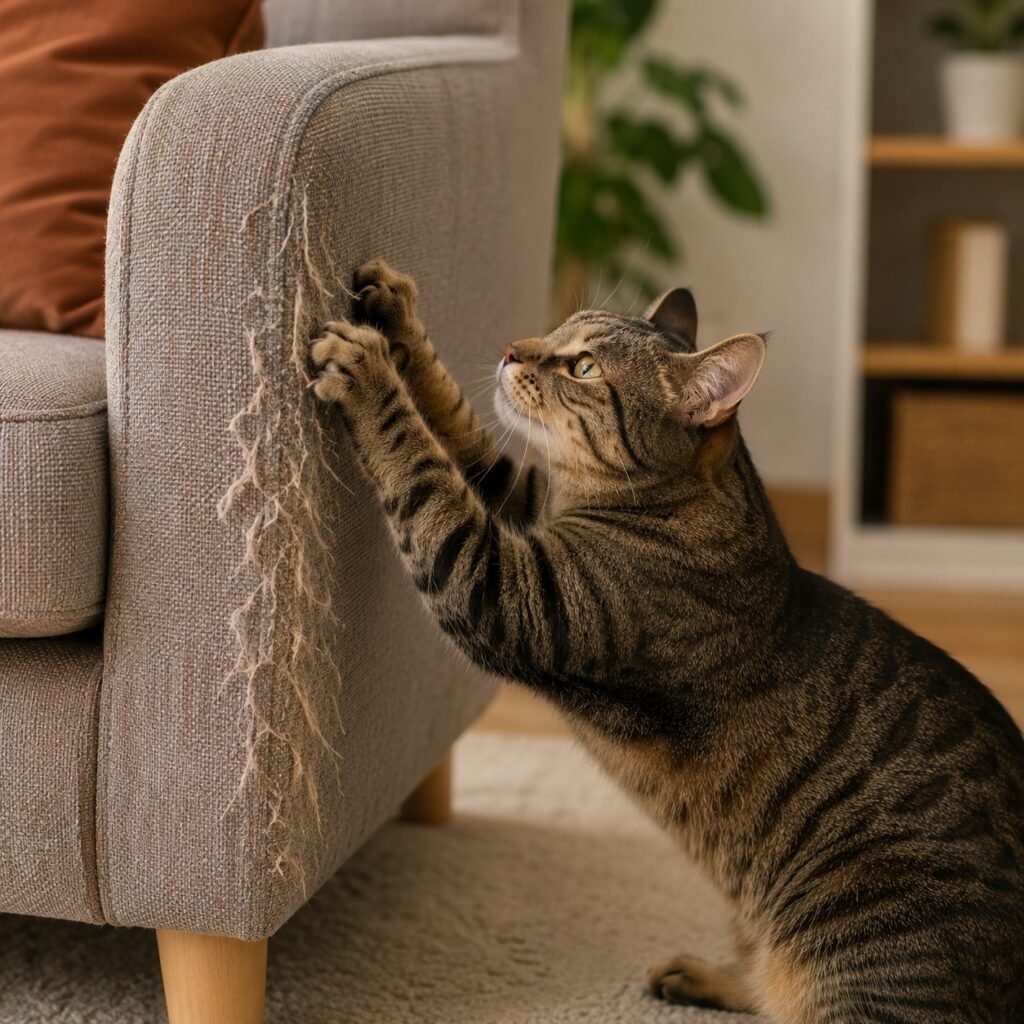
Learning how to stop a cat from scratching furniture without declawing starts with understanding one simple fact: scratching is normal, healthy cat behavior, not misbehavior. Cats scratch to shed old nail sheaths, stretch their bodies, mark territory with scent glands in their paws, and relieve stress. You cannot and should not eliminate scratching, but you can absolutely redirect it away from your sofa and onto surfaces you approve of. This guide covers the humane, force-free methods that actually work, from choosing the right scratching post to training techniques that make your furniture boring and the scratching post irresistible.
Why Cats Scratch and Why Declawing Is Not the Answer
Scratching serves several purposes at once. The dragging motion pulls off the dull outer sheath of each claw, keeping the claws sharp and healthy. It also stretches the muscles of the shoulders and back, which is why cats often scratch after waking up. Scent glands between the toes leave a familiar mark, and the visible scratch marks themselves act as a visual signal to other cats.
Declawing does not remove just the claw; it amputates the last bone of each toe, which is comparable to removing the last joint of a human finger. It can cause lasting pain, changes in gait, litter box avoidance, and increased biting, since a cat that cannot scratch or climb confidently may feel more vulnerable. For those reasons, many veterinarians and animal welfare organizations oppose it, and it is banned or restricted in many places. The methods below protect your furniture without harming your cat, and they work better in the long run because they address the reason for the scratching rather than removing the cat’s ability to do it.
Provide Scratching Surfaces Your Cat Actually Likes
The most common reason a scratching post fails is that it does not match what the cat wants to scratch. Cats have individual preferences for orientation and material, and finding your cat’s preference is the key step. Some cats love tall vertical posts they can stretch up against, while others prefer flat or angled scratchers they can rake while crouching. Offer one of each to start and watch which one your cat uses.
Material matters just as much. Sisal rope and sisal fabric are the most popular choices because they shred satisfyingly and hold up well. Cardboard scratchers are cheap, replaceable, and loved by many cats. Carpet-covered posts can backfire, since a cat that learns to scratch carpet may not distinguish between the post and your carpeted floor. Natural wood logs with bark appeal to some cats and look good in a home, although they shed bark pieces.
Stability is non-negotiable. A post that wobbles or tips over when a cat leans on it will be abandoned immediately, and the cat may never trust it again. Choose a post with a wide, heavy base, or anchor a tall post to a wall. The scratching surface should be tall enough for a full stretch, at least 30 inches for most adult cats, or long enough for a full-body stretch on a flat scratcher.
Placement: Put the Post Where the Scratching Already Happens
Cats scratch in specific places for a reason: near sleeping spots for a morning stretch, near doorways and windows for territorial marking, and near favorite resting areas. Placing a scratching post in a back room nobody visits will not help if the cat scratches the arm of the sofa in the living room. Put a post right next to the furniture your cat targets, ideally within a foot or two of it.
Over time, once the cat is reliably using the post, you can gradually move it a few inches at a time toward a more convenient spot. Move it slowly, over days or weeks, and if the cat returns to the furniture, move the post back. Having more than one scratcher also helps, especially in larger homes: one near the main sleeping area, one in the living room, and one near a favorite window covers most cats’ needs.
If your cat scratches a particular chair every morning after waking, place the post beside that chair before the cat’s usual wake-up time. Timing matters, because you want the approved option to be the easiest and most obvious choice at the exact moment the urge strikes.
Train With Rewards, Not Punishment
Positive reinforcement is the fastest way to build a scratching-post habit. Every time your cat uses the post, reward it immediately with a treat, praise, or a brief play session. You can also make the post more attractive by sprinkling a little catnip on it or dangling a toy near it so the cat’s paws land on the scratching surface during play. Many cats learn within days when the post consistently leads to good things.
When you catch your cat scratching furniture, stay calm. Gently redirect the cat to the nearby post by picking it up or luring it with a toy, and reward it if it scratches the post. Do not yell, spray water, or clap loudly, since punishment teaches the cat to scratch when you are not watching rather than teaching it to use the post. It also damages trust, which makes every other training task harder.
Consistency across the household matters. If one person redirects calmly while another scolds, the cat receives mixed messages. Agree on the same approach: redirect, reward, and protect the furniture in the meantime. Patience is part of the method; a habit that took months to form may take a few weeks to redirect, and that is normal.
Make Furniture Less Appealing While Training
While your cat learns to use the post, temporary deterrents protect your furniture without frightening the cat. Double-sided tape applied to the scratched areas is very effective, because most cats dislike the sticky feeling on their paws. Products made for this purpose come in sheets sized for sofa arms, or you can use wide double-sided tape. Remove it once the cat has reliably switched to the post, usually after a few weeks.
Fitted furniture covers or throws also help, both by protecting the fabric and by changing its texture so it is less satisfying to scratch. A smooth, tightly woven cover is less appealing than a loose weave that claws catch in. For leather furniture, a cover is especially worthwhile, since leather shows scratches permanently while fabric can often be repaired or re-covered.
Keeping your cat’s nails trimmed is another simple protective step. Short, blunt nails do far less damage even if the cat scratches furniture during training. Trim just the sharp tip of each claw, avoiding the pink quick inside the nail, and reward the cat after each paw so trimming becomes a positive experience. If you are nervous about trimming, a veterinarian or groomer can show you the technique in a single visit.
Soft Nail Caps as a Temporary Aid
Soft plastic nail caps, glued over the claws, blunt scratching damage without preventing normal scratching motion. They are applied with a small amount of adhesive, stay on for several weeks as the nail grows, and fall off naturally when the outer sheath sheds. They are a useful bridge while training is underway, especially for households with leather furniture or very persistent scratchers.
Most cats tolerate caps well if they are introduced gradually, but they are not a permanent solution on their own. The cat still needs an approved scratching surface, since the urge to scratch remains. Caps also require regular checks: if a cap is missing, replace it, and if the cat chews at them excessively, discontinue use and focus on post training and nail trimming instead.
Related pet behavior problems often share the same training principles. Dogs that dig, for example, usually need an approved outlet and consistent redirection just as cats need an approved scratching surface, which is why guides such as how to stop a dog from digging holes in the yard without fencing emphasize redirection over punishment. The species differ, but the logic holds: give the animal a better option and reward it for choosing it.
Address Stress and Boredom Scratching
Some cats scratch more when they are stressed or bored. A new pet, a move, a new baby, or a change in routine can all increase scratching, as can a lack of play and enrichment. If scratching suddenly increases, look for what changed in the cat’s environment. Providing vertical space such as shelves or a cat tree, daily interactive play sessions, and a predictable routine often reduces stress-related scratching noticeably.
Multi-cat households deserve attention too. Cats that feel crowded may scratch more as a way of marking territory. Adding extra scratching posts, litter boxes, and resting spots reduces competition and gives each cat its own space. A good rule is one resource per cat plus one extra, spread across different rooms rather than clustered together.
Environmental enrichment also helps indoor cats generally. A window perch for bird watching, puzzle feeders that make meals more interesting, and rotating toys all reduce boredom-driven behaviors. A cat that is mentally stimulated and physically tired from play is less likely to take out excess energy on the furniture. Keeping the home environment clean and pleasant supports this too, since odor and mess can add stress for both cats and owners, as discussed in guides such as how to keep a litter box from smelling in an apartment.
What Not to Do
Never punish a cat for scratching, since punishment only teaches the cat to hide the behavior and can increase anxiety, which often makes scratching worse. Never declaw, for the welfare reasons described above. Do not remove a cat’s scratching post as a punishment, since that removes the approved outlet and guarantees the furniture becomes the target again.
Avoid covering every surface with deterrents permanently while providing no good scratcher; deterrents work only when paired with an attractive alternative. And do not expect overnight results. Redirecting a natural behavior takes time, and progress usually looks like less frequent furniture scratching rather than an immediate stop.
This article is for informational purposes only; if scratching is sudden, excessive, or accompanied by other behavior changes, consult a veterinarian or a certified cat behavior professional for advice specific to your cat. Persistent problems can sometimes signal pain, anxiety, or a medical issue that deserves professional attention.
Frequently Asked Questions
How long does it take to redirect a cat to a scratching post?
Most cats show improvement within one to two weeks of consistent redirection and rewards, and many switch fully within a month. Cats with a long-established furniture habit may take longer, so patience and keeping the post near the furniture are important.
What type of scratching post do most cats prefer?
There is no single favorite, but tall, stable sisal posts and flat cardboard scratchers are the most widely liked. Offer both a vertical and a horizontal option and watch which one your cat chooses, then invest in more of that style.
Does double-sided tape really stop cats from scratching furniture?
Yes, most cats dislike the sticky sensation and will avoid taped areas. It works best as a temporary training aid combined with a nearby scratching post, and it should be removed once the cat reliably uses the post.
Are soft nail caps safe for cats?
When applied correctly and checked regularly, soft nail caps are generally safe and painless. They blunt damage while still allowing normal scratching motion. If your cat chews at them constantly or seems distressed, stop using them and focus on training and nail trimming.
Why does my cat scratch furniture right after I buy a new post?
The new post may be in the wrong place, too short, unstable, or made of a material your cat dislikes. Move it next to the scratched furniture, check that it does not wobble, and try a different material or orientation to match your cat’s preference.
Can older cats learn to use a scratching post?
Yes, cats of any age can learn with patience and rewards. Older cats may need a shorter or angled scratcher if arthritis makes stretching up difficult, and they may take a little longer to change an established habit, but the same methods work.













2 thoughts on “How to Stop Cat From Scratching Furniture Without Declawing”
Comments are closed.