Cold pizza is a classic, but sometimes you want it hot — with a crisp, crackly bottom and cheese that actually melts instead of turning rubbery. Learning how to reheat pizza in a pan without it getting soggy is the single best upgrade you can make to your leftovers game. The microwave makes crusts chewy and limp, and the oven takes forever to preheat for two slices. A skillet, on the other hand, re-crisps the crust in minutes and — with one small trick — steams the cheese back to gooey perfection.
Why Reheated Pizza Goes Soggy
Sogginess has two causes, and your reheating method has to beat both:
- Trapped moisture: As the cheese and sauce heat, they release steam. In a microwave, that steam has nowhere to go and gets reabsorbed into the crust, turning it gummy.
- Uneven heating: The microwave blasts the toppings while the crust base stays floppy. An oven fixes this but dries out thin slices while you wait for it to heat up.
A pan solves both problems: direct contact with hot metal re-crisps the base, and a lid traps just enough steam to melt the cheese without drowning the crust. The result is honestly close to fresh — many people prefer it.
The Skillet Method: Step by Step
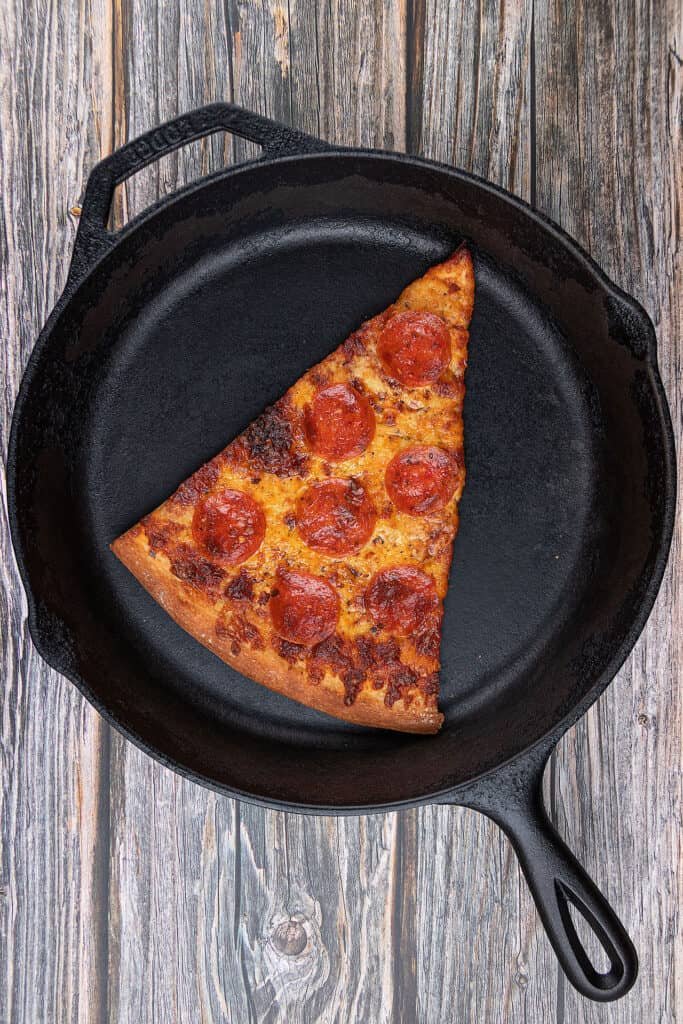
This works for any pan — cast iron, stainless steel, or nonstick — and any style of pizza, from thin New York slices to thicker pan pizza. Total time: about five minutes.
- Use a cold or room-temperature pan. Place your slices in a dry skillet before turning on the heat. Starting cold lets the crust warm gradually and crisp evenly instead of scorching on contact. Do not add oil or butter — the pizza’s own cheese fat is plenty.
- Heat over medium-low. Set the burner to medium-low and let the slices warm for two to three minutes. You should hear a gentle sizzle, not an aggressive crackle. If the bottom is browning too fast, lower the heat.
- Check the bottom. After about two minutes, lift a slice with a spatula. You want a golden, lightly crisped base. Pale and soft? Give it another minute. Dark brown already? Lower the heat next time.
- Add a few drops of water — the magic step. Push the slices to one side of the pan and flick in half a teaspoon to a teaspoon of water (for two to three slices), keeping it off the pizza itself. Immediately cover with a lid.
- Steam for one to two minutes. The water turns to steam under the lid and melts the cheese beautifully while the base stays crisp against the hot pan. Peek after one minute — the cheese should be fully melted and glossy.
- Rest for 30 seconds, then serve. Slide the slices onto a plate or cutting board and let them sit briefly so the crust sets. Listen for the crunch.
Why the water trick works
The lid traps steam, which melts cheese far more efficiently than dry heat alone. Because the crust sits directly on the hot metal the whole time, its bottom keeps crisping while the top steams. It is the best of both worlds — a technique borrowed from dumpling and potsticker cooking, where the same crisp-bottom, steamed-top contrast is the whole point. Keeping the water away from the slices matters: pour it into an empty corner of the pan, not onto the food.
Cast Iron vs. Nonstick: Which Pan Is Best?
- Cast iron skillet: The champion. It holds heat evenly and produces the deepest, crispiest crust. Preheat awareness matters less since you start from cold.
- Stainless steel: Works well but the crust can stick if the pan is too hot. Keep the heat at medium-low and make sure slices sit flat.
- Nonstick: Totally fine and the easiest cleanup. Just avoid blasting it on high heat, which can damage the coating — medium-low is ideal anyway.
- Griddle or flat pan: Great for reheating four or more slices at once; the method is identical.
Pan size matters: slices should sit flat in a single layer without overlapping. Crowding traps steam under the slices and softens them. Reheat in batches if needed — each batch takes only five minutes.
7 Mistakes That Make Reheated Pizza Soggy
- Using the microwave as the main method. It is the fastest route to a rubbery, floppy slice. If you must microwave, do 30 seconds max, then finish in the pan.
- Starting with a ripping-hot pan. A screaming-hot skillet chars the bottom before the cheese melts. Medium-low and patient wins.
- Adding oil to the pan. The slice already has fat in the cheese and crust. Extra oil fries the bottom into greasiness instead of crispness.
- Skipping the lid. Without a lid, the cheese never fully melts and you end up overcooking the base waiting for it. No lid? Use a baking sheet or even a large plate as a cover.
- Pouring water onto the pizza. The water goes in the empty part of the pan. On the slice, it is just… wet pizza.
- Reheating too many slices at once. Overlap equals trapped steam equals soggy middles. Single layer, always.
- Storing leftovers badly in the first place. Slices stacked in the box absorb moisture overnight. For the best reheat, store slices in an airtight container or wrapped individually, and they will crisp up far better. Good storage habits matter for all leftovers — the same care that keeps meal-prep chicken from drying out applies to keeping pizza slices reheatable.
Adjusting for Different Pizza Styles
- Thin crust: Reduce heat to low and shorten the crisping phase to about 90 seconds — thin bases go from golden to burnt fast.
- Thick or deep-dish slices: Give them an extra minute of covered steaming so the center heats through. You can also slice them in half horizontally for faster, more even reheating.
- Extra-cheesy or loaded slices: Add the water a little earlier; heavy toppings need more steam time to melt through.
- Gluten-free or cauliflower crust: These are more fragile. Use low heat, a nonstick pan, and handle gently with a wide spatula.
Other Methods, Ranked
The pan is the winner, but here is how the alternatives compare:
- Skillet + lid (this method): Crispy base, melted cheese, five minutes. Best overall.
- Oven or toaster oven at 375°F: Good results, evenly heated, but ten-plus minutes including preheat. Fine for a whole leftover pizza.
- Air fryer at 350°F for 3–4 minutes: Surprisingly good — crisp all over. Watch closely; small slices can fly around or burn at the edges.
- Microwave: Fast but floppy. Only acceptable in emergencies, or as a 30-second head start before the pan.
Whatever method you choose, the same principle from great breakfast cooking applies: texture is everything. If you love a proper crunch, you will appreciate the technique behind crispy hash browns at home too — dry heat and patience beat rushing every time.
Serving Tips for Reheated Pizza
- Finish with fresh toppings after reheating: a drizzle of olive oil, red pepper flakes, fresh basil, or grated parmesan makes leftovers taste intentional.
- Let the slice rest 30 to 60 seconds before eating — the cheese sets slightly and the crust firms up.
- Eat with a fork and knife if the slice is loaded; reheated toppings can slide on the first bite.
FAQ
How do you reheat pizza in a pan without it getting soggy?
Place slices in a cold, dry skillet, heat over medium-low for two to three minutes until the base crisps, then add a few drops of water to an empty corner of the pan, cover with a lid, and steam for one to two minutes until the cheese melts.
Should you add oil when reheating pizza in a pan?
No. The pizza already contains enough fat in its cheese and crust. Added oil makes the base greasy rather than crisp. A dry pan gives the best texture.
How long does it take to reheat pizza in a skillet?
About five minutes total: two to three minutes uncovered to crisp the bottom, then one to two minutes covered with a splash of water to melt the cheese.
Can you reheat pizza in a cast iron skillet?
Yes — cast iron is the best pan for the job. Its even heat retention produces the crispiest crust. Start with a cold pan over medium-low heat, just like any other skillet.
Why is my reheated pizza soggy in the middle?
Usually one of three causes: the heat was too high (burnt bottom, cold middle), slices were overlapping and trapped steam, or water was poured onto the pizza instead of into an empty corner of the pan. Fix those and the middle stays crisp.
Is reheated pizza safe to eat the next day?
Yes, as long as the pizza was refrigerated within two hours of delivery or baking and stored properly. Reheat until steaming hot throughout. For make-ahead breakfasts with similar food-safety thinking, these fluffy pancakes without eggs are another great next-day option.