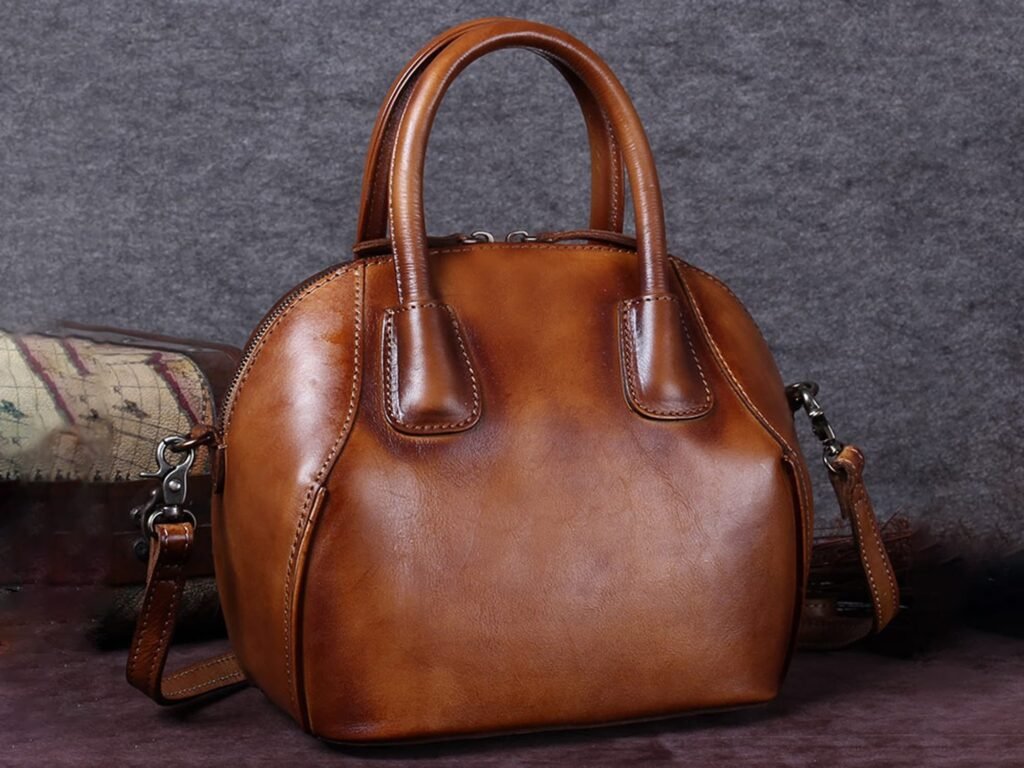
A pen mark on a leather bag feels like a disaster, especially when the bag was expensive or a favorite. The standard advice is to reach for rubbing alcohol, but alcohol is risky on leather: it strips the natural oils, dries out the finish, and can leave a pale, faded patch that looks worse than the ink. Learning how to remove pen marks from a leather bag without alcohol is the safer path, and the gentle methods in this guide can lift most ballpoint and gel ink marks without damaging the leather underneath.
The key is to act gently and work in stages. Ink sits on the surface of finished leather at first, and a mild method can often lift it completely. If the ink has soaked in over days or weeks, it will take more patience and a few rounds of treatment. Never scrub hard, never use a solvent you have not tested, and always test on a hidden spot first.
Identify Your Leather Before You Start
Not all leather reacts the same way to cleaning. Finished leather, which covers most handbags, purses, and totes, has a smooth protective coating on the surface. Ink sits on top of that coating, which makes it much easier to remove. Unfinished leather, such as suede and nubuck, has no coating, so ink soaks straight into the fibers and is far harder to lift. The methods in this guide are for finished leather. If your bag is suede or nubuck, skip the wet methods entirely and take it to a leather specialist.
To check your leather, put a single drop of water on a hidden area, such as the inside of a strap or the bottom corner. If the water beads up and sits on the surface, the leather is finished and sealed. If the water darkens the spot and soaks in quickly, the leather is unfinished or the finish has worn away, and you should be extra gentle or seek professional help.
First Step: Blot, Never Rub
If the ink mark is fresh, your first move is to blot it with a clean, dry white cloth. Press the cloth gently onto the mark and lift it straight up. Repeat with a clean section of the cloth each time. This picks up wet ink sitting on the surface before it can sink in. Do not rub the mark, even lightly. Rubbing pushes ink deeper into the leather and spreads it across a wider area, turning a small dot into a smear.
For dried ink, blotting will not help, so move on to the cleaning methods below. Work in a well-lit area and take a photo of the mark before you start, so you can compare your progress honestly after each round.
Method 1: The White Eraser Trick
The simplest and safest method for fresh ballpoint pen marks is a clean white eraser, the kind used for pencil. This works because the eraser lifts ink from the surface coating of finished leather without any liquid at all, which means there is no risk of the ink spreading or the leather drying out.
How to Use the Eraser
Take a soft white vinyl eraser and make sure it is completely clean, with no pencil marks or dirt on it. Rub it very gently over the pen mark using short strokes in one direction. Use almost no pressure at first, and increase it only slightly if the ink is not lifting. Check your progress every few strokes by brushing away the eraser crumbs and looking at the mark.
Stop the moment the ink is gone, or the moment you notice any change in the leather’s shine or texture. Over-erasing can wear through the finish and leave a dull patch. This method works best on small, fresh ballpoint marks; for gel ink, marker, or old ink, move on to the next methods.
Method 2: Baking Soda Paste
Baking soda is a mild abrasive and a gentle cleaner, and a paste made from it can lift ink that an eraser cannot reach. It is safe on most finished leather when used gently, and it costs almost nothing.
Step 1: Mix the Paste
Mix two parts baking soda with one part water in a small bowl until you have a thick paste, about the consistency of toothpaste. You only need a small amount, roughly a teaspoon of paste, for a typical pen mark. Do not make the paste runny, since excess water can seep into the leather and leave a water mark.
Step 2: Apply and Wait
Use a cotton swab or a soft cloth to dab a thin layer of paste directly onto the ink mark. Do not spread it beyond the mark. Let it sit for ten to fifteen minutes. The baking soda will slowly loosen the ink from the leather’s surface coating. For a stubborn mark, you can leave it for up to thirty minutes, but do not let the paste dry out completely and crust onto the leather.
Step 3: Wipe Away Gently
Dampen a clean white cloth with plain water, wring it out well, and wipe the paste away with gentle circular motions. Then dry the area immediately with a second clean cloth. Check the mark. If it has faded but not disappeared, you can repeat the treatment once more. If two rounds do not remove it, move on to a different method rather than repeating the same one, since repeated abrasion can wear the finish.
Method 3: White Vinegar Solution
White vinegar is a mild acid that can dissolve ink, and diluted properly it is gentle enough for finished leather. This method works well on gel pen marks and on ink that has been on the bag for a few days.
Mix one part white vinegar with two parts water in a small bowl. Dip a cotton swab into the solution and dab it onto the ink mark, working only on the ink itself and not the surrounding leather. Let the solution sit for a minute or two, then blot it up with a clean dry cloth. Repeat with a fresh swab until the ink stops transferring onto the swab.
Never pour vinegar directly onto the bag, and never use balsamic or apple cider vinegar, which can stain the leather. After the ink is gone, wipe the area once more with a cloth dampened with plain water to remove any vinegar residue, then dry it immediately. Vinegar has a strong smell, but it fades within an hour or two once the leather is dry.
Method 4: Mild Soap and Water
For faint ink marks or ink that has already faded through other treatments, plain mild soap and water is often enough to finish the job. Use a gentle soap such as a few drops of mild dish soap or a dedicated leather soap, mixed into a bowl of lukewarm water.
Dip a soft white cloth into the soapy water, wring it out until it is barely damp, and rub the ink mark gently in small circles. Rinse the cloth, wring it out again, and repeat. This method is slow, and you may need many rounds before the ink fades, but it is the gentlest option in this guide, which makes it a good first choice for light-colored or expensive bags.
Do not soak the leather: a damp cloth is all you need. Excess water can leave dark marks, especially on lighter colors, and weaken stitching over time. Dry the area with a clean towel immediately and let the bag air dry fully before using it again.
Method 5: Non-Gel White Toothpaste
Plain white non-gel toothpaste contains very mild abrasives, and it can lift ink from finished leather when other methods stall. This is a good option for small, stubborn marks, but it must be the right kind of toothpaste: white, non-gel, and without whitening crystals or colored stripes.
Put a pea-sized amount of toothpaste on a soft cloth and rub it gently over the ink mark in small circles. Work for thirty seconds, then wipe the toothpaste away with a clean damp cloth and check your progress. Repeat once if needed. Stop as soon as the ink is gone, since the abrasives in toothpaste can dull the leather’s finish if you keep rubbing after the ink has lifted. Wipe the area thoroughly afterward, since dried toothpaste residue can leave a white film on dark leather.
What to Do After the Ink Is Gone
Once the pen mark is gone, the leather needs to be conditioned. Every cleaning method in this guide removes some of the leather’s natural oils along with the ink, and unconditioned leather can dry out, stiffen, and crack over time. Apply a small amount of leather conditioner to a soft cloth and rub it into the cleaned area in gentle circles, then buff off any excess with a dry cloth.
If you do not have a leather conditioner, a tiny amount of a neutral leather balm or a dedicated leather cream works just as well. Avoid household oils such as olive oil or coconut oil, which can darken the leather unevenly and go rancid over time. Condition the whole bag, not just the cleaned spot, so the color and sheen stay even across the surface.
Mistakes to Avoid
The most damaging mistake is reaching for a strong solvent. Rubbing alcohol, nail polish remover, acetone, and bleach can all strip the finish off leather in seconds, leaving a pale, rough patch that no conditioner can fix. This is why every method in this guide avoids alcohol entirely. The same warning applies to hand sanitizer, which is mostly alcohol, and to many makeup removers that contain solvents.
Another common mistake is scrubbing hard with a rough cloth or a brush. Leather is a skin, and it responds to pressure the way skin does: gentle, repeated treatment works, while aggressive scrubbing causes damage. Use soft white cloths and cotton swabs, and let the cleaning agent do the work instead of your elbow.
Do not use colored cloths or paper towels on light-colored leather. Dye can transfer from a colored cloth onto damp leather, leaving a second stain on top of the first. White cloths, white cotton swabs, and white erasers are the safe choice every time. And never apply heat to speed up drying, since heat can set any remaining ink permanently into the leather.
Finally, do not ignore a mark and hope it fades on its own. Ink that sits on leather for weeks bonds more strongly with the finish and becomes much harder to remove. Treat a pen mark the day you notice it, even if you only have time for the eraser method. A quick response often means the difference between a mark that disappears completely and one that leaves a faint shadow forever. For more leather care, see our guide on how to stop a belt from squeaking without replacing it, which covers keeping leather accessories in good shape, and if you deal with other marks on fabric, our guide on how to remove deodorant marks from a black shirt fast shows the same gentle, fabric-safe approach to stain removal.
How to Prevent Pen Marks on Your Leather Bag
Prevention is simple once you know where the risk comes from. Keep pens in a separate zippered pouch inside your bag rather than loose in the main compartment, where they can leak or leave marks every time you reach in. A small pencil case or a zippered pocket costs very little and protects a bag worth far more.
Choose pens with retractable tips or secure caps, and check them regularly for leaks, especially in warm weather when ink expands and escapes more easily. Avoid carrying uncapped pens in the same pocket as your bag’s lining, and keep markers and gel pens away from leather entirely when you can, since their ink is harder to remove than standard ballpoint ink.
Consider applying a leather protector spray to your bag once or twice a year. A good protector creates an invisible barrier on the surface that makes ink, water, and dirt easier to wipe away before they can set. Test the spray on a hidden spot first, and reapply after the bag has been cleaned or exposed to heavy rain.
FAQs
Can I use hand sanitizer to remove pen marks from leather?
No. Hand sanitizer is mostly alcohol, and alcohol strips the oils and finish from leather, leaving a pale, dried-out patch that is often worse than the ink mark. Use the eraser, baking soda, or vinegar methods in this guide instead.
Will baking soda damage my leather bag?
Baking soda is safe on most finished leather when used as a paste and wiped away gently. Always test it on a hidden spot first, use a thin layer, and do not repeat the treatment more than twice. Condition the leather afterward to restore its moisture.
How do I remove a pen mark from a white leather bag?
White leather needs the gentlest approach. Start with the white eraser method, then try mild soap and water, and only move to baking soda paste or vinegar if the mark remains. Test every method on a hidden spot first, since any lightening or discoloration will be very visible on white leather.
Can a magic eraser remove pen marks from leather?
A magic eraser can lift ink, but it is a fine abrasive that can also remove the leather’s finish and color if you press too hard. Use it only as a last resort, with the lightest possible touch, on a small test area first. The white eraser or baking soda paste is safer for most bags.
What if the ink has been on the bag for months?
Old ink is harder to remove because it bonds with the finish over time. Try the vinegar method or baking soda paste for several rounds, with conditioning in between. If the mark barely fades after a few attempts, a professional leather cleaner has stronger tools and can often remove what home methods cannot.
Should I condition my bag after cleaning off ink?
Yes, always. Cleaning removes oils from the leather along with the ink, and unconditioned leather can dry out and crack. Apply a leather conditioner to the cleaned area and the rest of the bag, then let it dry fully away from direct heat and sunlight.