Learning how to remove ink from clothes without rubbing alcohol can save a favorite shirt, a work uniform, or a school outfit. Ink spreads fast and looks permanent, but most fresh stains respond well to ordinary household products. Milk, dish soap, hairspray, baking soda, white vinegar, and glycerin can all lift ink when used in the right order and with patience.
Act before heat sets the stain. Blot first, never rub, and test every method on a hidden seam.
Why Ink Stains Are So Stubborn
Ink is designed to stick. Ballpoint ink is oil based, gel ink is water based with thick pigment, permanent marker ink contains resins that bond to fibers, and fountain pen ink is a thin dye that soaks deep into fabric. Once ink dries, it locks into the weave. Heat from a dryer or a hot iron can set it for good, so never put a stained garment in the dryer until the mark is gone.
Rubbing alcohol dissolves many inks, but milk, hairspray, dish soap, baking soda, vinegar, and glycerin can also lift ink. The best choice depends on the ink and the fabric.
Before You Start
- Blot, do not rub. Press a clean white cloth against the stain to lift wet ink. Rubbing pushes ink deeper.
- Work from the outside in, so the mark shrinks instead of growing.
- Place a clean white towel under the stained layer so ink does not transfer to the back of the garment.
- Check the care label. Silk, wool, and dry clean only garments need gentler methods.
- Test in a hidden spot first, such as an inside seam, and check for color change.
- Rinse with cold water. Hot water can help set dye based ink.
- Do not use the dryer yet. Air dry, inspect in good light, and treat again if any trace remains.
Keep the stain damp. Change your blotting cloth often.
Method 1: The Milk Soak
The milk soak is gentle and works well on fresh ballpoint ink and delicate fabrics. Milk will not bleach color or damage most fibers, which makes it a good first try.
- Pour enough whole milk into a bowl to cover the stain. Whole milk works best because its fat loosens oil based ink.
- Soak for at least 30 minutes. For a heavy stain, leave it for several hours or overnight in the refrigerator.
- If the milk turns blue, replace it with fresh milk so ink keeps moving out of the fabric.
- Rub gently with your fingers or a soft toothbrush, rinse with cold water, then add a drop of dish soap, rinse again, and wash as usual.
Milk works slowly and is less effective on permanent marker or dryer set ink.
Method 2: Hairspray
Hairspray works because many formulas contain alcohol and solvents that break ink down on contact. It works best on ballpoint ink and fresh stains. Check the label for alcohol. Alcohol free hairspray will do very little for ink.
- Place a clean white cloth under the stain and spray until it is damp.
- Let it sit for 5 to 10 minutes, then blot firmly with a clean white cloth. Ink should transfer onto the cloth.
- Move to a clean part of the cloth and repeat. A strong stain may need three or four rounds.
- Rinse with cold water, apply a little dish soap, and wash as usual.
Hairspray can leave residue, so rinse and wash after treatment. If the first round shows no ink transfer, switch methods.
Method 3: Dish Soap and Cold Water
Liquid dish soap cuts grease and oil, which makes it a strong match for ballpoint ink, and it is safe for most washable fabrics. It is a good follow up after milk, hairspray, or vinegar.
- Blot up as much wet ink as you can.
- Mix one teaspoon of clear dish soap with one cup of cold water. Clear soap is best because colored soap can tint light fabric.
- Apply with a clean cloth, working from the outside in with light strokes, then blot with a clean damp cloth.
- Repeat until no more ink transfers, rinse with cold water, and wash as usual.
For a dried stain, let the solution sit for 15 to 20 minutes before blotting.
Method 4: Baking Soda Paste
Baking soda is a mild abrasive, and as a paste it can lift ink from sturdy fabrics such as cotton and denim. It works best as a second step after a liquid treatment has loosened the ink.
- Mix three parts baking soda with one part cold water to form a thick paste.
- Spread it over the stain and let it sit for 30 minutes.
- Work it gently with a soft toothbrush in small circles, rinse with cold water, and repeat if a faint shadow remains.
Do not use it on silk, satin, or fine wool. On denim and heavy cotton it suits surface ink.
Method 5: White Vinegar
White vinegar helps break down water based inks, including many gel inks and fountain pen inks. Use plain distilled white vinegar, not apple cider vinegar or any colored vinegar, which can stain light fabric.
- Mix equal parts white vinegar and cold water.
- Press a cloth soaked in the mixture onto the stain for 10 to 15 minutes, then blot and check.
- If ink is transferring, keep applying fresh solution and blotting with a clean cloth.
- Follow with dish soap and a normal wash to remove the smell.
Vinegar is weak on oil based ballpoint ink and needs a spot test on silk or wool. The same patient approach helps when learning how to remove red wine from a white shirt without bleach.
Method 6: Glycerin for Dried Ink
Glycerin is a thick, clear liquid sold in most drugstores. It softens dried ink and loosens its grip on fibers, which makes it valuable for stains that have set for a day or more. It does not remove ink on its own, but it prepares a dried stain so dish soap or a commercial remover can finish the job.
- Apply a few drops directly to the dried stain and work it in gently.
- Let it sit for at least one hour, or overnight for a very old stain.
- Blot, then apply dish soap and cold water, rinse, and repeat if needed before washing.
Spot test silk and wool first. Apply it in the evening and wash in the morning.
Method 7: Commercial Stain Removers
When household methods leave a faint shadow, a commercial stain remover can often finish the job. Look for a prewash spray, gel, or stick that lists ink or ballpoint pen among the stains it treats. Oxygen based removers suit white and colorfast cotton, while enzyme based formulas help with stains that mix with ink on work clothes.
- Apply exactly as the label directs and respect the waiting time.
- Use it after a household method, not instead of blotting.
- Do not mix it with vinegar, baking soda, or another cleaner unless the label says it is safe.
- Wash promptly after the wait time and check before drying.
Commercial removers are convenient, but a dryer set stain may still leave a faint outline.
Choosing the Right Method by Ink Type
Ballpoint pen ink
Ballpoint ink is oil based. Milk, hairspray, and dish soap are the best first choices. Blot, then soak in milk or use hairspray, and finish with dish soap.
Gel pen ink
Gel ink is water based with heavy pigment. Start with cold water and dish soap, then try white vinegar. Avoid hot water and blot carefully, since gel ink smears fast.
Permanent marker
Permanent marker is the hardest common ink to remove. Hairspray, dish soap, and a commercial remover together give the best chance, but a faint mark often remains. Treat early and repeat.
Fountain pen ink
Fountain pen ink is a thin dye that soaks deep and fast. Rinse under cold water right away, then try vinegar or a milk soak, followed by dish soap.
Choosing the Right Method by Fabric Type
Cotton
Cotton is the most forgiving fabric. It tolerates all seven methods above. Repeat treatments as needed, but avoid hot water and the dryer until the stain is gone.
Polyester and synthetic blends
Polyester absorbs less ink than cotton, so surface treatments work well. Dish soap and hairspray are good first choices. Avoid high heat and hard scrubbing, which can pill the fabric.
Silk and wool
Silk and wool need the gentlest approach. Start with blotting and cold water only. A short milk soak is usually safe. Avoid vinegar, baking soda paste, and scrubbing. Never wring them; press between towels. For large stains, use a dry cleaner.
Denim
Denim can handle stronger methods. Baking soda paste, dish soap, and hairspray all work well. Test dark denim on an inside seam first, since dye can fade.
Mistakes That Make Ink Stains Worse
- Rubbing the stain, which spreads ink and pushes it deeper.
- Using hot water first, which can set dye based ink.
- Putting the garment in the dryer before the stain is fully gone.
- Using a colored towel to blot, which can transfer dye.
- Applying too much cleaner at once, which can spread ink outward.
- Skipping the spot test on silk, wool, or dark dyes.
- Mixing cleaners at random. Use one method at a time and rinse between methods.
Do not give up after one attempt. Ink often fades in stages over a second or third round.
A Simple Routine for Most Stains
- Blot the wet ink with a clean white cloth. Do not rub.
- Place a clean cloth under the stain to catch ink as it lifts.
- Soak in milk for 30 minutes, or apply hairspray and blot for 10 minutes if you need a faster start.
- Rinse with cold water, apply dish soap mixed with cold water, blot, and rinse again.
- If a shadow remains, try white vinegar for gel or fountain pen ink, or baking soda paste for dried ballpoint ink on sturdy fabric.
- Wash as usual, air dry, and inspect in daylight before you use the dryer.
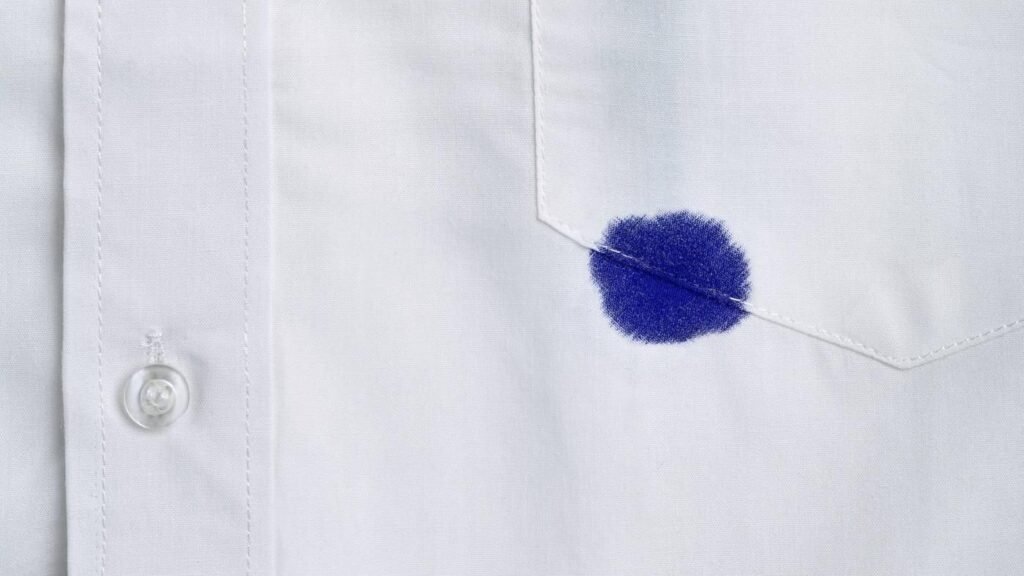
For a pen leak in a shirt pocket, treat both the pocket and the shirt front, since ink often soaks through. The same habit of blotting first, testing a cleaner, and avoiding heat applies to paint as well, as explained in this guide to how to remove paint from clothes without rubbing alcohol. If a garment comes out creased after handling, smooth it by following the steps for how to remove wrinkles from clothes without an iron.
Pros and Cons at a Glance
- Milk soak: very gentle and good for ballpoint ink, but slow and weak on permanent marker.
- Hairspray: fast on fresh ballpoint ink, but results vary by formula and it can leave residue.
- Dish soap: safe and widely available, but may not remove a heavy stain on its own.
- Baking soda paste: good for sturdy fabrics and dried ink, but too abrasive for silk and fine wool.
- White vinegar: helpful for gel and fountain pen ink, but weak on oil based ballpoint ink.
- Glycerin: excellent for softening dried ink, but slow and only a preparation step.
- Commercial removers: convenient and strong, but cost more and must be used exactly as directed.
Best results often come from combining two methods, such as milk followed by dish soap.
Frequently Asked Questions
Does milk really remove ink from clothes?
Yes, especially when the stain is fresh. Soak for at least 30 minutes, change the milk if it turns blue, then rinse and follow with dish soap.
Can hairspray remove permanent marker from fabric?
Hairspray can fade it, but rarely removes it completely. Spray an alcohol based formula, wait 5 to 10 minutes, blot, and repeat, then use dish soap and a commercial remover.
Will dish soap remove dried ink?
Dish soap can help with dried ink, but it works better after the stain has been softened first. Apply glycerin or soak in milk for an hour, then use dish soap and cold water to lift the loosened ink. Repeat until no more ink transfers.
Is white vinegar safe for all clothes?
No, white vinegar is safe for most washable cotton and polyester, but test it first on silk, wool, and dark dyes. It works best on water based gel and fountain pen ink. Do not use colored vinegar, and always rinse and wash after treatment.
What should I do if the ink stain has already been through the dryer?
A dryer set stain is much harder to remove, but it is still worth trying. Apply glycerin and leave it overnight, then treat with dish soap and a commercial stain remover. Repeat the cycle a few times. If the mark remains, a professional cleaner may fade it further, but some heat set stains will leave a faint shadow.
Can I use baking soda on silk or wool?
It is best not to use baking soda paste on silk or wool. Scrubbing can damage fine fibers and leave a dull patch. Stick to blotting, cold water, a short milk soak, and a tiny amount of mild dish soap after a spot test. For larger stains, take the garment to a dry cleaner.