
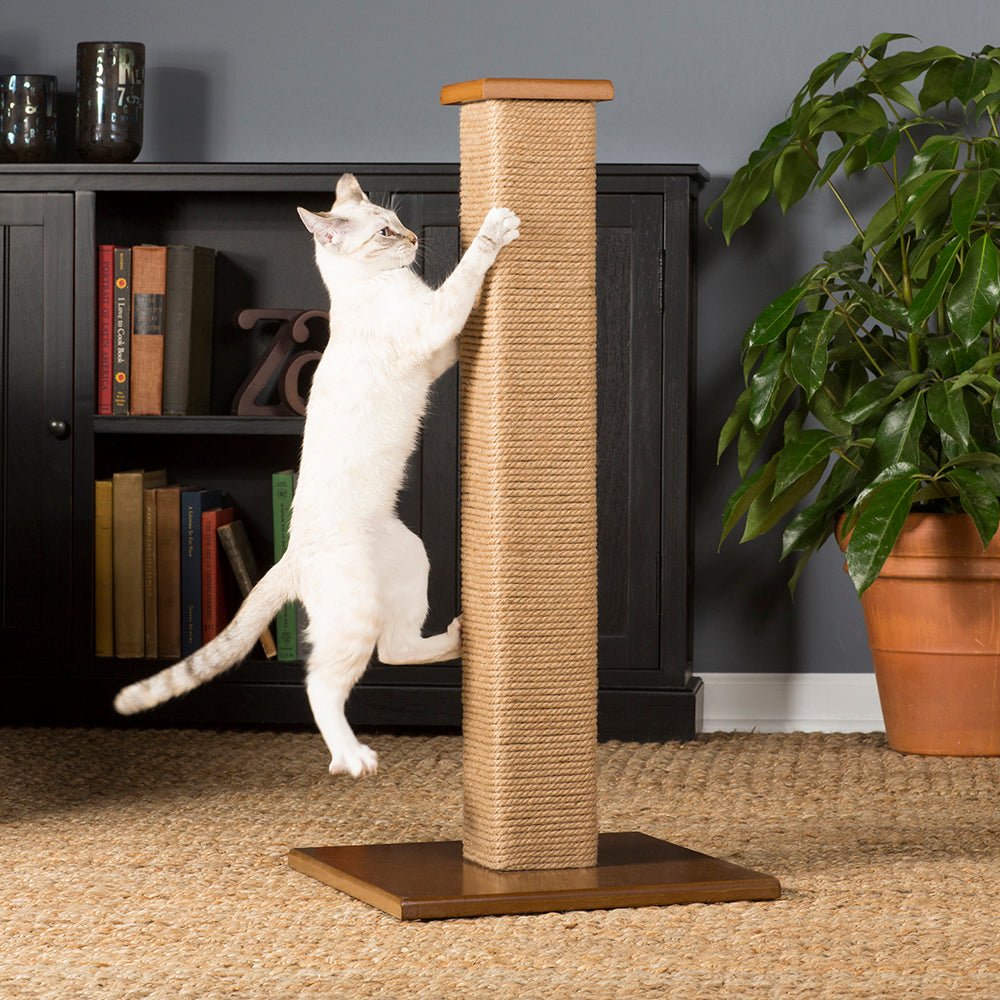
If your couch arms look like shredded confetti and your dining chairs have claw marks along every leg, you are not alone — and your cat is not being bad. Learning how to train a cat to use a scratching post instead of furniture starts with understanding one simple truth: scratching is a healthy, instinctive behavior your cat needs. You cannot train it out of her. What you can do is redirect it to the right surface, make the post more rewarding than the sofa, and make the furniture less appealing. Done correctly, most cats switch over within one to three weeks.
Why Cats Scratch in the First Place
Before you change the behavior, it helps to know what scratching actually does for your cat. It is never about spite or revenge.
- Claw maintenance: Scratching sheds the dull outer sheath of each claw, keeping the sharp edge underneath exposed. It is the feline equivalent of filing your nails.
- Stretching: A good scratch lets a cat dig in and pull, stretching the muscles along the back, shoulders, and paws — especially satisfying after a nap.
- Scent marking: Cats have scent glands in their paws. Scratching deposits their scent and leaves a visual mark, which says “this is mine” to other cats.
- Stress relief and excitement: Many cats scratch when they are happy, wound up, or greeting you at the door.
That is why yelling or spraying water rarely works long term — and why positive redirection beats punishment every time. If you want help keeping your cat off other forbidden surfaces too, this guide on how to keep a cat off the kitchen counter without a spray bottle uses the same reward-based approach.
Step 0: Pick a Scratching Post Your Cat Will Actually Use
A huge percentage of “my cat ignores the scratching post” stories are really “the post was wrong for this cat” stories. Get the hardware right first.
Size matters more than style
The post must be tall and sturdy enough for a full stretch. For a vertical post, look for at least 28 to 32 inches of scratching surface. If the post wobbles, most cats will abandon it instantly — a wobbly post feels unsafe and teaches nothing. A wide, heavy base or a wall-mounted option fixes this.
Match the material to your cat’s taste
Cats develop texture preferences early. The two most popular materials are:
- Sisal rope: The coarse, fibrous classic. Most cats love it because it shreds satisfyingly and gives claws real resistance.
- Cardboard: Affordable and loved by horizontal scratchers. Corrugated cardboard scratchers (flat or angled) are ideal for cats who prefer to scratch low.
Some cats prefer natural wood or carpet. Watch what your cat currently scratches: chair legs and door frames point to vertical sisal; rugs and the carpet under the bed point to horizontal cardboard.
Orientation: vertical, horizontal, or both
Offer both orientations at first, then keep whichever gets used. Vertical posts suit stretchers; flat or sloped pads suit cats who scratch rugs. Many multi-cat homes need more than one post.
Where to Put the Scratching Post (Location Is Half the Battle)
Placement is the single most common reason training fails. Cats scratch in specific contexts:
- Near the furniture they already scratch. Park the new post right beside the sofa arm or chair leg they target. You are intercepting an existing habit, not asking them to walk across the apartment.
- Near sleeping spots. Cats stretch and scratch within a minute or two of waking up. A post next to the bed, the sunny window spot, or their favorite chair catches that impulse.
- Near doorways and social areas. Since scratching is also scent marking, cats like to scratch where the household traffic is — not in a back hallway.
- Where you can see it. You need to catch the good behavior to reward it.
Never tuck the post in an unused corner or behind a plant. The corner where you want it to live can come later — first, win the battle where your cat already fights.
The 7-Step Training Plan
Work through these steps over two to three weeks. Keep sessions short (five to ten minutes), upbeat, and treat-driven.
Step 1: Make the post smell interesting
Rub a pinch of dried catnip or a catnip spray onto the scratching surface. For cats unmoved by catnip, silvervine works on many of the rest. A pheromone spray (the kind sold for scratching posts) can also draw curious sniffing. You are not teaching anything yet — just making the post the most interesting object in the room.
Step 2: Introduce it during play
Use a wand toy to lure your cat around the post. When paws touch the surface during play, praise warmly. Many cats will dig in on their own during an excited play session. The moment claws engage the post — even accidentally — reward with a treat and enthusiastic praise.
Step 3: Reward every single use
For the first two weeks, treat the post like a slot machine that always pays. Any scratching on the post earns a small treat, a scratch behind the ears (if your cat likes that), and a happy voice. Consistency matters far more than treat size — use pea-sized bits so you can reward often.
Step 4: Gently redirect from furniture
When you catch your cat scratching the sofa, do not yell. Calmly pick her up or lure her with a toy to the post, then reward when she uses it. If you are across the room, clap once to interrupt, then invite her over. The message you want: furniture scratching = boring nothing happens; post scratching = treats and praise. If you have a multi-pet household, the same calm redirection principle works when you introduce a new cat to a dog safely — patience and positive associations beat scolding.
Step 5: Make the furniture boring
While the post becomes rewarding, make the old target unattractive:
- Double-sided sticky tape on the scratched areas — cats dislike the tacky feeling on their paws. There are products made specifically for furniture.
- Aluminum foil draped over sofa arms — the texture and crinkle put most cats off.
- A throw or fitted cover over the favorite scratching spot as a physical barrier.
- A citrus or pheromone-based deterrent spray on the furniture (test fabric first).
Leave these in place for two to three weeks, until the new habit is solid. Then remove them gradually, one piece of furniture at a time.
Step 6: Keep the post well maintained
Do not throw away a post just because it looks shredded — a ragged post is a beloved post. But when the sisal is completely worn through to bare wood or the cardboard is flattened, replace it. A dead surface sends cats back to the furniture. Vacuum loose sisal fibers occasionally so the post looks and feels inviting.
Step 7: Expand the territory gradually
Once your cat reliably uses the post in its prime location for a full week, you can slowly move it a foot or two per day toward wherever you actually want it to live. Add a second post in another room so there is always a legal option nearby. Cats are less likely to scratch furniture when an approved surface is within a few steps.
5 Mistakes That Sabotage Scratching Post Training
- Punishing the cat for scratching furniture. Scolding, spraying, or clapping aggressively teaches the cat to scratch when you are not watching — it does not teach the post. Positive reinforcement builds the habit; punishment just adds fear. The same idea applies to other behavior problems — here is how people handle a dog barking at the mailman without punishment using redirection instead of scolding.
- Buying a tiny, wobbly post. Those cute 18-inch carpeted posts tip over on the first enthusiastic scratch. Invest in height and stability.
- Hiding the post in another room. If the post is not where the cat already scratches, it might as well not exist.
- Declawing. Declawing amputates the last bone of each toe and causes lasting pain and behavior problems. Training and nail trimming are the humane solutions — always.
- Giving up after three days. Most cats need one to three weeks of consistent rewarding before the new habit sticks. Senior cats and long-established scratchers may take a month. That is normal.
Keep Nails Trimmed: Your Secret Weapon
Training works even better when the claws themselves do less damage during the transition. Trim your cat’s nails every two to three weeks:
- Use cat-specific nail clippers or a grinder, and only trim the sharp curved tip — never the pink quick inside.
- Do one or two paws per session if your cat is squirmy; you do not have to finish all four at once.
- Pair every trim with treats so nail care stays positive.
Softer nails mean less furniture damage while the post habit forms, and many cats scratch a little less urgently when their claws are maintained.
What If Your Cat Still Prefers the Furniture?
Troubleshoot like this:
- Tries the post but goes back to the sofa? The furniture is still more rewarding. Double-check your deterrents and make sure you reward post use every time for at least two weeks.
- Ignores the post completely? Wrong texture, height, or location. Try a different material (cardboard pad if you bought sisal), move it next to the sleeping spot, or reapply catnip.
- Scratches only when you are asleep or away? Add more posts near every previously scratched surface and keep deterrents on the furniture longer.
- Multiple cats? You need roughly one post per cat plus one extra, spread across the rooms they use. Resource competition drives furniture scratching.
FAQ
How long does it take to train a cat to use a scratching post?
Most cats learn within one to three weeks of consistent positive training. Kittens often pick it up in days. Older cats with years of furniture-scratching habit may take four to six weeks — stay consistent and they will switch.
Can you stop a cat from scratching furniture completely?
You cannot stop scratching itself — it is a natural need — but you can redirect it almost entirely to approved surfaces with the right post, placement, rewards, and furniture deterrents used together.
Is it OK to trim a cat’s claws to protect furniture?
Yes. Regular nail trimming every two to three weeks is safe and humane when you only clip the sharp tip. It is a great complement to scratching post training, not a replacement for it.
Should I get a vertical or horizontal scratching post?
Watch your cat first: chair-leg and door-frame scratchers want tall vertical sisal posts; rug and carpet scratchers want flat or angled cardboard pads. When in doubt, provide one of each and keep the winner.
Does catnip really help train cats to use a scratching post?
For most cats, yes — rubbing catnip or silvervine on the post makes it more attractive during the introduction phase. About a third of cats do not respond to catnip, so try silvervine or a pheromone spray if yours is indifferent.
Why does my cat scratch the furniture right after I trim her nails?
Freshly trimmed nails feel different, and scratching re-shapes the nail edge. A quick scratching session after a trim is normal — gently guide her to the post and reward her there.













1 thought on “How to Train a Cat to Use a Scratching Post in 7 Steps”
Comments are closed.