If you want to know how to make oatmeal taste good without adding sugar, you are not alone. Oatmeal is one of the most nutritious breakfasts you can eat — packed with fiber, naturally low in fat, and genuinely filling — but a plain bowl can taste like warm cardboard. The fix is not a spoonful of brown sugar. With the right cooking technique and smart, naturally sweet toppings, oatmeal can taste rich, creamy, and genuinely crave-worthy while staying completely free of added sugar.
This guide covers everything: the cooking mistakes that make oatmeal gummy or bland, the flavor-building techniques that transform the base, and dozens of no-sugar topping combinations that make breakfast something you look forward to.
Why Plain Oatmeal Tastes Bland (and How to Fix the Base)
Most bad oatmeal is a cooking problem, not a topping problem. Before you add a single topping, get the base right:
Use the right oats. Rolled oats (old-fashioned) give the best balance of creaminess and texture for everyday bowls. Steel-cut oats are chewier and nuttier but take longer. Instant oats cook fastest but turn mushy and gluey easily — if your oatmeal always tastes like paste, the instant packets may be the reason.
Toast the oats first. This is the single biggest upgrade most people skip. Heat dry oats in a skillet over medium heat for two to three minutes, stirring constantly, until they smell nutty and look lightly golden. Toasting develops deep, roasted flavor through the Maillard reaction — the same browning that makes toast taste better than plain bread.
Cook in milk, not water. Water makes oatmeal taste thin and sad. Milk — dairy or unsweetened plant milk like oat, almond, or soy — adds creaminess, body, and a subtle natural sweetness from milk sugars. A 50/50 mix of milk and water keeps it lighter while still tasting rich.
Add a pinch of salt. Salt does not make oatmeal salty; it suppresses bitterness and makes every other flavor taste more vivid — including natural sweetness. Add it to the cooking liquid, not at the end.
Do not overcook. Mushy oatmeal is overcooked oatmeal. Rolled oats need about five minutes of gentle simmering; take them off the heat when they are just tender and still a little loose, because they keep thickening as they sit. Stir occasionally, not constantly — over-stirring breaks down the starches and turns the bowl gummy.
Let it rest. Two minutes off the heat lets the oats finish absorbing liquid and settle into a creamy, cohesive texture instead of a soupy one.
Build Flavor Without Sugar: The Core Techniques
1. Lean on Warm Spices
Spices are the fastest way to make oatmeal taste sweet without any sweetener at all. They trick your brain: warm, aromatic flavors register as “sweet” even with zero sugar involved.
- Cinnamon — the classic. A generous quarter teaspoon per serving adds warmth and perceived sweetness
- Nutmeg — a pinch adds depth; freshly grated is noticeably better than pre-ground
- Cardamom — floral and complex, wonderful with pear or apple toppings
- Ginger — ground ginger adds gentle heat that pairs beautifully with banana
- Pumpkin pie spice or apple pie spice — pre-mixed blends that instantly make oatmeal taste like dessert
- Turmeric — a small pinch with black pepper and cinnamon makes a golden, earthy bowl
Add spices to the cooking liquid so they bloom in the heat rather than sitting raw on top.
2. Use Extracts and Flavorings
A few drops of extract add bakery-level flavor for essentially zero calories:
- Vanilla extract — the single most transformative addition; half a teaspoon makes oatmeal taste like cookie dough
- Almond extract — use sparingly (an eighth of a teaspoon); intense, marzipan-like flavor
- Maple extract — gives maple flavor without maple syrup’s sugar
- Coconut extract — tropical notes that pair well with mango or pineapple
- Orange or lemon zest — fresh citrus zest brightens the whole bowl
Stir extracts in after cooking, since high heat dulls their flavor.
3. Add Unsweetened Cocoa Powder
A tablespoon of unsweetened cocoa powder per serving turns oatmeal into something that tastes like brownie batter — with no added sugar. Dutch-processed cocoa gives a smooth, mellow chocolate flavor; natural cocoa is a bit brighter and more intense. Cocoa also adds antioxidants and pairs perfectly with banana, peanut butter, raspberries, or a pinch of cinnamon for a Mexican-chocolate effect.
4. Mash in Ripe Fruit While Cooking
Here is the real secret to sweetness without sugar: cook the fruit into the oats. A mashed, very ripe banana stirred into the pot as the oats cook dissolves into the porridge, sweetening and thickening the entire bowl. The riper the banana — brown spots and all — the sweeter the result, since starches convert to sugars as bananas ripen.
The same trick works with grated apple or pear (which melt into the oats), mashed mango, or a handful of berries that burst and release their juices during cooking. Cooked fruit tastes significantly sweeter than the same fruit added raw on top.
The Best No-Sugar Toppings, Ranked by Impact
Fruit: Nature’s Sweetener
Fruit is the backbone of sugar-free oatmeal. The key is choosing fruit at peak ripeness and using enough of it:
- Bananas — sliced on top, or better, mashed into the cooking oats. Caramelize slices in a dry skillet for an even deeper flavor
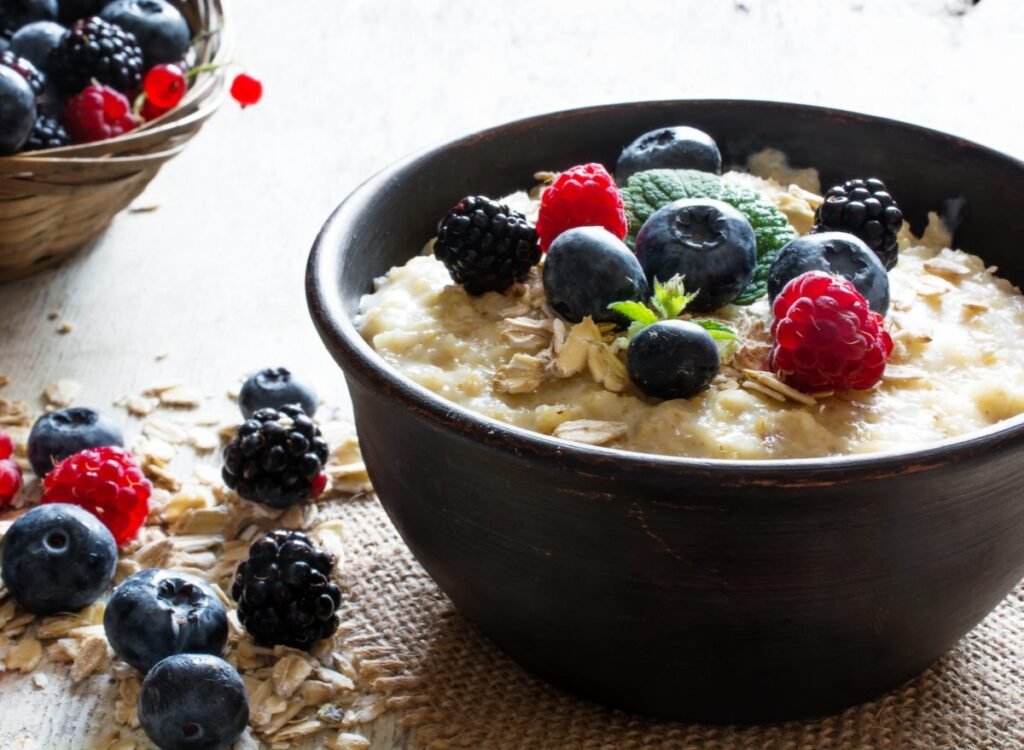
- Berries — blueberries, strawberries, raspberries, blackberries. Frozen berries work beautifully; add them during the last minute of cooking so they thaw into a warm compote
- Apples and pears — diced and cooked with the oats, or sauteed with cinnamon as a warm topping
- Mango, peach, and pineapple — tropical fruits bring intense natural sweetness; diced mango with coconut is a standout combination
- Dried fruit — dates (chopped), raisins, dried figs, dried apricots, dried cherries. Use modest amounts since dried fruit concentrates natural sugars, and check labels to avoid varieties with added sugar
- Unsweetened applesauce or fruit puree — swirl in a few spoonfuls for instant sweetness and moisture
Nut Butters and Nuts: Richness and Staying Power
A spoonful of nut butter swirled into hot oatmeal melts into a creamy, rich ribbon that makes the bowl taste indulgent while adding protein and healthy fats that keep you full for hours:
- Peanut butter — the classic; pairs with banana and cocoa for a combination that genuinely tastes like dessert
- Almond butter — milder and slightly sweet on its own
- Cashew butter — the creamiest option, almost like frosting when melted in
- Sunflower seed butter — a great nut-free alternative
Check labels: the ingredients should be just nuts (and maybe salt). Many commercial nut butters sneak in added sugar.
Whole nuts add crunch and contrast — toasted walnuts, pecans, sliced almonds, pistachios, or hazelnuts. Toasting nuts in a dry skillet for a few minutes dramatically improves their flavor.
Seeds, Coconut, and Texture Boosters
Texture is half of flavor. These additions make oatmeal interesting to eat:
- Chia seeds or ground flaxseed — stir in a tablespoon; they thicken the oats and add fiber and omega-3s
- Hemp hearts — soft, slightly nutty, and protein-rich
- Unsweetened shredded coconut or coconut flakes — toasted coconut flakes add crunch and tropical flavor
- Granola — a small handful of low-sugar granola on top adds crunch (check the sugar content, since many granolas are candy in disguise)
- Cacao nibs — intense chocolate crunch with no sugar at all
Creamy Mix-Ins
- Greek yogurt — a dollop stirred in after cooking adds tang, protein, and luxurious creaminess
- Cottage cheese — sounds odd, tastes great; blends in for extra protein with a cheesecake-like richness
- Mashed avocado — for savory-leaning bowls; incredibly creamy
- Egg — whisk a beaten egg into hot oatmeal off the heat for a custardy, protein-packed bowl (stir constantly to avoid scrambling)
Go Savory: The Overlooked Option
Not every great bowl of oatmeal is sweet. Savory oatmeal is a revelation if you have never tried it — think of oats as a blank grain, like rice or grits:
- Cook oats in water or broth with a pinch of salt, then top with a fried or soft-boiled egg, sauteed mushrooms, spinach, and a drizzle of soy sauce or hot sauce
- Oats with avocado, everything-bagel seasoning, and a squeeze of lemon
- Oats with roasted sweet potato, black beans, salsa, and cilantro
- Oats with parmesan, cracked black pepper, and wilted greens
Savory oatmeal sidesteps the sweetness question entirely and makes an excellent lunch or dinner, not just breakfast. If you enjoy make-ahead savory breakfasts, you might also like our guide to crispy hash browns for another hearty morning option.
Overnight Oats Without Sugar
Overnight oats are ideal for busy mornings, and they need no added sugar to taste great. The basic formula:
Equal parts rolled oats and milk, plus flavor. Combine half a cup of rolled oats with half a cup of milk in a jar. Add a mashed ripe banana or a quarter cup of unsweetened applesauce for sweetness, a spoonful of nut butter, chia seeds, cinnamon, and vanilla. Refrigerate overnight. In the morning, top with fresh fruit and nuts.
The long soak softens the oats into a creamy, almost pudding-like texture, and the flavors meld beautifully. Chocolate overnight oats (cocoa powder, banana, peanut butter) taste like dessert and require zero added sweetener. For more make-ahead breakfast ideas that stay fresh all week, see our meal prep guide — the same batch-cooking principles apply.
Five No-Sugar Oatmeal Recipes to Try First
1. Banana Bread Oatmeal
Cook rolled oats in milk with a mashed ripe banana, cinnamon, nutmeg, and a pinch of salt. Stir in vanilla after cooking and top with toasted walnuts. Tastes like banana bread in a bowl.
2. Chocolate Peanut Butter Oatmeal
Whisk a tablespoon of cocoa powder into the cooking liquid, cook the oats, then swirl in a spoonful of natural peanut butter and sliced banana. Add cacao nibs for crunch.
3. Apple Pie Oatmeal
Cook oats with diced apple, cinnamon, a pinch of cloves, and a squeeze of lemon. Top with toasted pecans and a spoonful of Greek yogurt. The cooked apple sweetens the whole bowl.
4. Tropical Coconut Mango Oatmeal
Cook oats in coconut milk with diced mango stirred in during the last two minutes. Top with toasted coconut flakes, a few macadamia nuts, and lime zest.
5. Berry Cheesecake Oatmeal
Cook oats with a handful of frozen mixed berries so they burst into a compote. Stir in vanilla and a big dollop of Greek yogurt or cottage cheese after cooking. Top with fresh berries and sliced almonds.
Mistakes That Ruin Sugar-Free Oatmeal
Using under-ripe fruit. A green banana adds starch, not sweetness. Wait for spots — or buy extra-ripe bananas specifically for oatmeal.
Adding spices at the wrong time. Ground spices go into the cooking liquid; extracts go in after cooking. Reversed, you get raw spice flavor and cooked-off vanilla.
Skipping the salt. Without that pinch of salt, everything tastes flat — and you will reach for sweetener to compensate.
Buying “healthy” toppings with hidden sugar. Flavored yogurts, sweetened nut butters, most granolas, and dried cranberries often contain significant added sugar. Read labels.
Expecting it to taste like the sugary version. Sugar-free oatmeal tastes different — nuttier, fruitier, more complex. Give your palate a week to adjust; most people stop missing the sugar entirely.
Frequently Asked Questions
What is the best natural sweetener for oatmeal if I avoid sugar?
Mashed ripe banana cooked into the oats is the most effective — it sweetens the entire bowl, not just the top. Unsweetened applesauce, cooked berries, and chopped dates are close seconds. Warm spices like cinnamon enhance perceived sweetness without adding any sweetener at all.
Can diabetics eat oatmeal without sugar?
Oatmeal’s soluble fiber can be part of a balanced diet, but individual needs vary widely. This article is for informational purposes only and is not medical advice. If you have diabetes or a blood sugar condition, consult a qualified professional or registered dietitian about whether and how oatmeal fits your eating plan.
How do I make oatmeal creamy without sugar or cream?
Cook rolled oats in milk instead of water, add a pinch of salt, stir in a mashed banana while cooking, and let the oats rest two minutes off the heat. A spoonful of nut butter or Greek yogurt stirred in at the end adds even more creaminess.
Is honey or maple syrup better than sugar in oatmeal?
Honey and maple syrup are still added sugars — your body processes them similarly. If your goal is no added sugar at all, stick with whole fruit, spices, and extracts for flavor instead.
Why does my oatmeal taste bitter?
Bitterness usually comes from overcooked oats, scorched milk solids on the pot bottom, or rancid oats (whole grains can go stale). Use fresh oats, cook gently without scorching, and add a pinch of salt — salt directly counteracts bitter flavors.
Can I make tasty oatmeal with just water and no toppings?
You can improve it a lot: toast the oats first, add salt and cinnamon to the water, and let them rest after cooking. But honestly, even one addition — a banana, a spoonful of peanut butter, or some frozen berries — transforms the bowl far more than technique alone.