Nothing ruins a peaceful kitchen quite like a trail of ants marching across the countertop. If you want to know how to get rid of ants in the kitchen without harsh chemicals, the good news is that you have plenty of effective options. Natural methods can eliminate the colony — not just the ants you see — while staying safe around kids, pets, and food. This guide covers the proven natural remedies, explains why ants invade kitchens in the first place, and shows you how to keep them from ever coming back.
Why Ants Invade Your Kitchen
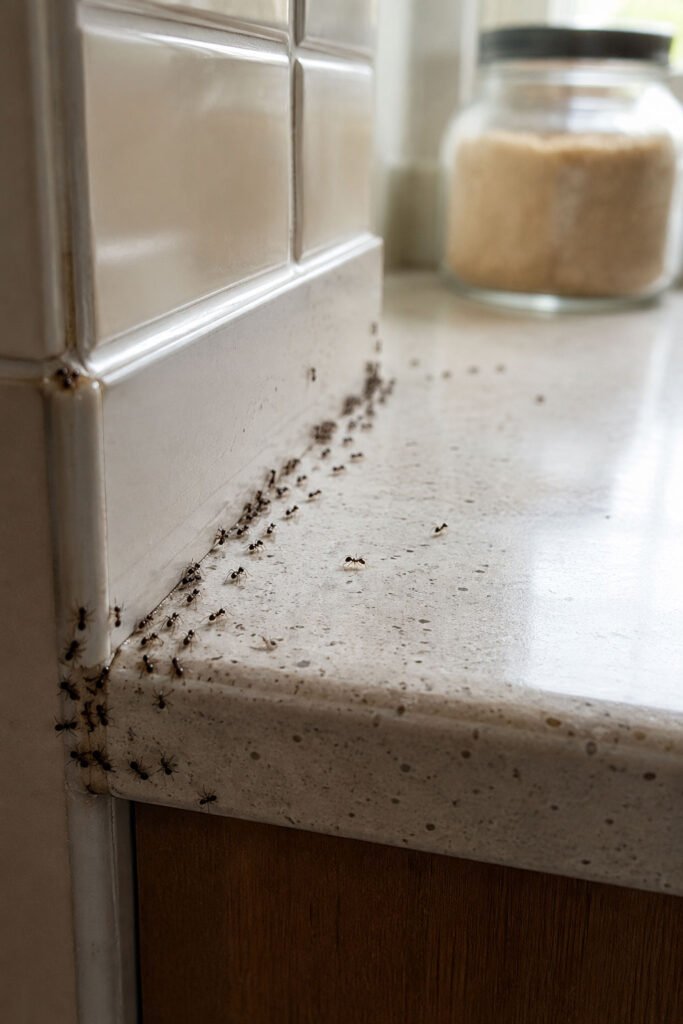
Ants are not coming for you — they are coming for food, water, and shelter. Your kitchen offers all three in abundance. A few crumbs under the toaster, a sticky jam jar, a dripping faucet, or even a pet food bowl left out overnight is enough to attract scout ants. Once a scout finds food, it lays down a pheromone trail — an invisible chemical highway that guides hundreds of colony mates straight to the source. That is why ants appear in lines: they are literally following a scent map.
Understanding this changes your strategy. Killing the visible ants accomplishes almost nothing, because the colony — which can number in the thousands — simply sends replacements. Real ant control means two things: wiping out the pheromone trails so new ants cannot find your kitchen, and delivering bait that worker ants carry back to poison the colony at its source, including the queen. Every method below targets one or both of these goals.
Step 1: Find and Erase the Pheromone Trails
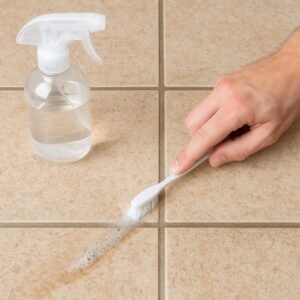
Before anything else, clean up the highways the ants are using. Mix equal parts white vinegar and water in a spray bottle and wipe down every surface where you have seen ants: countertops, windowsills, baseboards, and the floor along the wall. Vinegar disrupts the pheromone scent trail, which instantly confuses incoming ants and stops reinforcements from finding the same route. For stubborn spots, a solution of warm water and dish soap works similarly — the soap breaks down the trail chemicals. Do this daily for the first week; consistency matters more than intensity here.
While you clean, watch where the ants are coming from. Trace the trail backward to find their entry point — a crack in the caulk around a window, a gap under the door, a pipe opening behind the sink. Knowing the entry point is essential for the sealing step later.
Step 2: Remove Everything That Attracts Them
No remedy works if the kitchen keeps offering a buffet. Go through this checklist:
- Store all dry goods — sugar, flour, cereal, cookies — in sealed airtight containers. Ants can chew through paper bags and thin cardboard.
- Wipe down counters and the stovetop every evening. Even invisible grease residue attracts ants.
- Rinse recyclables before putting them in the bin, especially soda cans and jam jars.
- Take out the trash nightly and use bins with tight-fitting lids.
- Do not leave pet food out all day. Feed pets on a schedule and pick up bowls afterward.
- Fix leaky faucets and wipe up standing water in the sink — ants need water too.
- Sweep or vacuum under appliances where crumbs accumulate out of sight.
This step alone often reduces ant activity dramatically within a few days, because a kitchen with no accessible food stops being worth the colony’s energy. The same cleanup mindset works against other kitchen invaders — if fruit flies are also a problem, this guide to getting rid of fruit flies covers complementary natural methods.
Step 3: Set Borax Sugar Baits to Kill the Colony
This is the heavy hitter — the method that actually eliminates the colony rather than just repelling foragers. Borax (sodium borate) is a naturally occurring mineral that disrupts an ant’s digestive system, but it works slowly enough that worker ants carry it home and share it with the colony, including the queen. When the queen dies, the colony collapses.
Here is how to make an effective bait:
- Mix one part borax with three parts powdered sugar — the sugar lures them, the borax does the work. (Use powdered sugar rather than granulated; ants can separate granulated sugar from borax and eat only the sugar.)
- Add just enough warm water to form a thick syrup or paste.
- Soak cotton balls in the mixture, or spread small dabs on pieces of cardboard.
- Place the bait stations directly on active ant trails — not where you wish the ants were, but where they actually walk.
- Resist the urge to kill the ants around the bait. You want maximum traffic carrying the mixture home.
- Replace the bait every couple of days and keep it out for at least a week, refreshing as needed.
You should see ant traffic increase at first — that means it is working. Within several days to two weeks, activity typically drops off sharply as the colony dies. Keep borax bait away from pets and small children: place stations behind appliances or inside cabinets where only ants can reach them. Used responsibly, it is far gentler than commercial sprays.
Step 4: Seal Their Entry Points
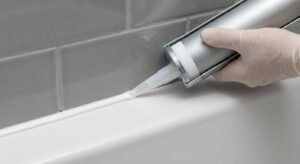
While the bait works on the colony, make your kitchen a fortress. Seal every entry point you identified earlier:
- Apply silicone caulk around windows, baseboards, and pipe openings.
- Install or replace door sweeps on exterior doors.
- Use steel wool packed into larger gaps around pipes, then caulk over it.
- Repair torn window screens.
Ants can squeeze through astonishingly small gaps, so be thorough. Sealing does not just stop the current invasion — it prevents the next one, because a new colony scouting your kitchen will find no way in. If you are already tackling home repairs, unclogging a drain without harsh tools or chemicals is another natural-fix win in the same spirit.
More Natural Ant Deterrents That Actually Work
Beyond the core strategy above, these natural deterrents help keep ants away from specific spots:
- Diatomaceous earth (food grade): Sprinkle this fine powder along baseboards and entry points. It is made from fossilized algae and damages ants’ exoskeletons on contact. Keep it dry — it stops working when wet — and reapply after cleaning.
- Lemon juice: The acidity disrupts pheromone trails, and ants dislike the scent. Wipe door thresholds and windowsills with it.
- Peppermint essential oil: Mix 10 to 15 drops with water in a spray bottle and spritz entry points. The strong scent masks the trails ants follow. Reapply every few days as the scent fades.
- Cinnamon: A line of ground cinnamon across an entry point acts as a natural barrier many ants will not cross.
- Coffee grounds: Used grounds scattered near entry points repel some ant species, and they are free if you brew coffee daily.
- Chalk: Drawing a chalk line across entry points disrupts trails — the calcium carbonate interferes with their scent markers.
Think of these as supporting players, not the main event. Deterrents redirect ants; borax bait and sealing eliminate them. Use both together for the fastest results.
What NOT to Do
- Do not spray the visible ants with insecticide: This kills only the foragers you see and scatters the rest, often causing the colony to split into multiple new colonies — a problem pest professionals call “budding.”
- Do not use bait and repellent sprays at the same time: Sprays keep ants away from the bait, defeating its purpose. Choose one strategy per area.
- Do not expect overnight results: Colony elimination takes one to two weeks. Patience is part of the method.
- Do not leave borax bait where pets or toddlers can reach it: It is a mild toxin. Placement behind appliances and inside closed cabinets keeps it ant-accessible and everything-else-safe.
- Do not ignore outdoor nests: If ants keep returning, look for mounds or trails outside near your foundation. Treating the outdoor source stops the pressure on your kitchen.
Long-Term Prevention: Keeping Ants Out for Good
Once the current invasion is handled, a few permanent habits keep your kitchen ant-free. Maintain the airtight-container system for all dry goods. Keep doing a quick evening counter wipe-down — it takes thirty seconds and removes the residue that attracts scouts. Inspect and refresh caulk around windows and doors once a year. Trim tree branches and shrubs that touch your house, since they act as ant bridges over your defenses. And keep outdoor trash cans sealed and positioned away from the house. Ants are opportunists; a kitchen that offers no food, no water, and no entry simply does not make their list.
Frequently Asked Questions
How long does it take to get rid of ants naturally?
Expect noticeable improvement within a few days of cleaning trails and setting bait, with full colony elimination typically taking one to two weeks. Larger colonies or multiple entry points can take a bit longer. Consistency with the bait is the key factor.
Is borax safe to use around pets and kids?
Borax is much gentler than commercial insecticides, but it is still a mild toxin and should never be eaten. Place bait stations where only ants can reach them — behind appliances, inside cabinets, under the sink — and keep pets and small children away from those spots while baiting.
Why do ants keep coming back after I kill them?
Because killing visible ants does not touch the colony. The queen keeps producing replacements, and surviving ants lay new pheromone trails. You have to destroy the trails and eliminate the colony with bait, then seal entry points — that combination is what ends the cycle.
Does vinegar really kill ants?
Vinegar does not kill ants — it erases their pheromone trails, which stops reinforcements from following the same path. It is an excellent first step and deterrent, but pair it with borax bait if you want to eliminate the colony itself.
What attracts ants to the kitchen the most?
Sugar and sweet residues are the biggest draw, followed by grease, crumbs, pet food, and standing water. Even a sticky honey jar lid or an unrinsed soda can is enough to bring a scout ant — and scouts bring the whole colony.
Are natural ant remedies as effective as chemical sprays?
For household ant invasions, yes — often more effective. Sprays kill only visible foragers and can cause colonies to split and spread. Borax bait wipes out the entire colony including the queen, which is the only way to truly solve the problem. The natural approach just takes a little more patience.