There is nothing quite like wrapping yourself in a clean, fresh-smelling towel after a shower. But towels have a frustrating habit: over time, they start to smell musty, sour, or damp, even right after washing. Many people reach for fabric softener to fix the problem, only to find the smell comes back worse than before. The truth is that learning how to keep towels smelling fresh without fabric softener is not only possible, it is usually more effective than using softener at all. Fabric softener coats towel fibers with a waxy layer that traps moisture and odor-causing buildup, making towels less absorbent and more likely to smell. The real solution is a combination of proper washing, thorough drying, and a few simple habits that keep bacteria and mildew from taking hold. This guide explains exactly how to do it, from stripping out old buildup to building a laundry routine that keeps every towel in your home smelling clean.
Why Towels Start to Smell in the First Place
Towels smell because they are the perfect home for bacteria and mildew. Every time you dry off, a towel absorbs water, skin cells, and body oils. If it stays damp for hours, bacteria multiply in the warm, moist fibers and produce the sour, musty odor we associate with old towels. Hanging a towel in a humid bathroom without airflow makes the problem worse, because the towel may never fully dry between uses.
Detergent and softener buildup adds a second layer to the problem. When you use too much detergent, the excess does not rinse out fully. It stays trapped in the fibers, where it attracts moisture and holds odor. Fabric softener does something similar: it leaves a coating on the fibers that reduces absorbency and seals in smells. Over time, this buildup makes towels feel stiff, dry less effectively, and smell stale no matter how often you wash them. Understanding this is the key to fixing the problem for good.
Stop Using Fabric Softener on Towels
The first step is simple: stop putting fabric softener on your towels entirely. That includes liquid softener in the wash and dryer sheets. Both products coat fibers with a thin layer designed to make fabric feel smooth, but on towels that coating blocks water absorption and traps odor-causing residue.
If you have been using softener for a long time, your towels probably have a significant layer of buildup. Do not worry, it can be removed. The stripping method described below will reset your towels, and once they are clean, washing without softener will keep them that way. You may notice that your towels feel slightly less silky at first, but they will dry you faster and smell fresher, which is what a towel is actually for.
Strip Out Old Buildup with Vinegar and Baking Soda
If your towels already smell musty, a normal wash will not fix them. You need to strip out the accumulated detergent, softener, and body-oil residue. A vinegar and baking soda treatment does this effectively and costs almost nothing.
How to Strip Your Towels
- Load your towels into the washing machine. Do not overload it. Towels need room to move freely in the water.
- Set the machine to the hottest water setting that is safe for your towels. Check the care label first, but most cotton towels can handle hot water.
- Add one cup of white distilled vinegar to the drum. Do not add detergent or softener.
- Run a full wash cycle.
- When that cycle finishes, run a second full cycle with half a cup of baking soda and no detergent.
- Dry the towels completely, preferably on a hot dryer setting or in direct sunlight.
Do not mix the vinegar and baking soda in the same cycle. The vinegar cycle breaks down soap and softener residue, and the baking soda cycle neutralizes lingering odors. Run separately, they work far better than they would together. After stripping, your towels should smell neutral and feel noticeably more absorbent.
You only need to strip towels when they develop a persistent smell or feel stiff and less absorbent. For most households, doing this once every few months is plenty. If your towels smell again soon after stripping, the problem is probably your drying routine rather than the wash itself.
Wash Towels the Right Way
Once your towels are stripped, a good washing routine keeps them fresh. A few small changes make a big difference.
Use Less Detergent Than You Think
Most people use far more detergent than necessary. Excess detergent does not make towels cleaner. It leaves residue that traps odor. For a normal load of towels, use about half the amount recommended on the detergent bottle, and even less if you have soft water. If your towels come out of the wash feeling slimy or coated, you are using too much.
Wash Towels Separately
Wash towels on their own, not mixed with clothing. Towels are heavy and produce a lot of lint, and they need the full capacity of the machine to get properly clean. Mixing them with clothes means neither gets washed as well. A towel-only load also lets you use hot water, which is better for killing odor-causing bacteria, without worrying about shrinking or fading delicate clothes.
Use Hot Water
Hot water cleans towels more effectively than cold water. It dissolves body oils better and kills more bacteria. Most cotton towels can be washed in hot water safely. If you have colored towels and worry about fading, warm water is a reasonable compromise, but try hot water at least occasionally to keep bacteria in check.
Add Vinegar to the Rinse Cycle
Adding half a cup of white vinegar to the rinse cycle is one of the best ongoing habits for fresh towels. Vinegar helps dissolve leftover detergent, softens fibers naturally, and leaves no smell of its own once the towels dry. You can add it to the fabric softener dispenser so it releases during the rinse, or simply pour it in when the rinse cycle starts. This replaces fabric softener completely.
Do Not Overload the Machine
Towels need space to tumble and rinse properly. An overloaded machine leaves detergent and dirt trapped in the fibers. Fill the drum no more than three-quarters full. It is better to wash two smaller loads than one packed load.
Dry Towels Completely Every Time
Washing is only half the job. Drying is where most towel odor actually starts. A towel that stays damp for hours will develop a musty smell even if it was washed perfectly.
Dry in the Dryer on High Heat
The dryer is the most reliable way to get towels fully dry. Use a medium to high heat setting and dry until the towels are completely dry to the touch, not just mostly dry. If your dryer has a sensor setting, use it, but check the towels before removing them. Damp spots in the middle of a folded towel will smell within a day.
Hang Towels to Dry Properly Between Uses
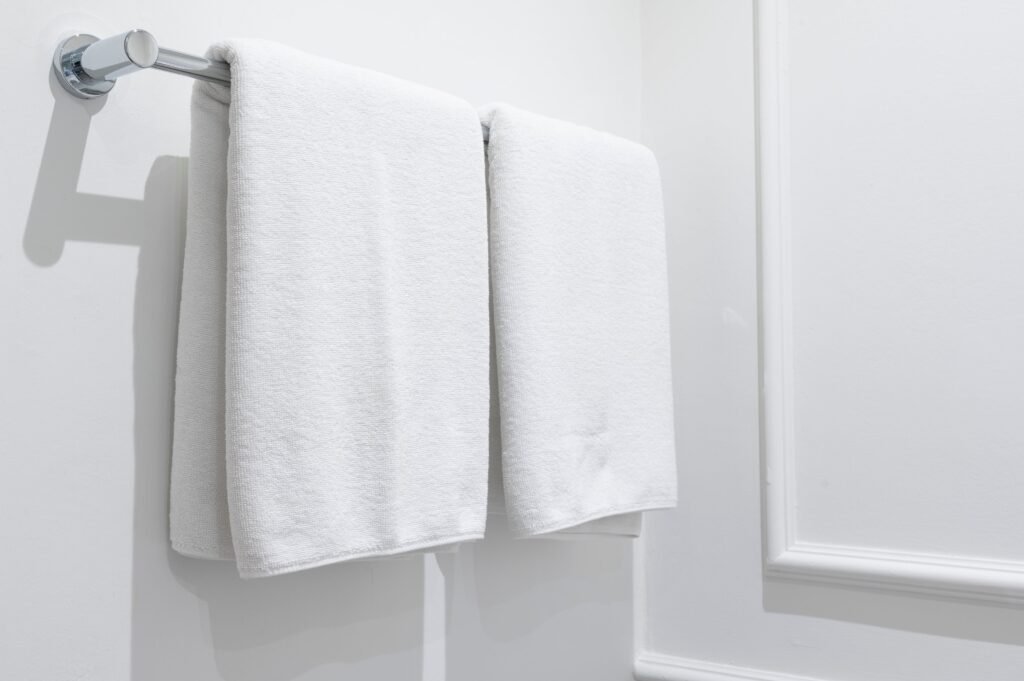
Between washes, how you hang a towel matters as much as how you wash it. Spread the towel out fully on a towel bar so air can reach both sides. Never bunch it up on a hook or leave it folded over itself, because the inner layers stay damp and breed bacteria. If your bathroom has poor ventilation, consider hanging towels on a rack outside the bathroom or near a window.
Use Sunlight When You Can
Sunlight is a natural disinfectant and deodorizer. Hanging towels outside on a sunny day kills bacteria and leaves them smelling genuinely fresh. If you have the option, line-dry your towels outdoors at least occasionally. Even a few hours in the sun makes a noticeable difference.
How Often Should You Wash Towels?
Bath towels should be washed after every three to four uses, or at least once a week. Hand towels, which get used more often and stay damp longer, should be washed every two to three days. Kitchen towels should be washed even more frequently, ideally every one to two days, because they pick up food residue and moisture constantly.
If someone in your household is sick, wash their towels more often and do not share towels between people. This is not just about smell, it is about hygiene. Fresh towels dry better, feel better, and last longer than towels that are washed too rarely.
Simple Habits That Keep Towels Fresh
- Shake towels out before hanging: A quick shake loosens the fibers and helps the towel dry faster and stay fluffy.
- Rotate your towels: Keep enough towels in rotation that each one gets fully dry between uses. Using the same towel every day without a break guarantees odor.
- Improve bathroom airflow: Run the bathroom fan during and after showers. Open a door or window when possible. Lower humidity means faster drying and less mildew.
- Do not leave wet towels in the washer: Move towels to the dryer promptly. Towels left sitting in a closed washer for hours develop a sour smell that can survive another wash.
- Store towels in a dry place: Keep clean towels in a linen closet or shelf away from bathroom humidity. Never store towels in a damp basement or a closed plastic container.
Natural Ways to Add a Fresh Scent
If you miss the scent that fabric softener used to provide, there are natural alternatives that do not coat your towels. A few drops of essential oil on a wool dryer ball adds a light, pleasant scent during the drying cycle without leaving residue. Lavender, eucalyptus, and lemon are popular choices. You can also add a few drops of essential oil to the vinegar in the rinse cycle.
Another option is to store clean towels with a small sachet of dried lavender or cedar in the linen closet. This gives towels a subtle fresh scent without affecting their absorbency. Avoid scented dryer sheets and scent beads, which work the same way as fabric softener and create the same buildup problem.
When to Replace Your Towels
Even with perfect care, towels do not last forever. Cotton towels typically last two to three years with regular use. Signs that a towel is past its prime include thinning fabric, frayed edges, a rough texture that does not improve after stripping, and a smell that returns within a day of washing. At that point, no amount of vinegar or baking soda will restore it. Replace it and start the new towel off right by washing it without softener from the very first wash.
When you buy new towels, wash them before the first use. New towels often carry a coating from the manufacturing process that reduces absorbency. A first wash with hot water and half a cup of vinegar removes that coating and prepares the towel to work properly.
For a related laundry fix, if your washing machine itself is the source of the smell, see our guide on how to clean a washing machine without vinegar. A clean machine is the foundation of clean towels, and that guide covers the steps in detail.
Common Mistakes to Avoid
- Using fabric softener or dryer sheets on towels: Both coat the fibers, reduce absorbency, and trap odor.
- Using too much detergent: Excess detergent leaves residue that holds smells. Less is more.
- Leaving towels bunched up on a hook: The inner layers never dry, and bacteria thrive in the damp folds.
- Forgetting towels in the washer: A few hours in a closed, damp machine is enough to create a sour smell.
- Washing towels in cold water every time: Cold water does not dissolve body oils or kill bacteria as effectively as hot water.
- Overloading the machine: Packed towels cannot rinse properly, so dirt and detergent stay trapped in the fibers.
Frequently Asked Questions
Why do my towels smell even right after washing?
The most common cause is buildup of detergent and fabric softener in the fibers, combined with towels not drying fully. Strip the towels with vinegar and baking soda, then wash with less detergent, no softener, and dry them completely.
Is vinegar safe for towels and washing machines?
Yes. White distilled vinegar is safe for cotton towels and for most washing machines when used in normal amounts. It helps dissolve detergent residue and leaves no odor once towels are dry. Avoid using it on silk or other delicate fabrics.
Can I use baking soda in every wash?
You can add half a cup of baking soda to the wash cycle occasionally to boost freshness, but it is not necessary every time. The vinegar rinse is the more useful everyday habit. Use the full stripping treatment only when towels develop a persistent smell.
How do I keep towels fresh if I do not have a dryer?
Hang towels spread out fully in a well-ventilated area or outdoors in sunlight. A fan blowing across the towels speeds drying. Avoid folding or bunching them while damp, and wash them more often if your home is humid.
Does fabric softener really make towels smell worse?
Yes. Fabric softener coats towel fibers with a waxy layer that reduces absorbency and traps moisture and odor-causing residue. Towels washed without softener dry better, absorb more water, and stay fresh longer.
How often should I wash bath towels?
Wash bath towels after every three to four uses, or at least once a week. Hand towels should be washed every two to three days, and kitchen towels every one to two days.