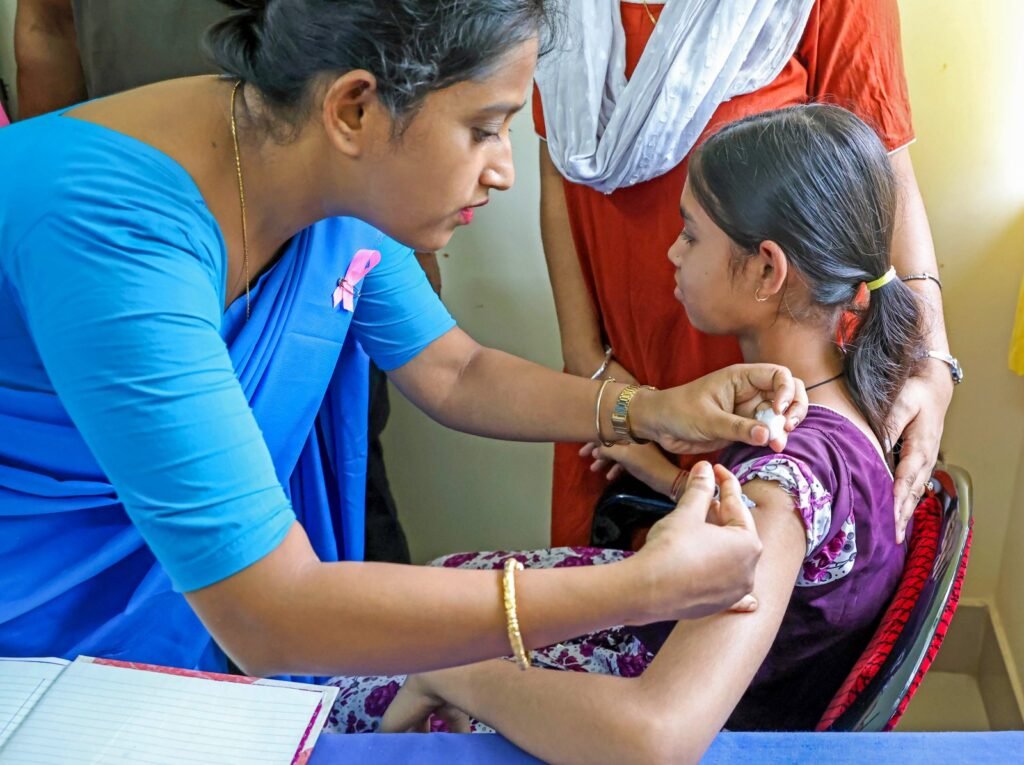
India has administered more than one crore doses of the Human Papillomavirus (HPV) vaccine in less than nine months, covering nearly 87 per cent of its annual target cohort of 14-year-old girls under the national cervical cancer prevention campaign.
The campaign was launched by Prime Minister Narendra Modi in February, and provides free, safe and voluntary single-dose HPV vaccination, with parental consent, to 14-year-old girls at government health facilities across the country. The Prime Minister described the achievement as a significant milestone in India’s journey towards preventive healthcare, saying every dose is a step towards protecting girls from cervical cancer and ensuring a healthier future for them.
The annual target cohort comprises around 1.2 crore girls, based on Registrar General of India 2021 population estimates. Vice-President C. P. Radhakrishnan also appreciated the achievement, describing it as a significant milestone in the fight against cervical cancer, while the World Health Organization’s South-East Asia Region congratulated India on the milestone.
Six states reach full coverage
Six states — Gujarat, Uttar Pradesh, Andhra Pradesh, Mizoram, Madhya Pradesh and Bihar — have achieved 100 per cent coverage of their identified target populations under the campaign.
In absolute numbers, Uttar Pradesh leads the country with more than 29.33 lakh girls vaccinated, followed by Bihar with over 13.70 lakh and Gujarat with more than 7.75 lakh. Among other high-performing states, Assam has recorded 95.63 per cent coverage, followed by Telangana at 95.28 per cent, Karnataka at 93.16 per cent and Uttarakhand at 90.17 per cent.
The U-WIN digital platform is being used for real-time monitoring, beneficiary tracking, vaccination slot booking and digital certificates.
Why the vaccine matters
Cervical cancer is the second most common cancer among women in India, and persistent infection with high-risk types of human papillomavirus is responsible for the vast majority of cases. The vaccine used in the campaign, Gardasil, protects against four of the most common strains of HPV — types 16, 18, 6 and 11. The World Health Organization’s Strategic Advisory Group of Experts on Immunization has recommended a single dose for women up to the age of 20 years.
Health officials say the achievement reflects growing public confidence in vaccination and strong coordination between the Centre and the states, supported by district administrations, healthcare professionals, frontline workers, teachers and parents. The government has reaffirmed its commitment to reaching every eligible girl and building a future free from preventable cervical cancer.
The milestone adds to a series of public-health measures aimed at reducing the burden of cancer in India. The drug pricing regulator has capped trade margins on 137 anti-cancer drugs at 30 per cent, a move expected to cut the prices of several cancer medicines by up to 70 per cent. In the Northeast, the strain on hospitals was visible when the Chandel spurious liquor tragedy pushed the toll to 17, with 38 patients on dialysis — a reminder of how much preventive healthcare matters.
#HPVVaccine #CervicalCancer #Health #NarendraModi #Vaccination #PublicHealth #GirlsHealth #UWIN