
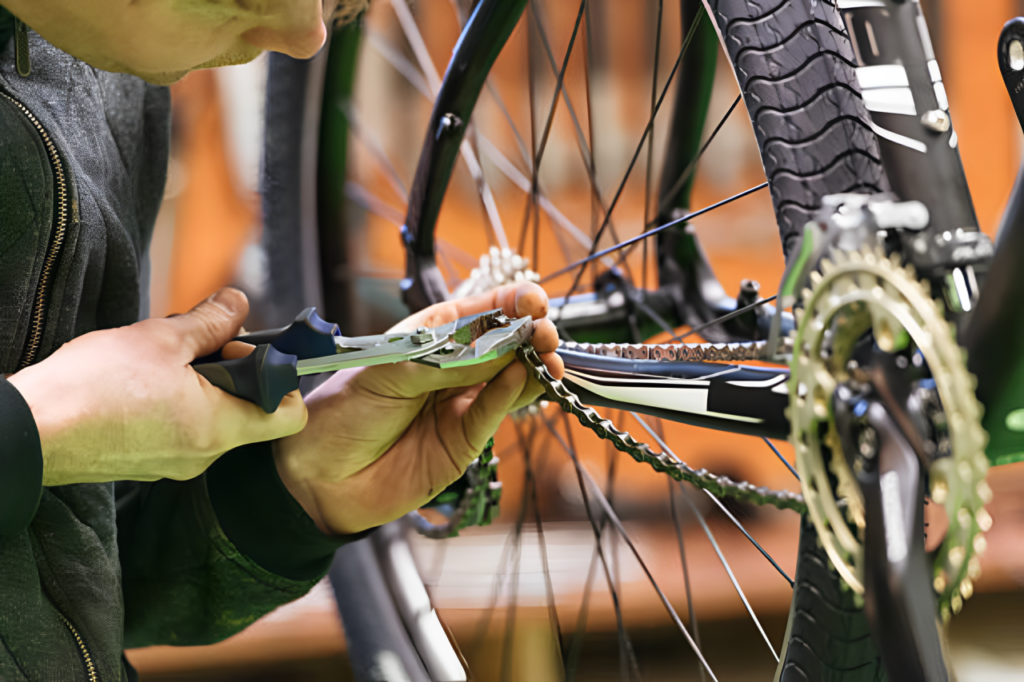
Learning how to remove rust from a bike chain without WD-40 is a useful skill for any rider, because a rusty chain is one of the most common problems a bicycle develops. Rust forms when steel is exposed to moisture and air, and a bike chain is especially vulnerable because it has dozens of small moving parts with tight gaps where water sits. The good news is that light surface rust can almost always be removed at home with simple tools and household items, and a chain that is cleaned and lubricated properly can run smoothly again.
Before you start, it helps to understand what you are dealing with. Surface rust is the orange-brown film that appears on the outside of the links and rollers. It looks bad, but it usually has not damaged the metal underneath. Deep rust is different: it pits the metal, makes links stiff so they do not bend freely, and can weaken the chain. A chain with stiff links that will not move even after cleaning, or with visible pitting and flaking metal, should be replaced rather than forced back into service.
WD-40 is often the first thing people reach for, but it is worth knowing what it actually does. It is a water displacer and light solvent, not a chain lubricant. It can help loosen surface rust and drive out moisture, but it washes away the grease inside the chain’s rollers and leaves almost no lasting lubrication behind. A chain treated only with WD-40 will run dry, wear faster, and rust again quickly. The methods below avoid it entirely and finish with proper chain lubricant.
What You Will Need
Most of this list is probably already in your home or garage.
- Old rags or shop towels. For wiping, scrubbing, and drying. You will go through several.
- A stiff brush. An old toothbrush, a nylon scrub brush, or a dedicated chain brush all work.
- A wire brush or steel wool. For stubborn spots only, used gently. Fine steel wool is safer than coarse.
- Dish soap and warm water. For the first wash and degreasing.
- Baking soda. For making a mild rust-removing paste.
- White vinegar. For an acid soak on removed chains — with the safety limits explained below.
- A container or old bottle. For soaking the chain if you remove it.
- Chain lubricant. A proper bicycle chain lube, wet or dry depending on your riding conditions.
- Gloves. Rust and old grease are messy, and steel wool can leave tiny splinters.
- A chain tool or quick link pliers. Only if you plan to remove the chain. Many chains have a quick link that opens by hand or with pliers.
Safety First: Know When to Stop and Replace the Chain
Before you spend time cleaning, inspect the chain carefully. Shift the bike so the chain is slack, then bend each section of the chain by hand, link by link, feeling for stiffness. A healthy chain flexes smoothly in every direction. Watch for these warning signs:
- Stiff links that will not bend freely even after you work them back and forth by hand. These create a skipping, jerky ride and wear out your gears.
- Pitting or flaking metal on the plates or rollers. Pitting means the rust has eaten into the steel, and the chain has lost strength.
- Visible cracks in any link plate or roller.
- Excessive stretch. If a chain wear tool shows the chain is worn beyond its limit, or a ruler measurement shows the links have stretched far past their original spacing, replacement is the right call.
If you find any of these, replace the chain rather than forcing it. A new chain is inexpensive compared with a broken chain on the road or a worn-out cassette and chainrings. Also, never use acidic soaks — vinegar, cola, or similar acids — on a chain if the chain maker warns against it. Check the maker’s guidance for your chain first, and when in doubt, use the non-acid methods in this guide instead.
Step 1: Inspect and Wipe Down the Chain
Start by wiping the chain with a dry rag. Hold the rag around the lower run of the chain and pedal backward slowly so the whole chain passes through the rag. This removes loose dirt, grit, and flaky rust, and it gives you a clear view of what you are dealing with. If the chain is coated in old grease mixed with dirt, this step alone makes the rest of the job much easier.
Step 2: Wash With Dish Soap and Warm Water
For light surface rust, a simple wash is often enough to get started.
- Mix a few drops of dish soap into a bucket or bowl of warm water.
- Dip your brush in the soapy water and scrub the chain thoroughly, top and bottom, working the bristles between the links and rollers.
- Pedal backward slowly while you scrub so every section of the chain passes under the brush.
- Rinse by wiping the chain with a rag dampened with clean water.
- Dry the chain immediately and completely with a clean rag. This is critical: a wet chain will rust again within hours.
Dish soap cuts through old grease and grime, and the brushing action removes loose surface rust. After drying, look at the chain again. If the rust was only light, you may find it is mostly gone already and you can move straight to lubrication.
Method 1: The Baking Soda Paste for Light Rust
Baking soda is mildly abrasive and slightly alkaline, which makes it a gentle and safe way to scrub rust without harsh chemicals. It is a good choice when you want to avoid acids entirely.
- Mix baking soda with a little water to form a thick paste.
- Spread the paste over the rusty sections of the chain with a brush or an old rag.
- Let it sit for ten to fifteen minutes.
- Scrub firmly with a stiff brush, working the paste into the links and rollers.
- Wipe the paste off with a damp rag, then dry the chain thoroughly with a clean rag.
- Repeat on any spots that still show rust.
This method works best on light to moderate surface rust. It takes some elbow grease, but it is safe for the chain and does not involve any chemical that could damage the metal.
Method 2: Steel Wool or a Wire Brush for Stubborn Rust
When rust has a real grip on the metal, gentle methods may not be enough. Fine steel wool or a soft wire brush can remove it, but technique matters — the goal is to take off rust, not metal.
- Make sure the chain is clean and dry first, so you can see the rust clearly.
- Take a small pad of fine steel wool and rub the rusty areas in short strokes, following the length of the chain.
- Use light to medium pressure and check your progress often.
- For tight spots between links, fold the steel wool into a narrow strip or use a wire brush.
- Wipe away the dust and loose rust with a rag, then wash the chain with soapy water and dry it completely.
Do not use coarse steel wool or a heavy wire brush aggressively. Those can scratch the metal deeply and remove protective coatings, which makes the chain rust faster next time. After steel wool, always follow up with a wash and a full lubrication, because the freshly exposed metal is unprotected.
Method 3: The Vinegar Soak for a Removed Chain
Use it only on a chain whose maker does not warn against acidic cleaning.
- Remove the chain using a chain tool or by opening the quick link.
- Place the chain in a container and cover it with white vinegar.
- Let it soak for one to two hours for moderate rust. For heavy rust, a longer soak may help, but do not leave it overnight — extended acid exposure can weaken the steel.
- Remove the chain and scrub it with a stiff brush to remove the loosened rust.
- Rinse the chain thoroughly with clean water to remove all vinegar.
- Dry it immediately and completely. A hair dryer on low heat can help, but a thorough towel dry plus air drying usually does the job.
- Inspect every link. If any link is still stiff or pitted, replace the chain instead of reinstalling it.
An important note: never soak a chain in cola or other sugary drinks. They contain acids too, but the sugar leaves a sticky residue that attracts dirt. Plain white vinegar, properly rinsed off, is the cleaner choice. And remember the safety rule from above — if your chain maker warns against acidic soaks, skip this method and use the baking soda or steel wool methods instead.
Method 4: Commercial Rust Remover for Heavy Cases
If household methods are not enough and the chain is otherwise in good shape — no stiff links, no pitting — a commercial rust remover made for bicycles or metal parts can help. Look for one that is safe for steel chains and follow the product instructions exactly. Wear gloves and work in a ventilated area, and never mix a rust remover with other cleaners. After using any chemical cleaner, rinse the chain thoroughly and dry it completely before lubricating.
Step 3: Lubricate the Chain Properly
Cleaning without lubricating is only half the job — and it is the step most people skip. A freshly cleaned chain has bare metal exposed, and it will rust again quickly and wear fast if it is not protected.
- Make sure the chain is completely dry. Any moisture left inside the rollers will be trapped under the lubricant.
- Choose the right lubricant. Wet lube lasts longer in rain and mud; dry lube stays cleaner in dry, dusty conditions.
- Hold the bottle over the lower run of the chain and pedal backward slowly, applying one small drop to each roller. You do not need to drench it.
- Keep pedaling backward for a minute so the lubricant works its way into the links.
- Let it sit for a few minutes, then wipe off the excess with a clean rag. The lubricant belongs inside the rollers, not on the outside where it attracts dirt.
Do not use WD-40, cooking oil, or motor oil as a chain lubricant. WD-40 is a solvent, not a lubricant, and it will wash away the grease the chain needs. Cooking oil goes rancid and gums up. Motor oil is too thick and attracts dirt. A proper bicycle chain lubricant costs little and makes a real difference to how long your chain lasts.
Step 4: Test the Chain Before You Ride
Before heading out, run through a quick check. Lift the rear wheel and pedal through all the gears, listening for grinding, skipping, or clicking. A clean, lubricated chain should run quietly and shift smoothly. If the chain skips under load or a link still sticks, do not ignore it — a sticking link under load can damage the cassette and chainrings. Fix it or replace the chain before a long ride.
How to Keep a Bike Chain From Rusting Again
Prevention is easier than rust removal, and it mostly comes down to keeping the chain clean and dry.
- Wipe the chain after wet rides. A quick wipe with a dry rag after riding in rain takes less than a minute and removes most of the moisture that causes rust.
- Lubricate regularly. Reapply chain lube every few rides, or after any wet ride.
- Store the bike indoors. A garage or shed is far better than leaving a bike outside in the rain. If outdoor storage is unavoidable, use a waterproof bike cover.
- Clean the chain monthly. A regular wipe and brush keeps grime from building up and trapping moisture against the metal.
Good storage habits help with everything else in the garage too. If your bike area is cluttered, our guide on how to keep a garage organized without buying shelves shows how to make space for proper bike storage using what you already have.
Mistakes to Avoid
- Leaving the chain wet after cleaning. Water left on steel starts new rust within hours. Dry thoroughly every time.
- Using WD-40 as a lubricant. It is a solvent and water displacer. It strips grease and leaves the chain unprotected.
- Soaking a chain in acid overnight. Long acid exposure can weaken the steel. Keep soaks short and rinse well.
- Forcing a stiff or pitted chain. A chain with stiff links or pitting should be replaced, not forced back into service.
- Over-lubricating. Excess lube on the outside of the chain attracts dirt and turns into grinding paste. Wipe off the excess.
- Ignoring the gears. A clean chain on rusty gears will be dirty again within a single ride.
Rust removal has a lot in common with other household rust jobs — the same patience and test-first approach applies. For example, our guide on how to remove rust from a knife without steel wool uses similar gentle methods for a different tool.
Frequently Asked Questions
Can I remove rust from a bike chain without taking it off the bike?
Yes. For light surface rust, you can clean the chain on the bike with dish soap, a brush, baking soda paste, or steel wool, pedaling backward to reach every section. Removal is only needed for a full vinegar soak.
Is WD-40 bad for a bike chain?
WD-40 is not a chain lubricant. It can loosen rust and displace water, but it strips grease from inside the rollers and leaves almost no lasting lubrication, so the chain wears faster and rusts again quickly. Use a proper bicycle chain lubricant instead.
How long should I soak a rusty bike chain in vinegar?
One to two hours is usually enough for moderate rust. Do not soak overnight, because extended acid exposure can weaken the steel. Always rinse thoroughly and dry completely afterward, and skip acid soaks entirely if the chain maker warns against them.
Can I ride a bike with a rusty chain?
A chain with light surface rust is usually safe to ride after cleaning and lubrication. Do not ride a chain with stiff links, pitting, or cracks — replace it instead, because it can damage your gears or snap while you ride.
How do I know if my bike chain needs replacing instead of cleaning?
Replace the chain if links stay stiff after cleaning, if you see pitting or flaking metal, if any link is cracked, or if a chain wear tool shows it is stretched beyond its limit.
What is the best lubricant to use after cleaning a rusty chain?
Use a proper bicycle chain lubricant — wet lube for rainy or muddy conditions, dry lube for dry and dusty riding. Apply one drop per roller, let it soak in, and wipe off the excess so it does not attract dirt.














2 thoughts on “How to Remove Rust From a Bike Chain Without WD-40 Safely”
Comments are closed.