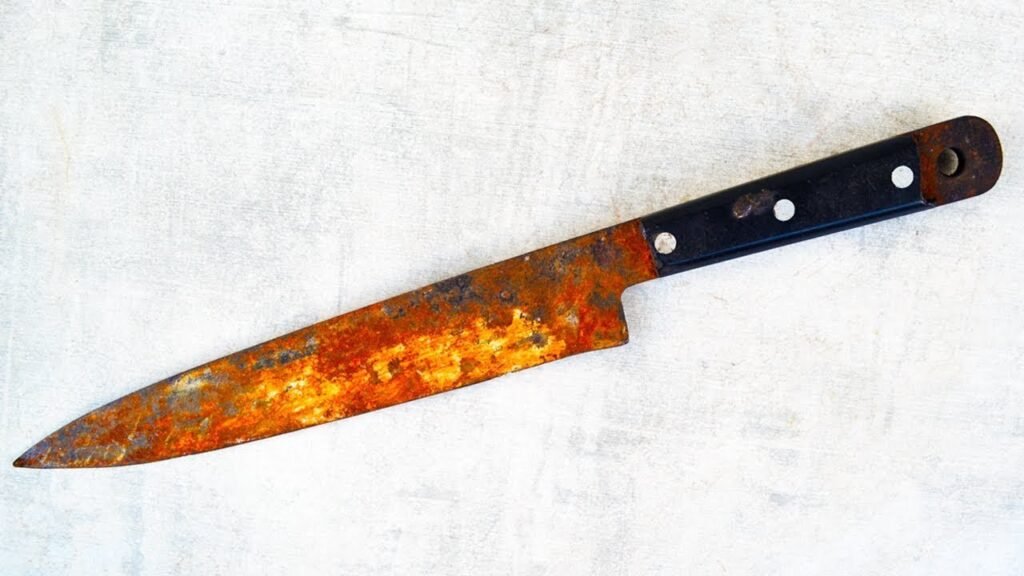
Learning how to remove rust from a knife without steel wool is a useful skill for anyone who owns a good kitchen knife. Steel wool seems like the obvious tool, but it scratches the blade, leaves tiny steel fibres behind that rust again, and can ruin the finish on a quality knife. The good news is that rust is easy to remove with gentler methods. White vinegar, lemon and salt, and baking soda can all dissolve rust without scratching the steel, and most of the work is just waiting while the solution does its job. This guide walks through the methods in order from gentlest first, so you can bring a rusty blade back to life without damaging it further.
Why Knives Rust
Rust is iron oxide, and it forms when iron in the steel reacts with oxygen and water. Even stainless steel can rust: the name means it stains less, not that it never stains. A knife rusts when it stays wet, when it is left in the sink, when it is washed in a dishwasher and left damp, or when it is stored in a humid kitchen. Acidic foods such as tomatoes, citrus, and onions can also trigger rust spots on carbon steel knives, which are more prone to rust than stainless steel but hold a sharper edge.
Small orange or brown spots are surface rust, and they are easy to remove. The blade underneath is usually still sound. Deep rust is different: if the metal feels pitted or rough after cleaning, or the edge is crumbling, the rust has eaten into the steel and the knife may need professional help or replacement. Most rusty kitchen knives fall into the first group, and a little patience with vinegar or lemon will restore them fully.
What Not to Do First
Do not reach for steel wool or a wire brush. Steel wool scratches the blade and leaves behind fine steel fibres that lodge in the surface and rust again within days, often worse than before. It also strips the finish and the protective chromium layer on stainless steel, making the blade more likely to rust in future. A coarse scouring pad causes the same damage on a smaller scale.
Do not use a power tool such as a bench grinder or an angle grinder on a kitchen knife. The heat from grinding can destroy the temper of the steel, leaving the edge soft and unable to hold sharpness. Do not soak a knife with a wooden handle in water for hours, because the wood will swell, crack, and loosen. Do not use chlorine bleach on a blade either: bleach attacks steel and causes pitting.
Before You Start: What You Need
You need very little for any of these methods: white vinegar, a lemon, table salt, baking soda, a soft cloth or sponge, and a small bowl or tray big enough to hold the blade. A cork from a wine bottle is handy for scrubbing, and an old toothbrush helps reach rust spots near the handle. Keep some mineral oil or food-safe knife oil nearby for the finishing step, plus a clean towel for drying.
Work on a stable surface with good light, and lay a towel underneath to protect the countertop and keep the knife from sliding. Hold the knife by the handle only, and always keep your fingers behind the edge. Wear gloves if your skin is sensitive to vinegar or lemon juice. If the knife has a wooden handle, wrap the handle in cling film before any soaking method, so the wood stays dry while the blade is treated.
Method 1: White Vinegar Soak
White vinegar is the most effective rust remover in this guide, because the acetic acid dissolves iron oxide without harming the steel underneath. Pour enough white vinegar into a shallow tray or bowl to cover the rusty part of the blade. Lay the knife in the vinegar with the handle kept out of the liquid, or wrap the handle in cling film first. For light surface rust, thirty minutes is enough. For heavier rust, leave the blade for two to three hours, or overnight for a badly rusted knife.
After the soak, lift the knife out and wipe the blade with a soft cloth. You should see the rust coming away as a brown smear. For stubborn spots, sprinkle a little baking soda onto a damp cloth and rub gently in small circles; the mild grit helps lift the loosened rust without scratching. Rinse the blade under warm water, dry it immediately with a clean towel, and check the surface. If a faint stain remains, repeat the soak for another hour. Vinegar is safe for stainless steel and for carbon steel, and it is the best first method for any knife with more than a few small spots.
Method 2: Lemon and Salt Scrub
Lemon and salt is the best method for a few small rust spots, and it works in minutes rather than hours. Cut a lemon in half and sprinkle a generous amount of table salt over the rusty area of the blade. Squeeze lemon juice over the salt until the area is wet, then let it sit for ten to fifteen minutes. The citric acid in the lemon dissolves the rust while the salt acts as a gentle abrasive.
After the wait, use the cut side of the lemon half as a scrubber, rubbing it over the rust spots in small circles. The lemon flesh is soft enough not to scratch the steel, and the juice keeps the surface wet while you work. For spots near the handle or along the edge, use an old toothbrush dipped in lemon juice and salt. Rinse the blade with warm water and dry it thoroughly. This method is fast, it smells pleasant, and it is ideal for a knife that has only a handful of spots. It is less suited to a blade covered in rust, where the vinegar soak is the better choice.
Method 3: Baking Soda Paste
Baking soda paste is the gentlest method here, and it is the safest choice for an expensive knife, a knife with a polished finish, or a blade you are nervous about treating with acid. Mix three parts baking soda with one part water to make a thick paste, roughly the texture of toothpaste. Spread the paste over the rusty areas with your finger or a soft cloth, making sure every spot is covered.
Let the paste sit for an hour so it can loosen the rust. Then scrub gently with a soft cloth, an old toothbrush, or a wine cork, working in small circles along the blade. The baking soda is a very mild abrasive, so it lifts the rust without scratching the steel. Rinse the blade under warm water and dry it immediately. For light rust, one round of paste is usually enough. For heavier spots, apply a second round and leave it for two hours. Baking soda paste is slower than vinegar, but it is the method least likely to damage a good blade, and it is a good follow-up after the vinegar soak to polish the surface and remove any last traces.
Method 4: Aluminium Foil Ball
A ball of aluminium foil is a surprisingly effective rust scrubber, and it is gentler than steel wool because aluminium is softer than knife steel. Tear off a sheet of aluminium foil, crumple it into a tight ball about the size of a golf ball, and dip it in water or white vinegar. Rub the rusty spots with the foil ball using light, circular strokes. The foil acts as a fine abrasive that lifts rust without gouging the steel.
This method works well on flat areas of the blade and on spots the vinegar soak has already loosened. It is also handy for rust on the flat side of a pocket knife or a garden knife. Keep the foil wet while you work, and rinse the blade often to check your progress. Stop as soon as the rust is gone; there is no need to keep scrubbing a clean blade. Dry the knife thoroughly afterwards and move on to the oiling step below. Aluminium foil is not a replacement for the vinegar soak on heavy rust, but it is an excellent tool for the final cleanup.
Dealing With Stubborn, Pitted Rust
If rust has been on the blade for a long time, it may have eaten small pits into the steel. After the vinegar soak and a scrub, run your fingertip across the blade: if the surface still feels rough or pitted, the rust has gone deeper than the surface. For this, use very fine wet sandpaper, 1000 grit or finer, kept wet with water or oil while you work. Sand lightly in one direction along the blade, never across it, and check often. The goal is to smooth the pits, not to reshape the blade.
A rust eraser, sold at hardware and kitchen shops, is a safer alternative to sandpaper. It is a small rubber block loaded with fine abrasive, and it removes pitted rust with far less risk of scratching than sandpaper. Work slowly and keep the blade wet. If the pitting is deep, or the edge is crumbling, take the knife to a professional sharpener. A professional can regrind the edge and remove deep pitting without ruining the temper of the steel. A knife with deep pitting on the edge itself is often not worth saving, but most kitchen knives never reach that stage.
Sharpen and Hone the Blade After Cleaning
Rust removal often leaves the edge a little dull, especially if you have scrubbed near the cutting edge. Once the blade is clean and dry, hone it with a honing steel: hold the steel upright, place the blade against it at a shallow angle, and draw the blade down the steel in smooth strokes, alternating sides. Honing straightens the edge rather than removing metal, and it restores the sharpness of a blade that has only gone slightly dull.
If the knife still feels dull after honing, it needs proper sharpening on a whetstone or by a professional. Do not try to sharpen a valuable knife on a pull-through sharpener with coarse carbide wheels, which can chip the edge. A whetstone gives a far better result, and a professional sharpening costs little and is worth it for a good knife. Always sharpen after rust removal, never before, because scrubbing can dull a freshly sharpened edge.
Prevent Rust From Coming Back
Prevention is simple once you know the cause: rust needs water and time. Wash your knife by hand with warm water and a little dish soap, and dry it immediately with a towel. Never leave a knife in the sink, never put it in the dishwasher, and never leave it wet on the draining board. The dishwasher is the worst offender: the heat, the detergent, and the long damp cycle are a perfect recipe for rust, and the blade also bangs against other items and goes dull.
Store knives in a dry place with air moving around them. A magnetic strip on the wall or a knife block with the blades pointing up both work well. Avoid storing knives loose in a drawer, where they knock against each other and trap moisture. Once a month, wipe the blade with a drop of food-safe mineral oil on a cloth. For carbon steel knives, wipe the blade dry after every use, even after cutting a single tomato, because the acid in food can start rust spots within hours.
Mistakes to Avoid
The biggest mistake is using steel wool or a wire brush, which scratches the blade and leaves steel fibres that rust again. The second mistake is soaking a knife with a wooden handle in water, which swells and cracks the wood. Always keep the handle dry. The third mistake is leaving the blade wet after cleaning. A knife that has just been treated for rust is especially vulnerable, because the protective surface layer has been disturbed, so dry it immediately and oil it lightly.
Do not use bleach, oven cleaner, or any harsh chemical on a blade. These attack the steel and cause pitting that is far worse than the rust you started with. Do not grind a kitchen knife on a power tool, which can overheat the steel and destroy its temper. Do not store a freshly cleaned knife in a damp sheath or a closed drawer while it is still wet. Finally, do not ignore small rust spots. A spot the size of a pinhead takes five minutes to remove today, and it can become a pit that needs professional help if it is left for months.
The same gentle cleaning ideas work on other kitchen items. Our guide on how to remove hard water stains from faucets without vinegar uses mild acids on metal the same way, and our article on how to clean a burnt stainless steel pan without baking soda covers restoring stainless steel. For removing mineral buildup, see how to get rid of limescale in a kettle without vinegar.
Frequently Asked Questions
Can you remove rust from a knife without steel wool?
Yes. White vinegar dissolves rust, lemon and salt scrub small spots away, and baking soda paste lifts light rust gently. All three work without scratching the blade, and they are safer for the steel than steel wool.
How long should I soak a rusty knife in vinegar?
Thirty minutes is enough for light surface rust. For heavier rust, soak the blade for two to three hours, or overnight for a badly rusted knife. Keep the handle out of the vinegar, and rinse and dry the blade as soon as the soak is done.
Is a rusty knife safe to use after cleaning?
Yes, once the rust is fully removed and the blade is washed with warm water and dish soap. Surface rust is not dangerous once cleaned off. If the blade is deeply pitted or the edge is crumbling, have it checked by a professional before using it for food.
How do I stop my kitchen knives from rusting?
Hand wash and dry them immediately after use, never leave them in the sink or the dishwasher, and store them somewhere dry with air moving around them. A light wipe with food-safe mineral oil once a month adds a protective film that keeps water off the steel.
Can I use baking soda to remove rust from a knife?
Yes. A paste of three parts baking soda to one part water, left on the rust for an hour and scrubbed gently with a soft cloth or old toothbrush, removes light rust safely. It is the gentlest method and the best choice for an expensive or polished blade.