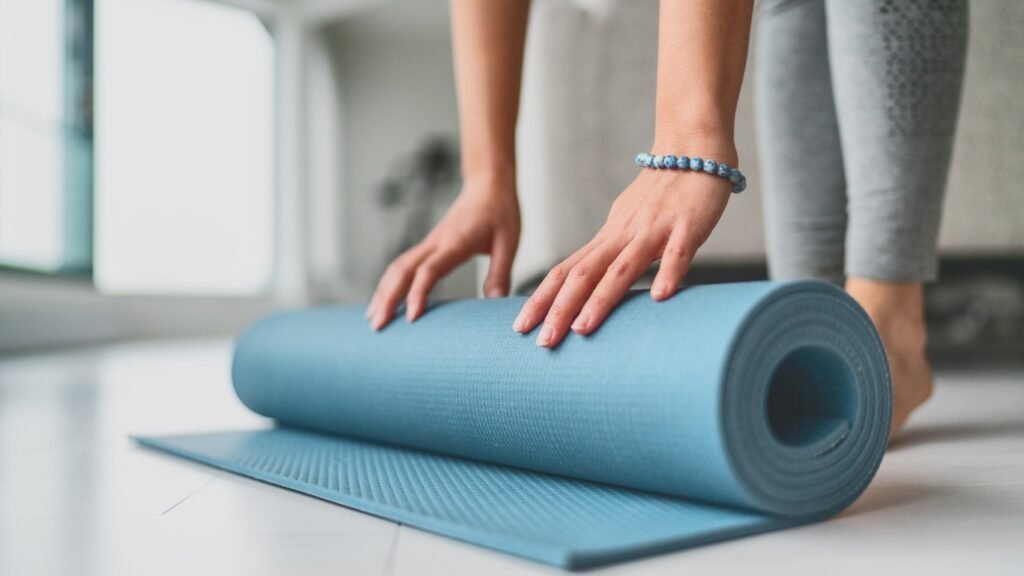
Learning how to clean a yoga mat without vinegar is useful for anyone whose mat smells musty, feels slippery, or shows sweat marks after practice. Vinegar is a popular natural cleaner, but many people dislike its smell, and it can damage certain mat materials, especially natural rubber and cork. The good news is that several gentle, effective methods clean a yoga mat just as well, using dish soap, baking soda, and a few simple ingredients you probably already have at home.
A yoga mat collects sweat, skin oils, dust, and bacteria with every session. A dirty mat can smell bad, lose its grip, and irritate skin. Regular cleaning keeps the surface grippy, extends the life of the mat, and makes practice more pleasant. This guide covers quick daily cleaning, deeper weekly cleaning, and a full soak for a mat that has been neglected, plus how to adapt each method to your mat’s material.
Know Your Mat Material First
Before cleaning, check what your mat is made of, since the wrong cleaner can damage it. Most mats are PVC, TPE, natural rubber, cork, or jute. PVC mats are the most common and the most forgiving: they handle soap, water, and gentle scrubbing well. TPE mats are softer and lighter, and they need gentler handling to avoid surface damage. Natural rubber mats offer excellent grip but can break down if soaked for too long or exposed to harsh cleaners and direct sunlight. Cork mats are naturally antimicrobial and need only a light wipe, since soaking can damage the cork. Jute mats have a natural fiber surface that should not be soaked.
Check the care instructions that came with your mat. If you no longer have them, start with the gentlest method, dish soap and water, and test it on a small corner first. Avoid bleach, alcohol-based cleaners, and abrasive scrubbers on every mat type, since these can strip the surface, cause cracking, and reduce grip.
Method 1: Dish Soap and Water, the Daily Clean
Dish soap and water is the safest and most reliable way to clean a yoga mat, and it works for almost every material. Fill a spray bottle with warm water and add a few drops of mild liquid dish soap. Shake gently to mix. Spray the mat lightly and evenly, then wipe it down with a clean, damp cloth or a soft sponge.
For a deeper clean, add a drop of dish soap directly to a damp cloth and wipe the mat in long strokes, covering the whole surface. Rinse the cloth in clean water, wring it out, and wipe the mat again to remove soap residue. Soap residue can make a mat slippery, so this second wipe matters. Let the mat air dry completely before rolling it up.
Do this quick clean after every practice, or at least two or three times a week if you practice daily. It takes two minutes, prevents odor from building up, and keeps the surface grippy. A mat that is wiped regularly rarely needs a deep clean.
Method 2: Baking Soda for Odor and Grime
Baking soda is a gentle deodorizer that lifts sweat and grime without harsh chemicals. Sprinkle baking soda evenly over the dry mat and let it sit for 15 to 30 minutes. The powder absorbs odors and loosens surface dirt. Then wipe the mat with a damp cloth to remove the powder, and follow with a clean, damp cloth to pick up any residue.
For a stronger treatment, make a paste of baking soda and a little water, spread it over stained or smelly areas, and let it sit for 15 minutes before wiping it off. Baking soda is safe for PVC, TPE, and rubber mats, and it works well on mats that have developed a musty smell from being stored rolled up while damp. Use it once a week or whenever the mat starts to smell.
Baking soda also helps with odor in other gear. If your workout shoes have developed a smell, our guide on how to stop shoes from smelling without baking soda covers related deodorizing methods for the rest of your kit.
Method 3: Tea Tree Oil Spray for a Natural Disinfectant
Tea tree oil has natural antibacterial and antifungal properties, which makes it a popular choice for yoga mat spray. To make your own, fill a spray bottle with water, add a few drops of mild dish soap, and add 5 to 10 drops of tea tree oil. Shake well before each use. Spray the mat lightly and wipe it with a clean cloth.
You can add a few drops of lavender oil for a pleasant scent, though this is optional. Use the spray after every practice for a fresh-smelling mat. Keep the spray bottle out of direct sunlight, and make a fresh batch every two to three weeks, since the oils can lose strength over time.
Test the spray on a small corner of the mat first, especially on natural rubber, since some oils can affect the surface over time. If you have sensitive skin, use fewer drops of tea tree oil, or skip it and use plain soap and water instead.
Method 4: A Gentle Deep Soak in the Bathtub
A mat that has not been cleaned in weeks, or one that smells strongly, may need a full soak. Fill a bathtub with lukewarm water and add a small amount of mild dish soap, about a tablespoon. Submerge the mat and let it soak for 15 to 30 minutes. Use a soft cloth or sponge to wipe both sides gently while it soaks, paying attention to areas where hands and feet rest.
Drain the tub, rinse the mat with clean water, and press out excess water with a towel. Do not wring the mat, since twisting can crack the surface and damage the material. Hang the mat over a shower rod or lay it flat on a clean towel to dry, flipping it once so both sides dry evenly.
Soaking is best for PVC and TPE mats. Limit soaking for natural rubber mats to 15 minutes, and do not soak cork or jute mats at all, since water can damage their surfaces. Never put a yoga mat in a washing machine or dryer, since the agitation and heat can warp, crack, or melt it.
Method 5: Witch Hazel and Water for a Quick Refresh
Witch hazel is a gentle, plant-based astringent that cleans without leaving residue, and it dries quickly, which makes it handy for a fast refresh between sessions. Mix equal parts witch hazel and water in a spray bottle, spray the mat lightly, and wipe it with a clean cloth. The mat will be dry and ready to use within a few minutes.
Witch hazel works well on all mat types, including natural rubber and cork, since it is mild and evaporates quickly. It is a good choice for people who dislike the smell of vinegar and want a quick, no-rinse option. Add a few drops of essential oil, such as lavender or eucalyptus, if you like a light scent.
How to Dry a Yoga Mat Properly
Drying matters as much as washing. A mat rolled up while damp grows mildew and develops a musty smell, so always let it dry fully before storing it. Hang the mat over a shower rod, a clothesline, or the back of a chair, with air flowing around both sides. If you dry it flat, flip it after an hour so the underside dries too.
Avoid direct sunlight for long periods, since UV light can fade colors and break down rubber and TPE. Dry the mat indoors in a well-ventilated room, or outdoors in the shade. Most mats dry within 2 to 4 hours, depending on thickness and humidity. Do not use a hair dryer or place the mat near a heater, since heat can warp it.
Once dry, roll the mat loosely with the top side facing outward, which prevents the edges from curling. Store it in a cool, dry place, away from direct sun. If you use a mat bag, make sure the mat is fully dry before putting it in, since a closed bag traps moisture.
Keeping Your Mat Grippy
A clean mat grips better than a dirty one, since sweat and oil reduce traction. Regular cleaning with soap and water is the best way to keep grip. If your mat still feels slippery after cleaning, check whether soap residue is the cause by wiping it again with a clean, damp cloth. Avoid using lotions or oils on your hands and feet before practice, since these transfer to the mat and reduce grip.
For extra traction during sweaty sessions, a yoga towel laid over the mat absorbs moisture and improves grip. A towel is also easier to wash than the mat itself. Our guide on how to keep your yoga mat from slipping without a towel covers grip techniques and mat positioning for slippery sessions.
How Often to Clean Your Mat
Clean your mat after every practice with a quick wipe, and give it a deeper clean once a week. If you practice hot yoga or sweat heavily, wipe the mat after every session and deep clean it twice a week. If you share a mat or use a studio mat, wipe it before and after each use.
Watch for signs that a mat needs attention: a musty smell, visible sweat marks, a slippery surface, or skin irritation after practice. These are all signs that bacteria and oils have built up and the mat needs a thorough clean. A mat that is cleaned regularly lasts longer, grips better, and stays pleasant to use.
Mistakes to Avoid
The most common mistake is using too much soap, which leaves a slippery residue. A few drops are enough. Another mistake is soaking a mat that should not be soaked, such as cork or jute, or leaving a rubber mat in water too long. Using bleach, alcohol, or harsh disinfectants is another error: these can damage the surface, cause cracking, and irritate skin.
Scrubbing with an abrasive pad or brush wears down the mat’s texture and reduces grip. Rolling up a damp mat is one of the worst habits, since it traps moisture and encourages mildew. Finally, drying a mat in direct sunlight or near a heater can warp it, so always dry it in the shade with good airflow.
Frequently Asked Questions
Can I clean a yoga mat with just water?
Plain water removes surface dust, but it does not cut through sweat and skin oils. Adding a few drops of mild dish soap makes cleaning far more effective. Wipe the mat with soapy water, then wipe again with a clean, damp cloth to remove residue.
How do I get the smell out of a yoga mat?
Sprinkle baking soda over the mat, let it sit for 30 minutes, then wipe it off with a damp cloth. For a strong smell, soak a PVC or TPE mat in lukewarm soapy water for 15 to 30 minutes, rinse it, and let it dry fully in the open air before rolling it up.
Is tea tree oil safe for all yoga mats?
Tea tree oil spray is safe for most mats when diluted in water with a little dish soap. Test it on a small corner first, especially on natural rubber, and use only 5 to 10 drops per spray bottle. If you have sensitive skin, use fewer drops or stick to plain soap and water.
Can I put my yoga mat in the washing machine?
No. A washing machine can warp, crack, or tear a yoga mat, and the heat of a dryer can melt or deform it. Clean the mat by hand with soap and water, or soak it in the bathtub for a deep clean.
How long does a yoga mat take to dry?
Most mats dry in 2 to 4 hours when hung in a well-ventilated room. Thicker mats take longer. Flip the mat halfway through drying so both sides dry evenly, and do not roll it up until it feels completely dry to the touch.
Why is my yoga mat slippery after cleaning?
Slipperiness after cleaning is usually caused by soap residue. Wipe the mat again with a clean cloth dampened with plain water, and let it dry fully. Avoid using too much soap, and skip oily cleaners or lotions before practice.