Learning how to keep a car battery from dying in winter without a garage can save you from one of the cold season’s most frustrating surprises: turning the key on a freezing morning and hearing nothing but a slow, tired crank. Cold weather is hard on batteries. Chemical reactions inside a battery slow down as temperatures drop, so it produces less power exactly when your engine needs more power to turn over. Add thickened engine oil, heavier use of heaters, lights, and defrosters, and you have a recipe for a dead battery.
The good news is that you do not need a heated garage to protect your battery. With a few smart habits around parking, driving, charging, and maintenance, an outdoor-parked car can start reliably all winter long. This guide covers the practical steps that actually work, the mistakes that quietly drain batteries, and the small pieces of gear worth owning before the first hard freeze arrives.
Why Cold Weather Drains Car Batteries
A car battery stores energy through a chemical reaction, and cold slows that reaction down. At freezing temperatures, a fully charged battery may deliver only about two-thirds of its normal cranking power. At well below freezing, that figure drops further. Meanwhile, a cold engine is harder to crank because the oil inside it thickens, creating more resistance. Your battery is therefore asked to do more work with less available power.
Short trips make the problem worse. Starting the engine uses a large burst of energy, and the alternator needs a decent drive to recharge what was used. A five-minute drive to the store in winter, with the heater, heated seats, headlights, and rear defroster all running, may not replace the energy spent starting the car. Repeat that pattern day after day, and the battery slowly slides toward a low charge, until one cold morning it simply cannot crank the engine.
Age matters too. Most car batteries last around three to five years, and an older battery that copes fine in mild weather can fail suddenly in the cold. If your battery is approaching that age range, winter is the time to have it tested, not the time to hope for the best.
Park Smart: Location Makes a Real Difference
Where you park an outdoor car matters more than most drivers realize. A few degrees of difference, or shelter from wind, can reduce the strain on your battery on the coldest nights.
Choose shelter from wind
Wind chill does not change the actual temperature of your car, but wind strips away the thin layer of slightly warmer air around the vehicle and speeds up cooling. Parking beside a building, fence, hedge, or wall that blocks the prevailing wind helps the car stay a little warmer overnight. Even parking close to other vehicles can offer a small benefit.
Face the morning sun when you can
If you have a choice, park so the front of the car faces east. Morning sunlight hitting the hood warms the engine bay slightly before you start the car, which can make cranking a touch easier. It is a small gain, but it costs nothing and is worth doing on clear winter days.
Avoid low, damp spots
Low-lying areas collect cold air and moisture, and dampness encourages corrosion on battery terminals. A slightly higher, drier parking spot is a better winter choice. If your driveway slopes, the higher end is usually the better bet.
Use a car cover on the coldest nights
A fitted car cover will not keep the engine warm like a garage, but it does cut wind exposure and reduce frost buildup. On nights when a hard freeze is forecast, a cover is a simple, cheap layer of protection. Just make sure the cover is dry before putting it on, so you are not trapping moisture against the bodywork.
Drive It Right: Recharge What Starting Takes
Your driving pattern is one of the biggest factors in winter battery health. The alternator recharges the battery while you drive, but only if the drive is long enough and the engine is warm.
Take one longer drive each week
If most of your trips are short hops, aim for at least one drive of twenty to thirty minutes at steady speed each week. Highway driving is ideal. This gives the alternator time to fully recharge the battery after the energy spent on cold starts. Think of it as a weekly top-up that keeps the battery from slowly running down.
Combine short trips
Instead of three separate short trips with cold starts in between, combine errands into one outing when you can. A warm engine restarts far more easily than a cold one, and you avoid spending the battery’s charge three times over.
Turn off accessories before you switch off
Before turning off the engine, switch off the heater fan, heated seats, heated steering wheel, headlights, and rear defroster. That way, when you start the car next time, the battery’s full power goes to cranking the engine instead of being split across accessories. Many modern cars manage this automatically, but on older vehicles it still makes a real difference.
Do not idle for ages to warm up
Long idling warms the cabin slowly and barely charges the battery, because the alternator produces little extra power at idle. Driving gently warms the engine faster and charges the battery better. Start the car, wait about thirty seconds, then drive off gently until the engine reaches normal temperature.
Use a Battery Maintainer or Trickle Charger
For a car parked outdoors without access to a power outlet, charging takes a little creativity. For a car parked near an outlet, a battery maintainer is the single most effective winter tool you can buy.
What a maintainer does
A battery maintainer, sometimes called a trickle charger, delivers a small, steady charge that keeps the battery topped up without overcharging it. Modern smart maintainers monitor the battery and switch to a low maintenance mode once it is full. You connect it overnight or whenever the car will sit for a few days, and it quietly keeps the battery in good shape.
Pros and cons of a maintainer
The advantages are clear: a maintained battery lasts longer, starts reliably, and resists cold-weather failure. The downsides are that you need an outdoor-rated extension lead and a power outlet within reach, and you must route the cable so it cannot be tripped over or damaged. Never run a charger lead across a public walkway, and only use equipment rated for outdoor use in wet conditions.
Solar trickle chargers for outlet-free parking
If you park on the street or in a lot with no outlet, a small solar trickle charger is worth considering. These panels sit on the dashboard or attach to a window and feed a tiny charge into the battery through the cigarette lighter socket or a direct connection. They will not recharge a flat battery, but on sunny winter days they can offset the slow drain from the car’s electronics and alarm system. In cloudy northern winters their contribution is modest, so treat them as a helper, not a solution on their own.
Disconnecting the battery for long sits
If the car will sit unused for several weeks, disconnecting the negative terminal stops the slow drain from onboard electronics. This is a practical option for a second car or a vehicle you will not use during a long trip. Note that disconnecting may reset the clock, radio presets, and some vehicle settings, so weigh that inconvenience against the benefit. For most daily drivers, a maintainer is the better choice.
Insulate and Protect the Battery
Keeping the battery itself a little warmer helps it deliver power on cold mornings. Battery insulation kits, essentially a thermal wrap or blanket that fits around the battery, slow down heat loss overnight. They are inexpensive, easy to fit, and particularly useful in regions with long stretches of sub-freezing weather. Some kits include a small heating pad that plugs in alongside a maintainer, though a simple insulating wrap alone still helps.
Also check that the battery is held firmly in its tray. Vibration from a loose battery damages the internal plates over time and shortens battery life. A snug hold-down clamp costs little and protects the battery through winter potholes and rough roads.
Keep Terminals Clean and Connections Tight
Corrosion on battery terminals acts like a partial blockage in a pipe: power cannot flow freely, so the starter receives less current than the battery can actually supply. White, blue, or green crusty buildup around the terminals is a warning sign worth acting on.
To clean terminals safely, switch the engine off, disconnect the negative cable first, then the positive, and scrub the terminals and cable ends with a wire brush and a paste of baking soda and water. Rinse with clean water, dry thoroughly, reconnect positive first then negative, and tighten firmly. A thin smear of petroleum jelly or a purpose-made terminal protector spray helps slow future corrosion. Wear gloves and eye protection, and keep the baking soda solution away from the battery’s vent caps.
While you are there, check the cables themselves. Cracked, swollen, or frayed cables should be replaced, since damaged cables create resistance and can cause hard starting even with a healthy battery.
Test the Battery Before Winter Bites
A battery test takes only a few minutes and removes the guesswork. Most auto parts stores will test a battery free of charge, and the test reports both the battery’s state of charge and its cranking ability compared with its rated capacity. If the test shows a weak battery, replacing it before winter is far cheaper and less stressful than calling for a jump-start in a snowstorm.
Watch for early warning signs: slow cranking on cold mornings, dimming headlights when you start the car, a clicking sound instead of cranking, or the need for a jump-start more than once. Any of these means the battery deserves attention now, not later.
Carry a Jump Pack and Know How to Use It
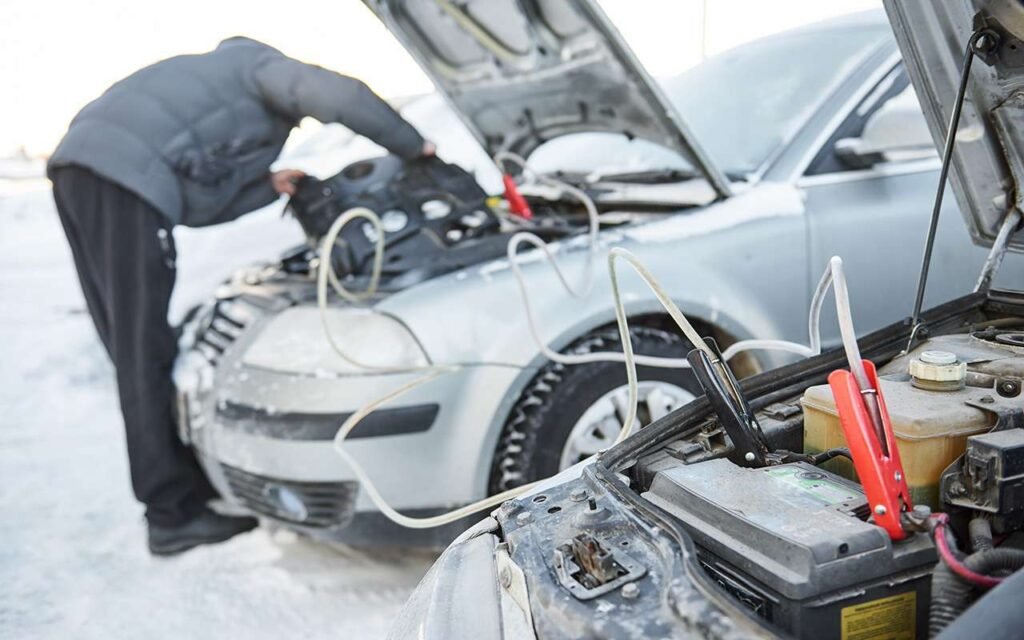
Even with good habits, a bitter cold snap can catch an older battery out. A portable lithium jump starter pack is small enough to keep in the glove box or trunk, and it can start a car without another vehicle. Charge the pack every month or two during winter, since a flat jump pack helps nobody, and keep it somewhere it will not freeze solid for days on end. Read the instructions once, before you need it, so a stressful morning is not the first time you open the box. Jumper cables are a cheaper backup, but they require a second car, so a self-contained jump pack is the more reliable choice for an outdoor-parked vehicle.
Mistakes That Quietly Kill Winter Batteries
Several common habits drain batteries without drivers noticing. Leaving interior lights, phone chargers, or dash cameras plugged in adds a constant small draw. Repeatedly starting the car just to “keep it warm” without driving it anywhere actually drains the battery, since starting uses far more energy than a few minutes of idling replaces. Ignoring a battery that is already several years old and hoping it survives one more winter is a gamble that often ends with a tow truck. And jump-starting a frozen battery is dangerous: a battery that has frozen solid can crack or leak, so if the case looks swollen or the battery is visibly frozen, do not attempt to jump it, and have it inspected instead.
Another quiet mistake is assuming a new battery solves everything. If a new battery also goes flat repeatedly, the real problem may be a parasitic drain, a failing alternator, or a loose connection. In that case, a mechanic’s diagnosis is worth more than another battery.
A Simple Winter Routine That Works
Put it all together and the routine is straightforward. Park sheltered and facing the morning sun when possible. Take one decent drive each week and combine short trips. Switch accessories off before shutting down. Keep terminals clean, test the battery before the coldest weather, insulate it if winters are harsh, and use a maintainer or solar charger if your parking situation allows. Keep a charged jump pack in the car as insurance. None of these steps requires a garage, and together they give an outdoor-parked car a strong chance of starting first time, every time, all winter long.
FAQs
How often should I start my car in winter if I am not driving it?
Starting the car and letting it idle for a few minutes does more harm than good, because starting uses more energy than idling replaces. If you cannot drive it, a battery maintainer is a better option. If you do start it, drive it for at least twenty minutes so the alternator can properly recharge the battery.
Does cold weather permanently damage a car battery?
Cold itself rarely causes permanent damage to a healthy, charged battery. The real damage comes from a battery sitting in a discharged state in the cold, which can allow the electrolyte to freeze and crack the case. Keeping the battery charged is the best protection against permanent cold damage.
Is a battery blanket worth it for outdoor parking?
Yes, in regions with long, harsh winters a battery insulation wrap is a cheap and useful addition. It slows heat loss overnight and helps the battery deliver more cranking power in the morning. It works best combined with good driving habits and a healthy battery, rather than as a fix for a battery that is already failing.
Can I use a solar charger in winter?
You can, but expect modest results. Short days, low sun angles, and cloudy weather all reduce output. A solar trickle charger helps offset the slow drain from the car’s electronics, but it will not recharge a battery that is already low. It is a helpful supplement, not a replacement for proper charging.
How do I know if my battery needs replacing before winter?
Slow cranking, dim lights at startup, a battery more than three to five years old, or a test result showing weak cranking capacity are all strong signs. A free test at an auto parts store gives a clear answer, and replacing a weak battery before winter is much easier than dealing with a failure during a cold snap.
Should I disconnect my battery if the car sits for weeks?
Disconnecting the negative terminal is a sensible option for a car that will sit unused for several weeks, since it stops the drain from onboard electronics. Just be aware that it may reset the clock, radio presets, and some vehicle settings, and reconnect the battery carefully, negative cable last, when you return.