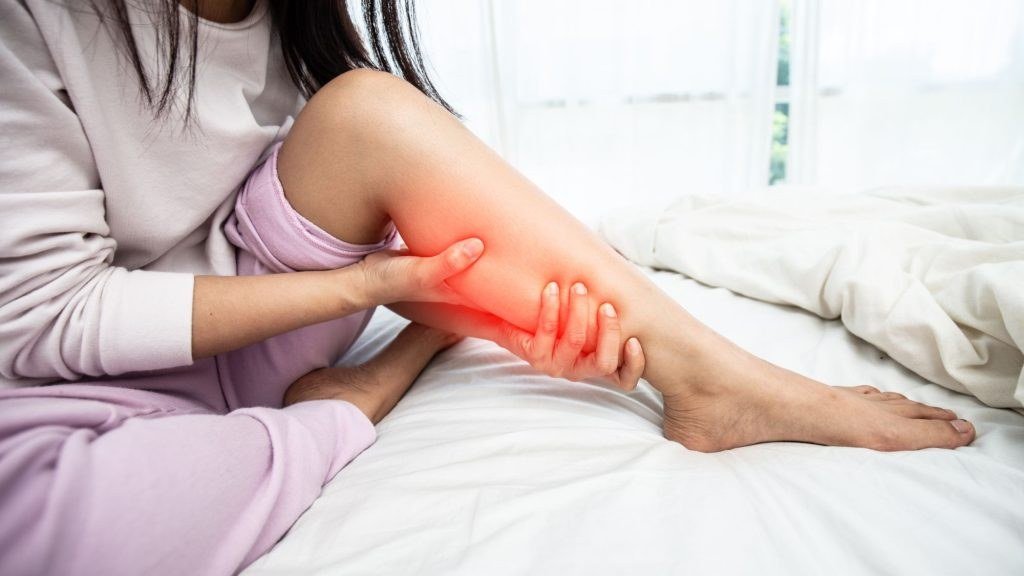
Knowing how to relieve calf cramps at night without medication is one of those skills you never think about until you need it at 3 a.m. One moment you are asleep, the next your calf muscle has seized into a hard, painful knot, and you are hopping across a cold floor trying not to wake the whole house. These sudden spasms, often called charley horses, are one of the most common sleep disruptions in adults, and they become more frequent with age.
The reassuring news is that the most effective responses cost nothing and take seconds. A specific stretch breaks almost every nighttime calf cramp, and a short bedtime routine can cut how often they strike. This guide covers exactly what to do in the moment, what helps afterward, and how to prevent cramps from hijacking your sleep night after night.
What Causes Calf Cramps at Night
A nighttime calf cramp is a sudden, involuntary contraction of the calf muscle. The muscle shortens hard and refuses to release, which is what causes the intense pain. Despite the folk wisdom, research suggests these cramps are mostly a nerve and muscle problem, not simply a sign that you are missing one magic nutrient.
Common contributors include muscle fatigue from the day, long periods of sitting, dehydration, and the position of your feet under the covers. Tight bedsheets that push your toes into a pointed position keep the calf muscle in a shortened state for hours, which makes it more likely to seize. Age plays a role too: the nerves and muscles change over the decades, and cramps become more common past middle age. Certain medications can also contribute, so it is worth mentioning frequent cramps to your doctor or pharmacist at your next visit.
It helps to know what nighttime cramps are not. They are different from restless legs syndrome, which creates an urge to move the legs without the hard, visible muscle contraction. They are also different from ordinary muscle soreness, which builds slowly and feels like stiffness rather than a sudden spasm. If your legs feel creepy-crawly and you must keep moving them, that points more toward restless legs than cramps.
How to Stop a Calf Cramp in the Moment
When a cramp strikes, speed matters. Follow these steps in order:
- Straighten your leg. Sit up if you can do so safely and extend the cramping leg, keeping the knee as straight as comfortably possible.
- Pull your toes toward your shin. Flex the foot upward, drawing the toes toward your body. This lengthens the calf muscle and is the single fastest way to break the spasm. If you cannot reach your foot, loop a towel around the ball of your foot and gently pull.
- Hold the stretch. Keep the position for 20 to 30 seconds, or until the muscle begins to relax. Use slow, steady pressure. Never bounce or force the stretch, which can strain the muscle.
- Stand or walk gently. Once the worst of the pain eases, carefully stand and put weight on the leg, or take a few slow steps. Stop if you feel dizzy.
- Massage the muscle. Rub the calf firmly but gently with your hands to help the remaining tightness release and improve blood flow.
- Apply gentle warmth. A warm towel or a heating pad on a low setting can relax a lingering tight muscle. Do not fall asleep with a heating device switched on.
For a cramp in the foot rather than the calf, the same principle applies: gently draw the toes upward and massage the arch without pressing too hard.
What to Do After the Cramp Releases
Most cramps resolve within a few minutes, but the muscle often stays sore into the next day. That lingering tenderness is normal and does not mean anything is damaged. A few things help you recover faster and get back to sleep:
- Keep moving gently. A short, slow walk around the room or some ankle circles in bed restore normal blood flow to the muscle.
- Stretch once more. Repeat the calf stretch for 30 seconds on each leg before getting back into bed, so the muscle does not seize again immediately.
- Drink some water. If you have not had fluids for hours, a small glass of water is sensible, though you do not need to chug a large amount in the middle of the night.
- Loosen your covers. Before lying back down, free your feet from tight sheets so your toes are not forced into a pointed position.
A 5-Minute Bedtime Routine That Prevents Cramps
Prevention beats rescue. Regular calf stretching before bed is one of the most consistently recommended strategies by clinicians, and it takes only a few minutes. Do this routine nightly:
The wall stretch
Stand an arm’s length from a wall with your palms flat against it. Step one foot back about a foot and a half, keeping that heel pressed into the ground and the back leg straight. Bend your front knee slowly until you feel a deep but comfortable stretch in the back calf. Hold 20 to 30 seconds, then switch sides. Repeat twice per leg.
The step stretch
Stand on the bottom step of a staircase holding the railing, with the balls of your feet on the step and your heels hanging off the edge. Slowly lower your heels below the step level until you feel the calves stretch. Hold 20 seconds, rise back up, and repeat three times.
Seated toe pull
Sit on the edge of the bed, extend one leg, and pull your toes toward your shin with your hand, holding 20 seconds per side. This is the same motion that breaks an active cramp, and practicing it nightly trains the muscle to stay supple.
Add ankle circles, ten in each direction per foot, to finish. The whole routine takes about five minutes and doubles as a relaxing wind-down before sleep.
Daytime Habits That Reduce Nighttime Cramps
What you do during the day shows up in your calves at night. These habits lower the odds of a 3 a.m. wake-up:
- Stay hydrated through the day. You do not need to overdo it, but steady fluid intake across the day supports normal muscle function far better than a big glass right before bed.
- Move regularly. Long, unbroken hours of sitting let the calves stiffen. Stand up, walk, or do a few calf raises every hour or two.
- Ease into new activity. A sudden hard workout after weeks of inactivity is a classic setup for nighttime cramps. Build intensity gradually.
- Wear supportive shoes. Flat sandals, worn-out sneakers, and long hours barefoot on hard floors fatigue the calves. Supportive footwear during the day pays off at night. If daytime standing leaves you achy, see how to relieve wrist pain from typing all day for the same kind of targeted relief approach applied to another overworked body part.
- Check your bedding. Heavy blankets or tightly tucked sheets that pin your feet downward keep the calf shortened all night. Untuck the foot of the bed or let your feet hang free.
Myths and Mistakes to Avoid
- The banana fix: Eating a banana will not reliably prevent cramps. Potassium matters for overall health, but nighttime cramps are rarely caused by a simple potassium shortage, and one banana before bed is not a proven strategy.
- Soap under the sheets: This folk remedy has no plausible mechanism and no evidence behind it. Skip it.
- Starting supplements on your own: Magnesium, potassium, and other supplements are widely marketed for cramps, but the evidence for preventing nighttime cramps is weak, and supplements can interact with medications or harm people with kidney problems. Talk to a doctor before starting anything.
- Aggressive stretching: Yanking or bouncing a cramped muscle can cause a strain. Slow and steady always wins.
- Ignoring one-sided symptoms: Cramps that always strike the same leg, especially with swelling, redness, warmth, or persistent pain, deserve medical attention rather than home remedies. Sleep position can aggravate one-sided aches too, so if side-sleeping leaves you sore, read how to relieve hip pain from sleeping on your side for adjustments that take pressure off the lower body.
When to See a Doctor
Occasional nighttime calf cramps are common and usually harmless. Get medical advice if cramps are frequent or severe, last longer than about ten minutes, repeatedly disrupt your sleep, or come with swelling, redness, numbness, or weakness. Mention them promptly if you take medications known to affect muscles or electrolytes, such as certain diuretics or cholesterol drugs. Seek urgent care if one leg becomes suddenly swollen, red, and painful, or if leg symptoms appear with shortness of breath or chest pain.
This article is for informational purposes only and is not medical advice. Consult a qualified professional.
Frequently Asked Questions
What is the fastest way to stop a calf cramp at night?
Straighten the leg and pull your toes toward your shin, holding for 20 to 30 seconds. This lengthens the calf and breaks the spasm faster than anything else.
Why do I only get cramps at night and not during the day?
At night your feet often rest in a pointed position under the covers, keeping the calf shortened for hours. Combined with daytime muscle fatigue and reduced movement, this makes the muscle prone to seizing.
Does dehydration cause nighttime leg cramps?
Dehydration can contribute, but it is rarely the whole story. Steady daytime hydration helps, but cramps are more often tied to muscle fatigue, inactivity, and sleep position than to fluids alone.
Should I take magnesium for leg cramps?
The evidence that magnesium prevents nighttime cramps is weak, and supplements can interact with medications or cause problems for people with kidney disease. Discuss it with a doctor rather than starting on your own.
Are nighttime leg cramps the same as restless legs syndrome?
No. Cramps cause a sudden, painful, visible muscle contraction. Restless legs syndrome creates an uncomfortable urge to move the legs without the hard contraction. They are different conditions with different treatments.
How long does soreness last after a bad cramp?
Mild tenderness for a day or two is normal after a strong cramp. Gentle stretching, light walking, and warmth usually resolve it. If pain is severe or persists beyond a few days, get it checked.