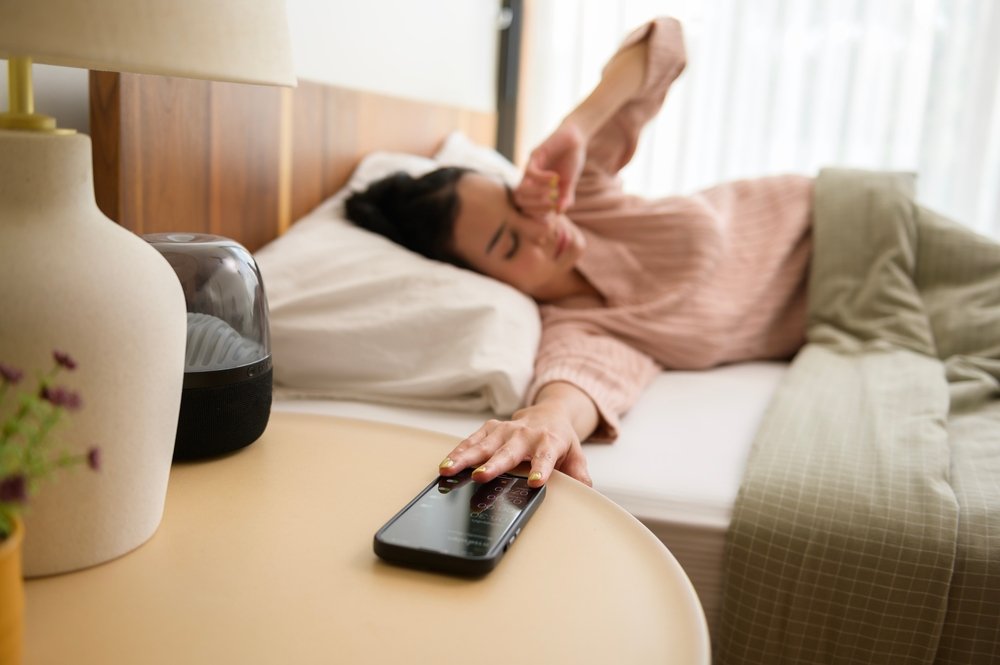
If you want to know how to stop checking your phone first thing in the morning, you are describing one of the most common habits of modern life — and one of the hardest to break. For millions of people, the day begins the same way: eyes half open, hand reaching for the nightstand, and within seconds the brain is flooded with overnight emails, breaking news, group chats, and social media. Before your feet touch the floor, someone else has already set your emotional agenda for the day.
The good news is that this habit is not a character flaw. It is a trained response to devices engineered to reward checking. And like any trained response, it can be retrained. This guide explains why the morning scroll hooks you, what it actually costs you, and ten practical strategies — from the five-minute fixes to the deeper resets — that help you reclaim the first hour of your day.
Why Your Hand Reaches for the Phone Automatically
Understanding the mechanism makes the habit much easier to dismantle. Three forces combine every morning:
- Variable rewards. Your phone delivers unpredictable payoffs — sometimes an exciting message, sometimes nothing. Psychologists have known for decades that variable-ratio rewards create the most persistent behavior. Every unlock is a tiny slot-machine pull.
- Overnight information debt. While you slept, the world kept moving. Your brain hates unresolved uncertainty, so checking feels productive — you are “catching up.” In reality, almost nothing that arrived at 3 a.m. requires your attention at 7 a.m.
- Low willpower on waking. Decision-making resources are depleted right after sleep, especially before caffeine or food. Habits run on autopilot precisely when your ability to resist them is weakest, which is why “I’ll just check one thing” almost never ends at one thing.
App designers know all of this. Red notification badges, infinite scroll, and autoplaying stories are not accidents — they are the product of enormous research into keeping you engaged. You are not weak for falling for it; you are up against a trillion-dollar attention industry. The strategies below work because they change the environment, not because they demand superhuman willpower.
What the Morning Scroll Actually Costs You
The price of those first fifteen minutes is steeper than it feels. Research on attention and stress points to several consistent effects:
- You start the day reactive instead of intentional. The first inputs your brain receives shape its priorities. An alarming headline or a passive-aggressive work email puts your nervous system into threat mode before you have even decided what matters today.
- Your attention fragments early. Switching between a news alert, a text thread, and a social feed trains your brain to expect constant novelty. That scattered pattern tends to persist for hours, making deep work noticeably harder.
- Cortisol gets an unhelpful spike. Cortisol naturally peaks shortly after waking to help you feel alert — the “cortisol awakening response.” Piling stressful inputs on top of that peak amplifies anxiety rather than alertness.
- You lose the quietest hour you will ever get. Mornings are one of the few windows free from other people’s demands. Spending it consuming feeds trades your most creative, self-directed time for content designed to keep you scrolling.
None of this means phones are evil or that you must become a digital monk. It simply means the first hour belongs to you, not to your notifications. Here is how to take it back.
10 Practical Strategies That Actually Work
1. Move the Charger Out of the Bedroom
This single change does more than any app or mindset trick. Charge your phone overnight in the kitchen, hallway, or living room — anywhere that requires you to stand up and walk to reach it. Distance is the most reliable willpower substitute ever discovered: a phone across the room is a phone you will not check “just for a second.”
The obvious objection is the alarm clock. Solve it with a ten-dollar standalone alarm clock — the kind with big glowing digits. Many people report that this one purchase transforms their mornings more than any productivity system. If you use your phone for sleep tracking or a smart alarm, most of those features work fine with the phone charging across the room instead of under your pillow.
2. Adopt a Phone-Free First Hour (Start With 30 Minutes)
Commit to a specific window — the first 30 to 60 minutes after waking — during which the phone stays untouched. Put the rule in writing, somewhere visible: a sticky note on the bathroom mirror works. A defined window beats a vague intention (“I’ll check less”) because your brain can count down to it.
If an hour feels impossible, start with 20 minutes and add five each week. The goal is not suffering; it is proving to yourself, one morning at a time, that nothing catastrophic happens when you are unreachable. Within two weeks, most people find the window feels natural — and many extend it voluntarily.
3. Build a “Morning Menu” of Replacements
Habits need substitutes, not just prohibitions. Willpower research consistently shows that “don’t do X” fails while “do Y instead” succeeds. Write a short menu of three to five things you genuinely enjoy that can fill the old scrolling slot: make coffee or tea slowly, stretch for five minutes, step outside for daylight, read ten pages of a book, write three lines in a journal, take a shower without rushing.
The key word is enjoy. If your replacement feels like punishment, the phone wins. Pick activities with a small sensory payoff — the smell of coffee, sunlight on your face, hot water — because your brain is looking for stimulation and you must offer it something better than a feed.
4. Make Your Phone Boring Overnight
On the nights when the phone must stay nearby, defang it before bed. Turn on Do Not Disturb or a dedicated Sleep Focus mode so nothing buzzes before your window ends. Move social and news apps off the home screen into a folder on the last page. Turn on grayscale in accessibility settings — without color, feeds lose a shocking amount of their pull. Turn off all notification badges for non-essential apps.
Each of these adds a tiny bit of friction, and friction is the enemy of autopilot. A phone that greets you with a gray, badge-free lock screen and no buzzing simply does not trigger the same grab reflex.
5. Create a Phone Parking Spot
Designate one specific place — a drawer, a basket by the door, a shelf in the closet — as the phone’s home during your morning window. The ritual of physically placing it there signals to your brain that the device is “put away,” the same way hanging up work clothes signals the end of the workday. Vague rules (“somewhere in the house”) leak; a named spot holds.
Pair the parking spot with a visible cue for what comes next: lay out your book, journal, or workout clothes the night before. When you wake up, the path of least resistance should lead toward your morning menu, not toward the drawer.
6. Do a One-Week App Audit
For one week, notice which apps you open in that first morning check. Most people discover it is the same two or three apps every time — and that 90 percent of what they see is forgettable within an hour. Once you have the data, take surgical action: delete the worst offender from your phone for a month (you can reinstall it later; almost nobody does), or log out of it so opening it requires effort.
This is not about deleting everything. It is about identifying the specific apps that hijack your mornings and treating them differently from the genuinely useful ones. Your banking app is not the problem. The infinite feed is.
7. Fix the Night Before, Not the Morning
Morning phone checking is often a symptom of evening anxiety. If you fall asleep rehearsing tomorrow’s to-do list, of course you wake up reaching for confirmation that everything is fine. Spend five minutes each evening doing a “brain dump”: write down tomorrow’s top three priorities, lay out what you need, and note anything you are worried about forgetting. Externalizing the list tells your nervous system the information is safe, which reduces the urge to verify it at dawn.
Also set a “phone bedtime” — a time, typically 30 to 60 minutes before sleep, when the phone goes to its parking spot for the night. Ending the day phone-free makes starting the day phone-free dramatically easier, because the habit loop never gets its evening reinforcement.
8. Tell Someone Your Plan
Social commitment is a powerful compliance tool. Tell a partner, friend, or coworker that you are doing a phone-free first hour, and ask them to check in after a week. Better yet, recruit them to join you — shared challenges have far higher follow-through than solo ones. Some people go further and post their streak publicly; the mild social pressure of not wanting to report a broken streak keeps them honest on groggy mornings.
9. Track Your Streak (and Expect Imperfection)
Mark an X on a paper calendar for every phone-free morning. After a few days, the growing chain becomes its own motivation — you will not want to break it. But plan for slips in advance: decide now that one bad morning does not end the experiment. The research on habit formation is clear that missing once has no measurable impact on long-term success; it is the “what the hell, I already failed” spiral that kills progress. Slip, note what triggered it, adjust, and continue the chain the next day.
10. Redefine What “Catching Up” Means
The deepest fix is philosophical. Ask yourself honestly: in the last month, how many times did something you saw in the first morning check actually require action before 9 a.m.? For most people, the answer is close to zero. The news will still be there at lunch. The group chat will still be there at lunch. Emails marked urgent at 6 a.m. are almost never actually urgent — and the rare genuine emergency will reach you by phone call, which bypasses Do Not Disturb for favorites.
Once you internalize that the morning check provides the feeling of preparedness without the reality of it, the urge loosens its grip. You are not missing anything. You are choosing something better.
Mistakes to Avoid
- Going from 60 minutes of scrolling to zero overnight. Cold turkey works for some, but most people do better tapering. Shrinking the window gradually builds the identity of “someone who doesn’t check” without the rebellion backlash.
- Replacing the phone with another screen. Swapping the phone for the TV news or a laptop achieves nothing — the goal is a calmer first hour, not a different feed.
- Keeping the phone as your alarm “just this once.” Exceptions become the rule within days. The standalone alarm clock exists precisely to remove this excuse.
- Checking “just the weather” or “just the time.” Trojan-horse checks are how the habit re-establishes itself. A wall clock and a window tell you the time and weather with zero risk.
- Beating yourself up after a slip. Shame is a terrible habit-change tool. Treat slips as data: what triggered it, and what environmental tweak prevents it next time?
A Simple Two-Week Plan
Week 1: Move the charger out of the bedroom and get an alarm clock. Set Do Not Disturb to cover your sleep plus one hour after waking. Write your morning menu and lay out one cue item each night. Aim for a 20-minute phone-free window.
Week 2: Extend the window to 45–60 minutes. Do the app audit and delete or log out of your top morning offender. Start the evening brain dump. Begin marking your X’s on the calendar. By day 14, most people report the same thing: mornings feel longer, calmer, and strangely more their own.
Related Reads
- How to Fall Back Asleep After Waking Up at Night: 12 Tips — because better nights make for easier mornings.
- How to Stop Impulse Buying When Shopping Online (12 Ways) — the same impulse-control muscles, applied to your wallet.
- How to Break a Big Project Into Smaller Steps (10 Tips) — turn big behavior changes into small winnable steps.
Frequently Asked Questions
How long does it take to break the morning phone habit?
Most people feel a real shift within one to two weeks of consistent practice, though full automaticity — where not checking feels like the default — typically takes three to eight weeks. The environment changes (charger relocation, alarm clock) produce benefits from day one, which is why they matter more than willpower.
What should I do instead of checking my phone in the morning?
Choose replacements you genuinely enjoy: make coffee or tea mindfully, stretch, get sunlight, read, journal, or exercise. The replacement needs a small sensory or emotional payoff, or your brain will drift back to the higher-stimulation feed. Start with just one or two options from a short “morning menu.”
Is checking your phone in the morning actually bad for you?
It is not morally bad, but research links it to higher stress, fragmented attention, and a reactive mindset that persists for hours. The first inputs of the day disproportionately shape mood and focus, so starting with alarming news or work demands tends to raise anxiety without improving preparedness.
What if I need my phone as an alarm clock?
A standalone alarm clock costs very little and removes the main excuse for keeping the phone nearby. If you truly cannot get one yet, keep the phone across the room on Do Not Disturb — far enough that checking requires getting up, which breaks the autopilot reach.
How do I stop checking my phone first thing in the morning when I work from my phone?
Separate the tools: the phone can be a work device after your morning window, not during it. Define a clear start time for work inputs, and keep everything before that time phone-free. Most “I need it for work” morning checks are actually news and social apps, not work.
Will grayscale mode really help?
Yes, noticeably. Color is a major driver of engagement — red badges, vivid photos, and bright thumbnails are engineered to capture attention. In grayscale, feeds look flat and far less compelling, which measurably reduces the urge to keep scrolling. It is one of the highest-impact five-minute tweaks you can make.