
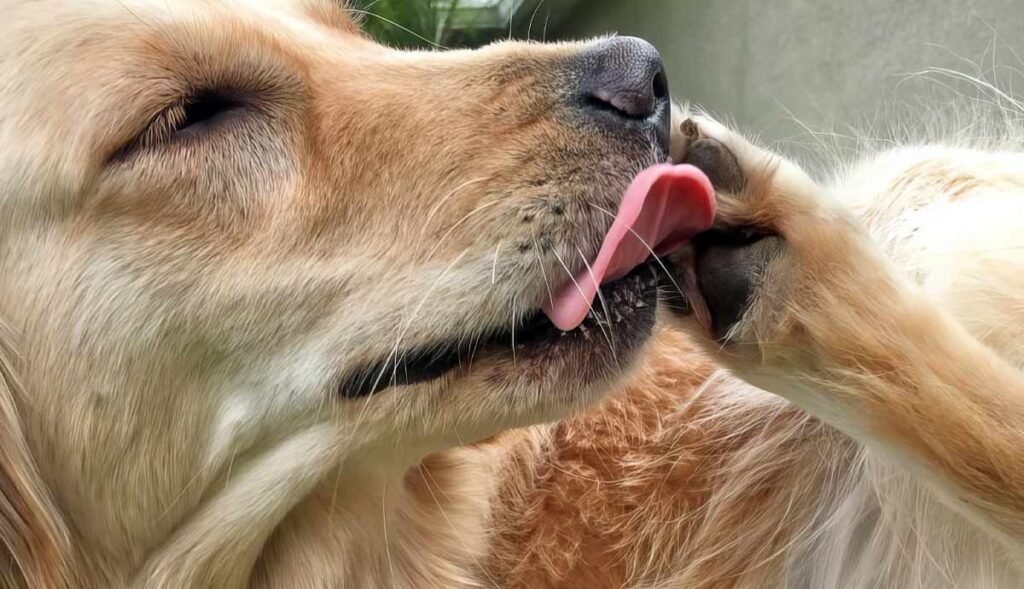
Figuring out how to stop a dog from licking its paws constantly without medication starts with understanding why the behavior happens in the first place. Occasional paw licking is normal. Dogs groom themselves, clean off dirt after a walk, and soothe minor irritations the same way people rub a sore spot. Constant licking is different. When a dog licks its paws for minutes at a time, several times a day, or to the point where the fur turns pink and the skin looks raw, something is driving the behavior, and that something needs attention. The good news is that many common causes can be managed at home with simple care routines, and medication is not always the first or only answer. A careful inspection, a regular cleaning routine, a few soothing home treatments, and changes to your dog’s daily routine can reduce or even stop the licking in many cases.
This article is for informational purposes only and is not medical advice. Consult a qualified professional.
Why Dogs Lick Their Paws Constantly
Paw licking usually has a physical cause, a behavioral cause, or a mix of both. The most common physical causes are allergies, skin irritation, and minor injuries. Dogs can react to pollen, dust, grass, and mold in the same way people do, and the paws are one of the first places the reaction shows up, because paws are in constant contact with the ground. Food sensitivities can also cause itchy paws, though this is less common than environmental triggers. Irritation from salt, ice-melt chemicals, hot pavement, rough surfaces, or grooming products can leave the skin between the toes sore and itchy.
Injuries are another frequent cause. A small thorn, a splinter, a cracked nail, a burr caught between the toes, or a minor cut can make a dog lick one paw obsessively. Dogs also lick paws when they are bored, anxious, or stressed. A dog left alone for long hours, a dog that does not get enough exercise, or a dog adjusting to a change in the household may develop licking as a self-soothing habit. Once the habit forms, it can continue even after the original trigger is gone, because licking releases calming chemicals in the brain. That is why the best approach tackles both the paws and the dog’s daily life.
Step One: Inspect the Paws Carefully
Before trying any treatment, take a close look at all four paws. Good lighting helps. Sit with your dog when it is calm, and gently spread each toe apart so you can see the skin between them. Look for redness, swelling, cuts, cracked pads, blisters, or sores. Check for anything stuck between the toes, such as a thorn, a burr, a piece of gravel, or a mat of fur. Smell the paws as well. A yeasty or sour smell can indicate irritation, while a normal paw smells faintly of corn chips or popcorn, which is harmless.
Note which paws your dog licks. Licking one paw usually points to a local problem, like an injury or something stuck in the paw. Licking all four paws more often suggests a general cause, such as an allergy or irritation from something the dog walks on. Also note when the licking happens. Licking that starts right after a walk may be linked to something on the ground, while licking that happens mostly at night or when the dog is alone may be linked to boredom or anxiety. Write down what you observe for a few days. This simple record helps you spot patterns and gives you useful information if you later visit a veterinarian.
While inspecting, check the nails too. A cracked, broken, or overgrown nail can be painful and cause constant licking. If a nail is broken and bleeding, or the toe looks swollen and hot, that is a sign to contact a veterinarian rather than managing it at home. The same applies to deep cuts, embedded objects you cannot remove easily, or any wound that looks infected.
Clean and Dry the Paws After Every Walk
One of the most effective daily habits is also the simplest: wash and dry your dog’s paws after every walk. Paws pick up pollen, dust, road salt, lawn chemicals, and other irritants on every outing, and those substances sit against the skin until they are removed. A quick rinse is often enough to break the cycle of irritation and licking.
Use lukewarm water and a gentle, fragrance-free cleanser made for dogs, or plain water alone. Fill a shallow basin or use a paw-washing cup, and dip each paw in turn, gently rubbing between the toes. Avoid human soaps and shampoos, which can dry out a dog’s skin and make itching worse. After washing, dry the paws thoroughly with a clean towel, paying special attention to the spaces between the toes. Moisture left between the toes creates a warm, damp environment where irritation thrives.
On days when the ground is wet, muddy, or treated with salt, this routine matters even more. If your dog walks on salted sidewalks in cold weather, rinse the paws as soon as you get home, because salt dries out the pads and stings small cracks. Making paw cleaning part of the coming-home routine takes only a couple of minutes, and many dogs learn to accept it quickly when it is paired with a calm voice and a small treat. If you want a fuller guide to this habit, see how to keep a dog’s paws clean after a walk without a bath.
Soothing Oatmeal Soaks for Itchy Paws
An oatmeal soak is a gentle, well-known home treatment for itchy skin, and it works on paws just as it does on the rest of the body. Colloidal oatmeal, which is finely ground oatmeal, forms a protective layer on the skin and calms irritation. You can buy colloidal oatmeal at a pharmacy, or make your own by grinding plain, unsweetened oatmeal in a blender until it becomes a fine powder.
To prepare a soak, mix the oatmeal powder into a basin of lukewarm water until the water turns milky. Let your dog stand in the basin for five to ten minutes, making sure the water covers the paws. You can gently splash the water between the toes. After the soak, pat the paws dry with a clean towel. Do not rinse the oatmeal off, since the thin layer it leaves behind is part of what soothes the skin.
An oatmeal soak can be repeated a few times a week when the paws look irritated. It is a supportive home-care measure, not a treatment for an underlying condition, so if the licking continues despite regular soaks and cleaning, the cause is probably something the soak cannot fix. Never add essential oils, vinegar, or other home ingredients to a paw soak without professional advice, because many of them irritate a dog’s skin or are unsafe if the dog licks them off.
Protect the Paws With Balm and Boots
Paw balm creates a thin barrier that protects the pads from rough surfaces, salt, and dry air. A good paw balm is made from safe, natural ingredients such as shea butter, beeswax, or coconut oil, and it should be labeled for use on dogs. Apply a small amount to the pads and between the toes once or twice a day, rubbing it in gently. Most dogs will try to lick the balm off, so apply it at a calm moment, perhaps before a meal or a nap, and distract your dog for a few minutes afterward.
In winter, or on hot pavement in summer, dog boots offer stronger protection. Boots keep paws off salt, chemicals, hot asphalt, and rough ground entirely, which can dramatically reduce irritation for dogs whose paws react to what they walk on. Introduce boots gradually, letting your dog wear them indoors for a few minutes at a time with treats and praise before using them on a full walk. Choose boots that fit well: too tight and they rub, too loose and they slip off.
At home, you can also reduce contact with irritants by wiping floors with plain water instead of harsh cleaners, and by keeping your dog off freshly treated lawns. Small changes in the environment often make a bigger difference than people expect, especially when the trigger is something the dog walks on every day.
Break the Habit With Distraction and Enrichment
When licking has become a habit, or when boredom and anxiety are driving it, distraction and enrichment are essential. A dog that licks its paws when it has nothing else to do needs something better to do. The goal is not to punish the licking, which usually makes an anxious dog worse, but to fill the dog’s day with activities that use its mind and body.
Start with exercise. Most dogs need more physical activity than they get, and a tired dog licks less. A longer walk, a game of fetch, or a run in a safe area can reduce restless behavior noticeably. Mental exercise matters just as much. Puzzle feeders, snuffle mats, frozen stuffed chew toys, and training sessions all give a dog a job to do. Rotate toys so they stay interesting, and introduce a new puzzle or a new trick every week or two.
When you catch your dog starting to lick, redirect calmly. Offer a chew toy, start a short training game, or take the dog outside. Keep the redirection positive and low-key. Scolding or pulling the paw away often increases stress and can make the habit stronger. If the licking happens mostly when you leave the house, leave a stuffed chew toy or a puzzle feeder as you go, and keep departures and arrivals calm and boring so the dog does not build up anxiety around them. The same calm, reward-based approach also works for other habits, such as stopping a dog from jumping on guests without yelling and stopping a dog from chewing furniture without bitter spray.
What to Watch For: Signs It Is Time to See a Vet
Home care works for many dogs, but some situations need professional help. Contact a veterinarian if the licking has continued for more than a couple of weeks despite consistent home care, if the skin is raw, bleeding, or swollen, if the paws smell strongly yeasty or sour, if the dog is limping or seems in pain, or if the licking is spreading to other parts of the body. Also seek help if your dog shows other signs of illness, such as loss of appetite, lethargy, ear infections, or hair loss.
A veterinarian can check for infections, injuries, and skin conditions that home inspection cannot identify, and can discuss whether allergy testing or a diet trial is appropriate. Bringing your notes about which paws are affected, when the licking happens, and what you have already tried will make the visit more useful.
A Simple Daily Routine That Covers Everything
Putting it all together, a practical daily routine looks like this. After each walk, rinse and dry the paws. Once or twice a week, or when the paws look irritated, give an oatmeal soak. Apply paw balm in the morning or evening, and use boots on salted, hot, or rough ground. Feed meals from a puzzle feeder, give the dog a daily walk and a training session, and redirect calmly whenever licking starts. Wash the dog’s bedding weekly with a fragrance-free detergent.
Keep a short log for the first two or three weeks: note how often the licking happens, which paws are involved, and what changed. Improvement is often gradual, so a log helps you see progress that might otherwise be hard to notice. If the licking fades, keep the routine going, because the habits that fixed the problem are usually the habits that keep it from coming back. If it does not fade, your log becomes valuable information for the veterinarian.
Frequently Asked Questions
Why does my dog lick its paws all the time?
The most common reasons are allergies, skin irritation from things the dog walks on, minor injuries, boredom, and anxiety. Licking one paw usually points to a local problem like a thorn or a cracked nail, while licking all four paws more often suggests a general cause such as an allergy. Check the paws, note when the licking happens, and work through the possible causes one at a time.
Is paw licking in dogs always a sign of allergies?
No. Allergies are a common cause, but irritation from salt, hot pavement, lawn chemicals, or grooming products can produce the same behavior. Boredom and anxiety are also frequent causes, especially in dogs that lick mostly when they are alone or at rest. A careful inspection and a few weeks of home care usually help narrow down the cause.
How often should I wash my dog’s paws?
A quick rinse and thorough dry after every walk is a good routine, especially in spring and autumn when pollen is high, and in winter when sidewalks are salted. Use lukewarm water and a gentle, fragrance-free cleanser made for dogs, or plain water alone. Always dry between the toes, because moisture left there can worsen irritation.
Are oatmeal soaks safe for dogs?
Yes, a plain oatmeal soak made from colloidal oatmeal or finely ground unsweetened oatmeal in lukewarm water is a gentle, widely used home treatment for itchy skin. Let the dog stand in the soak for five to ten minutes, then pat the paws dry without rinsing. Do not add essential oils, vinegar, or other ingredients to the soak without professional advice.
Can dog boots really help stop paw licking?
Boots help when the trigger is something the dog walks on, such as salt, chemicals, hot pavement, or rough surfaces. They keep irritants off the paws entirely. Introduce boots gradually with treats and short indoor sessions first. Choose boots that fit well, and combine them with paw cleaning and balm for the best results.
When should I take my dog to the vet for paw licking?
See a veterinarian if the licking continues for more than a couple of weeks despite consistent home care, if the skin is raw, bleeding, or swollen, if the paws smell strongly yeasty, if the dog is limping or in pain, or if the licking spreads to other parts of the body. A vet can check for infections and skin conditions that home inspection cannot identify.
Stopping constant paw licking without medication is usually a matter of patient, consistent home care: inspect the paws, clean and dry them after every walk, soothe them with oatmeal soaks, protect them with balm or boots, and fill the dog’s day with exercise and enrichment. Work through the possible causes one at a time, keep a simple log, and know when to ask a veterinarian for help. Most dogs improve steadily with this approach, and the routine that brings relief is worth keeping long after the licking stops.













1 thought on “How to Stop a Dog From Licking Paws Without Medication”
Comments are closed.