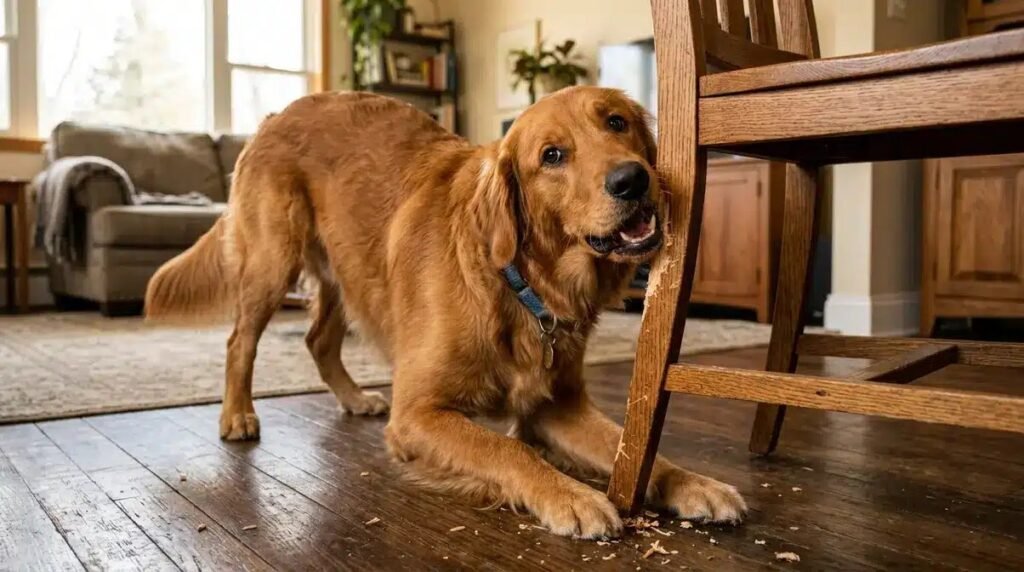
Learning how to stop a dog from chewing furniture without bitter spray starts with understanding why dogs chew in the first place. Chewing is a natural behavior for dogs, not a sign of spite or bad character. Puppies chew while teething, adult dogs chew to relieve boredom or stress, and many dogs simply chew because it feels good and gives them something to do. When a dog targets a chair leg or a sofa cushion, it is usually meeting a real need in the wrong place. The goal, therefore, is not to stop chewing altogether. It is to redirect that chewing toward safe, approved items and to make furniture a less interesting option, all through calm, positive methods that build trust rather than fear.
Bitter sprays work for some households, but they are not the only option, and many owners prefer not to use them. Some dogs ignore the taste, some learn to chew a different spot, and some become anxious around treated furniture. Fortunately, training, enrichment, and smart home setup can solve most furniture-chewing problems without any spray at all. This guide explains how to figure out why your dog is chewing, how to teach a reliable leave-it and trade routine, which chew alternatives actually satisfy a determined chewer, and how to protect your furniture while training takes effect. With consistency and patience, most dogs improve noticeably within a few weeks.
Why Dogs Chew Furniture
Chewing serves several purposes for a dog. For puppies, it soothes sore gums during teething and helps explore the world through the mouth, much as a toddler explores by touching everything. For adult dogs, chewing releases tension, burns energy, and provides mental stimulation. A dog left alone for long hours with little to do may chew simply because it is bored. A dog that is anxious, under-exercised, or overtired may chew as a way to settle itself. Some dogs also chew because they have learned that it gets attention, even if that attention is a scolding.
The reason matters because it shapes the solution. A teething puppy needs safe teething items and close supervision. A bored adult dog needs more exercise, play, and puzzle toys. An anxious dog needs a calmer routine and gradual practice being alone. A dog that chews for attention needs calm, consistent responses that do not turn chewing into an exciting event. Watch when your dog chews, what it targets, and what happens just before and after. Those patterns will tell you far more than a single incident, and they will help you choose the right combination of strategies from this guide.
First Step: Manage the Environment
Training takes time, and management protects your furniture in the meantime. Start by limiting access to the most tempting items. Use baby gates or closed doors to keep your dog out of rooms with valuable furniture when you cannot supervise. When you are in the room, stay close enough to notice chewing early and redirect it calmly. If a particular chair leg is a favorite target, move that piece temporarily, cover it with a washable throw, or place a safe chew toy nearby so the dog has an easy alternative within reach.
Management is not a failure of training. It is part of training, because every time a dog practices chewing furniture, the habit grows stronger. Every time it chews an approved item instead, the good habit grows stronger. Think of management as setting your dog up to succeed. Remove temptation where you can, supervise where you cannot, and make the right choice the easy choice. As training progresses and your dog reliably chooses its own toys, you can gradually restore access, one room at a time, while watching for any relapse.
Teach a Calm Leave-It
Leave-it is one of the most useful skills for a dog that chews things it should not. Start with a low-value item in your closed hand. When your dog sniffs or noses your hand, wait calmly. The moment it pulls back or looks away, mark the moment with a cheerful yes or a click, and reward it with a treat from your other hand. Repeat this until your dog reliably turns away from the closed hand. Then practice with the item on the floor, covered by your hand if needed, and reward the dog for looking away.
Once your dog understands the game, practice near furniture in a calm setting. Walk past a chair leg together, and if your dog looks at it but does not mouth it, reward that good choice immediately. If it moves toward the furniture, use a calm leave-it cue, guide it gently away, and offer an approved chew instead. Keep sessions short, cheerful, and frequent, perhaps five minutes a few times a day. The goal is a dog that hears leave-it, pauses, and looks to you for guidance, not a dog that freezes in fear. Never chase, grab, or shout during this training, because that turns a learning moment into a stressful confrontation.
The Trade Game: Teaching Your Dog to Swap
If your dog already has something it should not chew, the trade game prevents a tug-of-war. Approach calmly, show a high-value treat or a favorite toy, and say a simple cue such as trade or drop it. When your dog releases the item, give the reward right away, then calmly remove the furniture item from reach if possible. Over time, your dog learns that giving something up leads to something even better, which makes it far more willing to release items in the future.
This approach is especially important for dogs that guard objects. Chasing a dog or prying an item from its mouth can make guarding worse and can damage trust. Trading, by contrast, teaches cooperation. Practice the trade game with safe items first, such as a toy your dog is happy to swap, and build up gradually. Use a variety of rewards so your dog does not know exactly what is coming, which keeps the game interesting. If your dog regularly guards furniture or other objects with growling or stiffening, stop and seek guidance from a qualified behavior professional, since guarding needs an individualized plan.
Give Chewing a Legal Outlet
A dog that has nothing satisfying to chew will find something, so provide options that meet the same need. Different dogs prefer different textures and sizes, so offer variety and observe what your dog actually enjoys. Durable rubber toys that can be stuffed with food, natural chews of an appropriate size, and textured teething toys for puppies are all good starting points. Rotate toys every few days so they stay novel, and always choose items sized for your dog, since a toy that is too small can break apart and become a hazard.
Food-stuffed toys are particularly powerful because they combine chewing with mental work. Fill a rubber toy with a portion of your dog’s regular food mixed with a little wet food, freeze it, and offer it when you leave the room or when your dog would normally start chewing furniture. This gives the dog a long-lasting, rewarding project that keeps its mouth busy in a safe way. Supervise new chews at first to make sure your dog uses them safely, and remove any item that starts to break into small pieces. A well-stocked chew station near your dog’s usual resting spot makes the right choice obvious.
When to Seek Extra Help
Most furniture chewing improves with management, training, enrichment, and time. Some situations, however, benefit from professional support, and seeking it early is a sign of responsible ownership, not failure. If chewing is sudden, intense, or paired with other changes such as loss of appetite, restlessness, or withdrawal, talk to your veterinarian. If your dog chews through barriers, injures its mouth, or swallows pieces of furniture or toys, that also warrants prompt veterinary advice. This article offers general information only and is not a substitute for professional guidance for your individual dog.
Similarly, persistent destructive chewing, swallowing objects, or signs of distress such as pacing, vocalizing when left alone, or difficulty settling may indicate a deeper issue that needs a qualified behavior professional. A certified trainer or behavior consultant can observe your dog, assess its routine, and build a plan tailored to your home. Choose a professional who uses positive, reward-based methods and who explains their approach clearly. With the right support, even long-standing chewing habits can improve, and your dog can learn to relax and chew safely.
Common Mistakes to Avoid
One common mistake is relying on a single solution. A new chew toy alone will not fix a bored, under-exercised dog, and extra walks alone will not help a teething puppy that needs something safe to gnaw. Chewing problems usually need a combination of management, training, enrichment, and patience. Another mistake is inconsistency. Allowing chewing sometimes and forbidding it at other times teaches a dog to keep trying, because occasional success is a powerful reward. A third mistake is giving attention, even negative attention, in a way that makes chewing exciting. Calm redirection and praise for the right choice work better than dramatic reactions.
Another mistake is choosing the wrong chew items. Toys that are too small, too hard, or easily shredded can be unsafe, and items that resemble household objects, such as old shoes offered as toys, can teach a dog that shoes in general are fair game. Offer only toys designed for dogs, sized appropriately, and supervise new items until you know how your dog uses them. Finally, avoid punishment-based methods such as shouting, physical corrections, or frightening the dog away from furniture. These methods can damage trust, increase anxiety, and often make chewing worse by adding stress to the very behavior you want to reduce.
A Simple Daily Routine That Reduces Chewing
A predictable routine helps many dogs settle. Start the day with a walk or play session, followed by breakfast in a puzzle feeder or stuffed toy. Offer a safe chew during quiet times, and practice a short training session in the afternoon. Provide another walk or play session before the evening, and settle your dog with a chew or a calm activity while you relax. When you leave the house, offer a stuffed toy and leave the dog in a safe, managed space with its bed, water, and approved chews, rather than free access to every room.
This routine does not need to be rigid, and it should fit your life, but its predictability reassures dogs that their needs will be met. For a related positive-training example, a guide on how to stop a dog begging at the table without scolding shows the same reward-based approach applied to another common household habit. Notice how both guides rely on teaching an alternative behavior and rewarding calm choices, rather than on fear or punishment. That consistency across behaviors is what builds a dog that trusts you and makes good choices on its own.
FAQs
How long does it take to stop a dog chewing furniture?
Many dogs improve within a few weeks of consistent management, training, and enrichment, but the timeline varies with age, habit strength, and daily routine. Puppies often improve as teething passes, while adult dogs with a long-standing habit may need a couple of months. Steady progress matters more than a quick fix.
Do I need bitter spray for this to work?
No. Bitter spray is only one tool, and many owners succeed without it. Management, a reliable leave-it, a trade routine, safe chew alternatives, and enough exercise and enrichment address the underlying reasons for chewing, which a spray alone does not.
What is the best chew alternative for a strong chewer?
There is no single best option, since preferences vary. Start with a durable rubber toy sized for your dog, preferably one that can be stuffed with food and frozen, and add a couple of different textures to see what your dog prefers. Always supervise new chews and remove any item that breaks into small pieces.
Should I scold my dog when I find chewed furniture?
Scolding after the fact does not teach your dog anything, because it cannot connect the scolding with earlier chewing. It may simply learn to chew when you are away. Instead, stay calm, manage access better next time, and focus on rewarding the dog when it chews an approved item.
Why does my dog only chew when left alone?
Chewing when alone often points to boredom, excess energy, or difficulty settling without company. Increase exercise and enrichment, leave a stuffed toy when you go out, and practice short, gradual absences. If distress signs persist, seek advice from a veterinarian or a qualified behavior professional.
Is chewing furniture dangerous for my dog?
It can be, if a dog swallows splinters, fabric, foam, or pieces of a broken toy. Remove damaged items promptly, supervise new chews, and choose toys sized for your dog. If your dog swallows an object or shows signs of discomfort, contact your veterinarian promptly for advice.