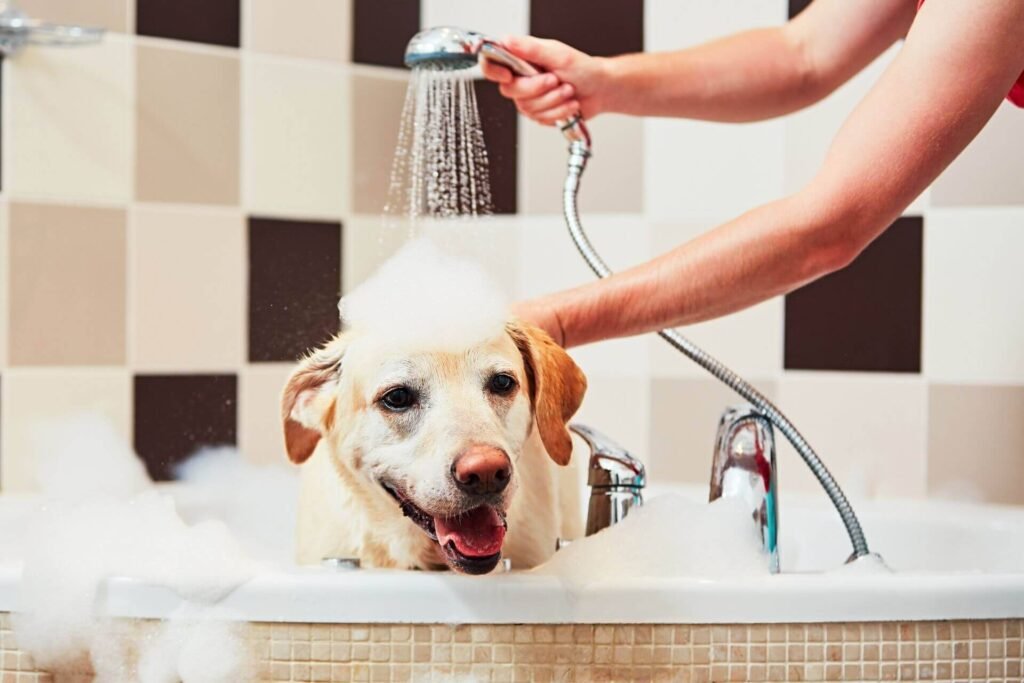
If your dog’s skin flares up at the slightest provocation, bath time can feel like a gamble. Bathe too often and the itching gets worse. Bathe too rarely and dirt, pollen, and oils build up and irritate the skin all over again. So how often should you bathe a dog with sensitive skin? For most dogs, every four to six weeks is the sweet spot — frequent enough to wash away allergens and grime, but spaced out enough to protect the natural oils that keep the skin barrier healthy. The right schedule depends on your dog’s coat, lifestyle, and what is actually causing the sensitivity. This guide explains how to find that balance, how to give a gentle bath that soothes instead of stripping, and when it is time to call the vet.
This article is for informational purposes only and is not veterinary advice. If your dog has a diagnosed skin condition, follow your veterinarian’s guidance before changing its care routine.
The Short Answer: Every 4 to 6 Weeks for Most Dogs
Most healthy adult dogs with mildly sensitive skin do best with a bath every four to six weeks — long enough for the skin to replenish its natural oils, but frequent enough to keep allergens, dust, and grime from building up. Dogs with very dry or flaky skin often do better at the longer end of that range, while dogs who spend a lot of time outdoors or live in a high-pollen area may need the shorter end, around every four weeks.
That four-to-six-week window is a starting point, not a rule carved in stone. Some dogs with sensitive skin thrive on baths every three weeks, and some only need one every eight weeks. The real test is how your dog’s skin responds. After a bath, the skin should look calm and the coat should feel soft, not greasy or brittle. If your dog scratches more in the days after a bath, or the skin looks pink and dry, you are probably bathing too often or using a shampoo that is too harsh. If the coat smells or feels oily at the roots as the weeks pass, the gap is probably too long.
Why Over-Bathing Makes Sensitive Skin Worse
A dog’s skin is thinner and more alkaline than human skin, and it relies on a layer of natural oils called sebum to stay hydrated and to keep out bacteria, yeast, and allergens. Every bath, no matter how gentle the shampoo, removes some of that oil. In a dog with normal skin, the oil layer rebuilds within a few days and no harm is done. In a dog with sensitive skin, the barrier is already fragile. Frequent baths strip the oil faster than the skin can replace it, leaving the surface dry, tight, and more permeable — which means irritants get in more easily and the itching cycle speeds up instead of slowing down.
Hot water makes all of this worse. It opens pores, dissolves oils faster, and can trigger itching on its own. Lukewarm water — about the temperature you would use for a baby — cleans just as effectively and is far kinder to reactive skin. The same goes for vigorous scrubbing: a sensitive dog’s skin should never be rubbed hard during a bath, and gentle, flat-handed massage is enough to work shampoo through the coat.
Bath Schedules by Situation
The right bathing frequency changes with what your dog’s skin is dealing with. Here is how to adjust the four-to-six-week baseline for the most common situations.
Maintenance bathing for mild sensitivity
For a dog whose skin is generally calm but reacts to the occasional shampoo or a dusty walk, stick to the baseline: every four to six weeks with a gentle, fragrance-free shampoo. Between baths, a plain lukewarm-water rinse after a muddy walk is usually enough, and it does not strip oils the way shampoo does.
Dry, flaky skin
If your dog’s skin is dry and flaky, less is more. Stretch baths to every six to eight weeks and choose a moisturizing formula — oatmeal-based shampoos are the classic choice. After the bath, dry the coat thoroughly, because damp skin under a thick coat can turn flaky and itchy on its own.
Pollen season and outdoor allergies
During high-pollen months, allergens collect on the coat and paws, and a dog who lies in grass or rolls outside brings that pollen straight onto its skin. In this season, many sensitive dogs do better with a bath every three to four weeks, plus a plain-water rinse of the belly and paws after outdoor play. If your dog licks its paws constantly after being outside, a gentle paw wipe after walks can help. Our guide on how to keep a dog’s paws clean after a walk without a bath covers wipe-down routines that work well between full baths.
Active flare-ups and medicated baths
When a dog is in the middle of a flare-up — red patches, hot spots, or intense itching — the bathing rules change, and your veterinarian takes the lead. Vets sometimes prescribe medicated shampoos used two or three times a week for a short period, then tapered down as the skin improves. Do not increase bathing frequency on your own during a flare-up, because even a gentle shampoo used too often can delay healing. If the flare-up involves constant paw licking, our article on how to stop a dog from licking its paws constantly without medication has practical steps you can use alongside your vet’s treatment plan.
Puppies with sensitive skin
Puppies have even more delicate skin than adult dogs. For most puppies, a bath every six to eight weeks is plenty, with spot-cleaning using a damp cloth handling the messes in between. Always use a puppy-specific, tear-free shampoo, keep the water lukewarm and the bath short, and dry the puppy thoroughly afterward, since puppies chill easily. If a puppy shows persistent scratching, redness, or flaking, talk to your vet before settling on any bathing schedule.
Choosing the Right Shampoo for Sensitive Skin
The shampoo matters as much as the schedule. A harsh shampoo used every six weeks can do more damage than a gentle one used every three. For sensitive skin, look for a formula labeled hypoallergenic or for sensitive skin, and read the ingredient list rather than trusting the front of the bottle.
What to look for
- Colloidal oatmeal: the best-studied soothing ingredient for itchy dog skin. It calms irritation and helps the skin hold moisture.
- Aloe vera: gentle, moisturizing, and widely tolerated by sensitive dogs.
- Ceramides or fatty acids: help rebuild the skin barrier that sensitive dogs struggle to maintain.
- Fragrance-free or naturally scented: added perfumes are one of the most common irritants in dog shampoo.
- pH-balanced for dogs: dog skin sits around pH 6.5 to 7.5, noticeably more alkaline than human skin, so human shampoo — even a gentle baby shampoo — is usually too acidic and can dry a dog’s skin out.
What to avoid
- Sulfates such as sodium lauryl sulfate: strong detergents that strip oils aggressively.
- Artificial dyes and heavy perfumes: common triggers for contact irritation.
- Human shampoo, dish soap, and household cleaners: all too harsh for a dog’s skin barrier, and they can make sensitivity dramatically worse.
- Medicated or antifungal shampoo without a vet’s direction: useful when prescribed, but unnecessary and potentially irritating when used as a routine wash.
When you switch to a new shampoo, patch-test it first: wash a small area, such as one patch on the belly, and watch for redness or itching over the next day before using it all over. Always dilute concentrated shampoo according to the label — undiluted shampoo is harder to rinse out, and residue left on the skin is one of the most common causes of post-bath itching.
How to Give a Gentle Bath, Step by Step
A calm, well-run bath is half the treatment. Rushing, cold water, or a slippery tub turns bath time into a stressful event, and stress itself can worsen itching. Set everything up before the dog gets wet.
Before the bath
Brush the coat thoroughly first. Brushing removes loose hair, tangles, and surface dirt, which means less shampoo and less scrubbing later, and it lets you check the skin for red patches, hot spots, or scabs. Place a non-slip mat in the tub and gather your supplies within reach: diluted shampoo, a cup for rinsing, towels, and treats.
Wet the coat with lukewarm water
Wet the coat with lukewarm water, never hot, working from the neck down. Avoid getting water in the ears, which can lead to ear infections — a cotton ball placed gently in each ear opening during the bath helps, and should be removed right after. Start at the body and work outward toward the legs, belly, and tail, which are usually the most sensitive areas.
Apply diluted shampoo gently
Pour the diluted shampoo into your hands or directly onto the coat and massage it in with flat hands, working in the direction the hair grows. Pay attention to the areas where allergens collect: the belly, the groin, the armpits, and the paws. Do not scrub. Let the shampoo sit for three to five minutes if the label recommends a contact time — oatmeal and soothing formulas work better when they have a few minutes on the skin. Keep the dog calm with a steady voice and a treat or two.
Rinse until the water runs clear
This is the step most people rush, and it matters most for sensitive skin: shampoo residue dries the skin out and triggers itching that owners often blame on the shampoo itself. Rinse section by section until the water runs completely clear and the coat no longer feels slippery, and rinse the belly and armpits twice — these folds trap shampoo easily. With a thick or double coat, rinsing can take several minutes. Take the time.
Dry thoroughly
Towel-dry by pressing the coat, not by rubbing, which tangles hair and irritates skin. Follow with a hair dryer on the lowest, coolest setting if your dog tolerates it, held at a distance and kept moving. Make sure the coat is dry all the way to the skin, especially in thick-coated breeds, because a damp undercoat encourages hot spots and yeast. Keep the dog in a warm room until fully dry.
Between-Bath Care That Keeps Skin Calm
What you do between baths often matters more than the bath itself. A few low-effort habits can stretch the time between full baths and keep the skin barrier intact.
- Plain-water rinses: after muddy walks or pollen-heavy days, a quick rinse of the belly, legs, and paws with lukewarm water removes irritants without stripping oils.
- Hypoallergenic grooming wipes: useful for spot-cleaning the face, paws, and belly. Choose fragrance-free wipes made for dogs, and avoid baby wipes, which suit human skin pH.
- Regular brushing: two or three sessions a week spreads natural oils, removes loose hair and dust, and helps you spot new redness early.
- Clean bedding: wash your dog’s bed cover weekly in a fragrance-free detergent. Bedding collects pollen, dust mites, and shed hair that a sensitive dog lies on for hours daily.
- Paw care after walks: a quick wipe-down after every walk removes salt, pollen, and grit before your dog licks it off and turns mild irritation into raw skin. See our guide on keeping a dog’s paws clean after a walk without a bath for a routine that takes two minutes.
Common Mistakes to Avoid
Most bathing problems with sensitive dogs come from a handful of avoidable mistakes.
- Bathing on a fixed weekly schedule out of habit. Weekly baths are too frequent for almost every sensitive dog unless a vet has prescribed them. Let the skin, not the calendar, decide.
- Using human shampoo. Even gentle human formulas are the wrong pH for dogs and strip oils fast.
- Skipping the rinse. Residue is the most common cause of post-bath itching. Rinse until the water is clear, then rinse once more.
- Adding new products all at once. A new shampoo, conditioner, and spray in the same week make it impossible to know which one caused a reaction. Change one thing at a time.
- Ignoring the ears. Water trapped in the ear canal can cause ear infections in dogs with sensitive skin. Dry the ears gently after every bath.
Signs You Should Call the Vet
Some skin problems are beyond what bathing adjustments can fix. Call your veterinarian if you notice any of the following, especially if they persist or keep coming back:
- Persistent redness, swelling, or raw patches that do not improve between baths
- Hot spots — moist, red, painful sores that appear quickly and spread
- Hair loss in patches, or a coat that is thinning overall
- Sores, scabs, or crusty areas that do not heal
- A strong yeasty or sour smell from the skin or ears, even right after a bath
- Constant scratching, licking, or chewing that interferes with sleep or eating
- Changes in appetite, energy, or behavior alongside skin problems
These signs can point to allergies, bacterial or yeast infections, parasites, hormonal problems, or food sensitivities — all of which need a diagnosis, not just a different shampoo. Your vet may recommend allergy testing, a food trial, or a medicated bathing schedule.
Frequently Asked Questions
How often should you bathe a dog with sensitive skin?
Every four to six weeks works for most dogs with sensitive skin. Dogs with very dry skin may do better every six to eight weeks, while dogs exposed to a lot of pollen or dirt may need a bath every three to four weeks. Always follow your vet’s guidance for a diagnosed skin condition.
Can I bathe my sensitive dog once a week?
Weekly bathing is usually too frequent for sensitive skin unless your vet has prescribed a medicated shampoo schedule. Weekly baths strip natural oils faster than the skin can replace them, which often makes itching worse.
What is the best shampoo for a dog with sensitive skin?
A fragrance-free, hypoallergenic, dog-specific shampoo with colloidal oatmeal or aloe is a good starting point. Avoid sulfates, artificial dyes, heavy perfumes, and human shampoo, and always dilute concentrated shampoo and rinse well.
Is it okay to rinse my dog with just water between baths?
Yes. A plain lukewarm-water rinse removes pollen, dirt, and grime without stripping natural oils, so it is a safe way to freshen your dog between full shampoo baths. Focus on the belly, legs, and paws, where irritants collect.
Why does my dog itch more right after a bath?
The most common causes are shampoo residue, water that was too hot, or a shampoo that is too harsh. Rinse until the water runs completely clear, use lukewarm water, and switch to a gentle hypoallergenic formula. If the itching continues, talk to your vet.
Should puppies with sensitive skin be bathed less often?
Yes. Puppies have very delicate skin and usually need a bath only every six to eight weeks, with spot-cleaning in between. Use a puppy-specific, tear-free shampoo and lukewarm water, and dry the puppy thoroughly afterward.