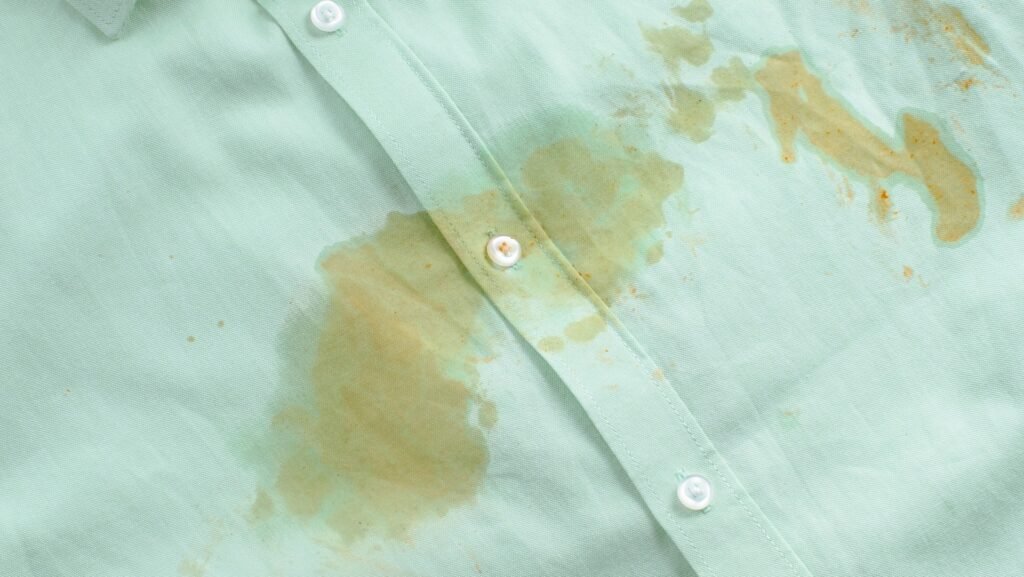
A drop of cooking oil, a splash of salad dressing, a bit of butter on your sleeve. Grease stains are the most common clothing accident in any kitchen, and they are also one of the most frustrating, because water alone will not touch them. Dish soap is the usual fix, since it is designed to cut grease, but it is not the only option. Learning how to remove grease stains from a shirt without dish soap is useful when the bottle is empty, when you are traveling, or when you simply prefer a different method.
Grease is oil, and oil repels water. That is why a grease stain survives a normal wash cycle. To remove it, you need something that absorbs the oil, breaks it down, or lifts it out of the fibers. Several everyday household items do exactly that, and most of them work best when you act quickly, before the stain sets.
Act Fast: The First Five Minutes Matter
Whatever method you choose, the first step is always the same. Blot the stain gently with a clean cloth or paper towel to lift as much surface oil as possible. Do not rub, because rubbing pushes the oil deeper into the fibers and spreads it wider.
Next, cover the stain with an absorbent powder, such as baking soda, cornstarch, baby powder, or even plain flour. The powder draws oil out of the fabric. Leave it on for at least 15 to 30 minutes, then brush it off. For a fresh stain, this step alone can remove most of the grease before you even start cleaning.
Do not put the shirt in the dryer until the stain is gone. Heat sets grease stains permanently, and once a stain has been through a hot dryer, it is far harder to remove.
Method 1: Baking Soda Paste
Baking soda is mildly abrasive and highly absorbent, which makes it one of the best dish soap alternatives for grease.
Steps
After blotting and powdering the stain as described above, mix baking soda with a small amount of water to form a thick paste. Spread the paste over the stain and gently work it into the fabric with an old toothbrush or your fingertips. Let it sit for 30 minutes.
Rinse the area with warm water, then check the stain. If a shadow remains, repeat the paste treatment once more. When the stain is gone or nearly gone, launder the shirt as usual with your regular detergent, using the warmest water the fabric care label allows.
Best For
Cotton and polyester shirts, fresh stains, and everyday cooking oil. Baking soda is gentle enough for most fabrics, though you should test it on a hidden area first for delicate materials.
Method 2: White Vinegar and Water
White vinegar is acidic, which helps break down grease, and it is safe for most washable fabrics.
Mix equal parts white vinegar and warm water in a small bowl. Soak the stained area in the mixture for 30 minutes, or lay the shirt flat and pour the mixture over the stain. Then rub the fabric gently against itself or use a soft brush to work the stain loose. Rinse and launder as usual.
For a stubborn stain, combine this method with baking soda. Sprinkle baking soda on the stain first, then pour vinegar over it and let it fizz for a few minutes before scrubbing gently. The fizzing action helps lift oil from the fibers, though you should rinse thoroughly afterward to remove all residue.
Do not use vinegar on silk or rayon without testing first, and never mix vinegar with bleach.
Method 3: Cornstarch or Baby Powder (The Overnight Fix)
If you are not in a rush, an absorbent powder left overnight can do most of the work for you.
Cover the stain generously with cornstarch, baby powder, or talc-free powder. Press it lightly into the fabric and leave the shirt flat overnight. In the morning, brush off the powder. Much of the oil will have been drawn out into the powder. Follow with a warm-water wash using regular laundry detergent.
This method is especially good for delicate fabrics, because it involves no scrubbing and no liquid chemicals. It also works well on older stains that have already dried, though you may need to repeat it twice.
Method 4: Rubbing Alcohol
Rubbing alcohol dissolves oil, which makes it effective on grease stains that other methods leave behind.
Dampen a clean white cloth with rubbing alcohol and blot the stain, working from the outside edge toward the center so the stain does not spread. Replace the cloth or use a clean section as it picks up oil. Continue until the stain fades, then rinse the area with warm water and launder as usual.
Use rubbing alcohol only on colorfast fabrics, and test it on an inside seam first, because it can fade some dyes. Work in a well-ventilated area and keep it away from open flame, since it is flammable.
Method 5: Shampoo or Body Wash
Shampoo is designed to remove oil from hair, and it works on the same principle on fabric. If you have no dish soap but you do have shampoo, it is a surprisingly effective substitute.
Apply a small amount of plain shampoo directly to the stain and work it in gently with your fingers or a soft brush. Let it sit for 15 to 20 minutes, then rinse with warm water. Repeat if needed, then launder as usual. Clear or white shampoo works best, since colored shampoo can leave a tint on light fabrics.
Method 6: Chalk for Small, Fresh Stains
White chalk is absorbent and easy to carry, which makes it a handy trick for a small grease spot when you are out.
Rub white chalk generously over the stain and let it sit for a few minutes. The chalk absorbs the surface oil. Brush it off, then treat the remaining mark with one of the methods above when you get home. Chalk will not remove a deep stain on its own, but it stops a small spot from setting while you are away from home.
Grease Stains on Different Fabrics
Cotton is the most forgiving fabric for grease removal. It tolerates warm water, baking soda, vinegar, and gentle scrubbing. Polyester and synthetic blends are trickier, because heat can set the stain and the fibers hold oil more stubbornly. Use warm, not hot, water and avoid aggressive scrubbing.
For wool and silk, skip vinegar and rubbing alcohol and use the powder method only, followed by a gentle hand wash or a trip to the dry cleaner if the stain persists. For denim, baking soda paste works well, and you can scrub a little more firmly because the fabric is sturdy.
Always check the care label before choosing a method. If the label says dry clean only, do not try home treatments beyond blotting and powdering, and take the shirt to a cleaner promptly, pointing out the stain.
Old and Dried Grease Stains
A stain that has been sitting for days or has already been through the wash is harder, but not always hopeless. Start by reapplying an absorbent powder and leaving it for several hours, which can draw out oil even from a dried stain.
Then try a baking soda paste left on for an hour, followed by a vinegar soak. For a really stubborn mark, repeat the cycle twice, and use the warmest water the fabric allows in the wash. If the stain has been through a hot dryer, it may have set permanently, but it is still worth one or two attempts before giving up.
Common Mistakes That Make Grease Stains Worse
The most common mistake is washing the shirt in hot water before treating the stain, which drives the oil deeper into the fibers. The second is putting the shirt in the dryer before checking whether the stain is gone. The third is rubbing the stain hard, which spreads it and damages the fabric. The fourth is using colored towels or cloths to blot, which can transfer dye onto the shirt. And the fifth is waiting too long, since a stain that sits for days bonds more firmly to the fibers.
The fix is a simple routine: blot, powder, treat, check, and only then wash and dry. It takes a few extra minutes and saves many shirts.
Preventing Grease Stains in the Kitchen
An apron is the simplest prevention, and it is worth wearing when you fry, sauté, or dress a salad. Keep a clean kitchen towel over your shoulder while cooking, and change out of good shirts before handling oily foods. If you cook often, keep a small container of baking soda near the laundry area so the powder step is always easy.
Good fabric care habits help in other ways too. If you want to keep your whites looking bright between stain treatments, our guide on keeping a white shirt from turning yellow without bleach is a useful companion. And for other laundry frustrations, see how to get rid of static cling without dryer sheets. For stains on leather rather than fabric, our guide to removing pen marks from a leather bag covers a different but related rescue.
Frequently Asked Questions
Can you remove a grease stain without dish soap?
Yes. Baking soda paste, white vinegar, cornstarch or baby powder, rubbing alcohol, and even shampoo can all remove grease from a shirt. The key is to blot first, treat the stain before washing, and never put the shirt in the dryer until the stain is gone.
Does baking soda remove grease stains from clothes?
Yes, baking soda absorbs oil and gently lifts it from fabric. Apply it as a dry powder first, then as a paste with water, let it sit for 30 minutes, rinse, and launder. Repeat once if a faint shadow remains.
How do you get an old grease stain out of a shirt?
Start with absorbent powder left on for several hours, then use a baking soda paste and a vinegar soak. Repeat the cycle twice and wash in the warmest water the care label allows. Old stains that have been through a hot dryer may not come out fully.
Does vinegar remove grease stains?
White vinegar helps break down grease, especially when combined with baking soda. Soak the stained area in equal parts vinegar and warm water for 30 minutes, then scrub gently and launder. Test on a hidden area first for delicate or brightly colored fabrics.
Can shampoo remove a grease stain from a shirt?
Yes. Shampoo is designed to cut oil, so a small amount worked into the stain and left for 15 to 20 minutes can lift grease effectively. Use clear or white shampoo on light fabrics to avoid tinting.
Why will a grease stain not come out in the wash?
Grease is oil, and water alone cannot dissolve it. Without a pre-treatment that absorbs or breaks down the oil, a normal wash cycle only moves the grease around. Heat from a dryer can also set the stain permanently, so always treat first and check before drying.
You do not need dish soap to save a greasy shirt. Blot it, powder it, treat it with baking soda or vinegar, and check before you dry. The sooner you act, the easier the stain comes out, and the methods above will handle most kitchen accidents with things you already have at home.