
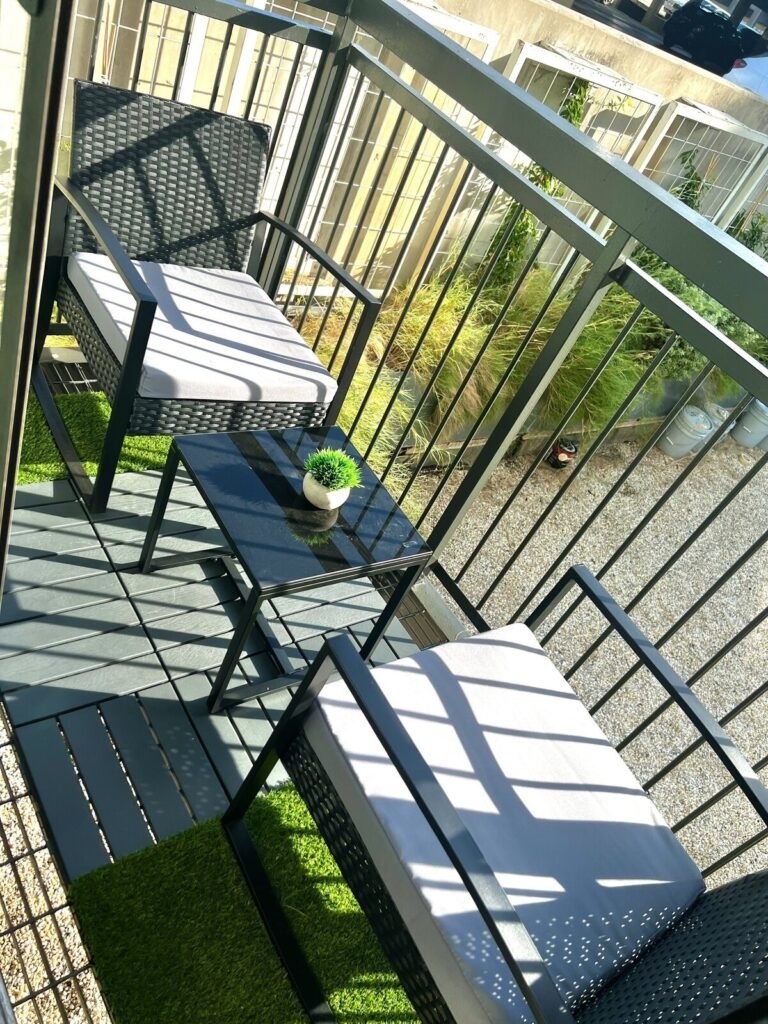
Learning how to make a small balcony feel bigger without spending money starts with a simple truth: most balconies feel cramped not because they are tiny, but because they are crowded, cluttered, and cut off from light and view. You do not need new furniture, a renovation, or a shopping trip to change that. With a bit of rearranging, some ruthless editing, and a few clever visual tricks, the same few square feet can feel open, calm, and genuinely inviting. This guide walks you through every free change that makes a real difference, from clearing the floor to borrowing the view beyond your railing.
Why a Small Balcony Feels Even Smaller Than It Is
A balcony shrinks visually for a handful of predictable reasons. Too many objects compete for attention, so the eye never rests. Tall items block the sightline, so the space seems to end at the nearest obstacle instead of stretching toward the horizon. Dark, heavy colors absorb light, and a floor hidden under pots, boxes, and drying racks gives the brain no sense of open ground to stand on. The good news is that every one of these problems is reversible without buying anything. Once you understand what is making the space feel tight, you can fix it with what you already own.
Start With a Free Reset: Empty It Completely
Before rearranging anything, take everything off the balcony. Yes, everything: pots, chairs, boxes, tools, shoes, and the odds and ends that migrated there because there was nowhere else to put them. Sweep or wipe the floor, and then stand in the empty space for a moment. This blank slate is the most powerful free tool you have, because it lets you see the actual shape and light of the balcony instead of the clutter that has been hiding it.
The one-hour clear-out
Give yourself a single focused hour. Sort items into three groups: things that belong on the balcony and earn their place, things that belong somewhere else in your home, and things that can be donated, recycled, or thrown away. Broken pots, dried-out plants, rusted odds and ends, and storage boxes that have become permanent residents are prime candidates for removal. Be honest about items you have been keeping “just in case.” If an item has sat unused on the balcony for months, it is costing you space every single day.
The keep-or-move test
For each item you consider bringing back, ask one question: does this make the balcony better to use, or does it just live here? A chair you sit in daily passes the test. A spare bucket, an old toolbox, or a stack of empty planters does not. Those items can live in a closet, under a bed, or in a storage area indoors. Every object you leave off the balcony is free floor space you just gained, and floor space is the single most valuable thing a small balcony has.
Keep the Floor as Visible as Possible
The eye judges the size of a space largely by how much floor it can see. A floor that is mostly visible reads as open; a floor that is mostly covered reads as cramped, even if the covering items are small. This is why clearing clutter matters more than any decorating trick. Once you have emptied the balcony, bring back only what truly needs to touch the ground.
If you already own a light-colored outdoor rug or mat, try it out and see whether it helps or hurts. A rug that covers most of the floor in a pale tone can make the surface feel continuous and calm. A dark, busy, or undersized rug that floats in the middle of the floor can have the opposite effect, chopping the space into pieces. If you do not own a rug, skip it entirely. A clean, bare floor looks bigger than a floor crowded with half-measures. Sweeping regularly also matters more than people expect: dust, leaves, and grime dull the floor and make the whole space feel neglected and closed in.
Let Light Do the Heavy Lifting
Light is the cheapest way to expand a small space, and on a balcony it is usually free and abundant. The trick is to stop blocking it and start bouncing it around.
Use pale colors you already have
Look around your home for light-colored items you can borrow for the balcony: a white or cream throw, a pale cushion cover, a light tray, or a whitewashed pot you already own. Pale surfaces reflect daylight instead of absorbing it, which makes the space feel brighter and airier. You do not need to repaint anything. Simply swapping a dark cushion cover for a light one you already own, or draping a pale cloth over a dark table, can noticeably lift the whole balcony.
Add reflective surfaces
Glass, metal, and glossy ceramics all bounce light around a small space. A glass-topped side table you already own, a metal tray, or a glazed ceramic pot can each add a small sparkle that keeps the balcony from feeling flat and heavy. Even a clean glass of water or a small lantern with a reflective interior contributes. The point is not to fill the balcony with shiny objects, but to avoid a collection of only matte, dark, heavy items that swallow light.
Use a Mirror You Already Own
A mirror is the classic small-space trick because it genuinely works: it doubles the perceived depth of a space and bounces light into corners that would otherwise sit in shadow. If you have a spare mirror indoors that is not essential where it hangs, try it on the balcony wall. Place it where it reflects something pleasant, such as the sky, greenery, or the open view, rather than a blank wall or a cluttered corner. A mirror that reflects clutter just doubles the clutter.
Choose the largest mirror you can spare, and hang or lean it securely so wind cannot topple it. On a rented balcony, leaning a mirror against the wall or propping it on a sturdy surface avoids holes and damage. If the mirror is framed in a dark, heavy frame, consider whether a lighter frame you already own fits it. Keep the mirror clean, since a dusty or streaked mirror reflects a dull image and defeats the purpose. If you do not own a spare mirror, skip this step rather than buying one; the other free changes in this guide still make a big difference on their own.
Go Vertical Instead of Outward
When floor space is scarce, the walls and railing are your best friends. Moving items upward frees the floor and draws the eye up, which makes the whole balcony feel taller and more open. Look for vertical storage you already have: hooks, a small wall-mounted rack, a hanging shoe organizer, or a sturdy shelf that can be repurposed outdoors.
Hang lightweight items from hooks on the wall or railing, such as a watering can, a small tool bag, or a hanging planter you already own. If you have a shoe organizer gathering dust indoors, hang it on the balcony wall and use its pockets for small pots, seed packets, or supplies. The key is to keep vertical storage tidy and contained. A wall covered in dangling odds and ends feels just as chaotic as a cluttered floor, so limit yourself to one or two vertical features and keep the rest of the wall clear.
Choose Fewer, Better Pieces
Small balconies punish excess furniture. Two chairs, a table, a bench, and a storage box might each seem reasonable on their own, but together they leave no room to move. Pick the smallest set of furniture that serves the way you actually use the balcony. For most people, that is one comfortable chair and a small surface for a drink or a book. If you regularly share the balcony with someone, two slim chairs that can tuck neatly together work better than one bulky lounger.
Pay attention to the shape and legs of the furniture you keep. Pieces with visible legs and open space underneath them let the eye travel across the floor, which reads as more open than solid, boxy furniture that sits flat on the ground. Folding chairs you already own are ideal for a small balcony because they can be put away when you want the space completely clear. Avoid furniture that blocks the railing or the doorway, since blocked pathways make the balcony feel like an obstacle course rather than a retreat.
Protect the View
The view beyond your balcony is free square footage for your eyes. Anything that blocks it shrinks your world to the size of the balcony itself. Keep the railing line as clear as you can. Avoid stacking tall plants, drying racks, or storage directly against the railing where they cut off the sightline. Lower plants and slimmer items near the railing preserve the view while still giving you greenery.
Also think about the doorway between your home and the balcony. If a curtain, a tall piece of furniture, or a pile of shoes crowds the entrance, the balcony feels separated and small. Keeping that threshold clear creates a smooth visual flow from indoors to outdoors, so the two spaces feel connected and the balcony borrows a sense of size from the room beside it. When you sit on the balcony, you should be able to see sky, trees, rooftops, or street life, not the back of a storage box.
Group Plants Instead of Scattering Them
Plants make a balcony feel alive, but a dozen small pots scattered across the floor make it feel like a crowded nursery. Grouping plants together has a much calmer, more spacious effect. Cluster your pots in one corner or along one wall, mixing heights so the group reads as a single lush feature rather than many separate obstacles. Place taller plants at the back and shorter ones in front, just as you would arrange a display.
Fewer, larger plants generally look better on a small balcony than many tiny ones. If you have several small pots of the same plant, consider combining them into one larger container you already own. Prune overgrown plants so they stop sprawling across walkways and blocking light. A well-shaped plant that fits its spot looks intentional and generous, while a plant that has outgrown its corner looks like clutter. Remember that healthy plants also need breathing room; cramming pots together so tightly that air cannot circulate invites pests and disease, which costs you plants in the long run.
Create One Clear Purpose
A balcony that tries to be everything at once, a garden, a storage room, a laundry area, and a seating area, ends up feeling like none of them. Choose one main purpose for your balcony, and let everything else support it or leave. If your balcony is for morning coffee, the chair, the small table, and one or two plants are the stars, and everything else is secondary. If it is for gardening, the plants take priority and seating can be a single folding stool that tucks away.
This single-purpose rule makes decisions easy. When you are tempted to add something, ask whether it serves the balcony’s main job. If it does not, it belongs somewhere else. A clear purpose also makes the balcony more inviting, because you walk out knowing exactly what the space is for instead of facing a jumble of competing uses.
Mistakes That Make a Balcony Feel Smaller
Several common habits quietly shrink a balcony. Storing bulky items there “temporarily” is the biggest one, because temporary storage has a way of becoming permanent. Hanging heavy, dark curtains or sheets across the opening blocks light and cuts the balcony off from the room inside. Covering the railing with opaque material for privacy can also backfire: it blocks the view and traps the space in shadow. If privacy matters, try a single row of plants or a light, semi-sheer fabric you already own, which screens the view without sealing the balcony in darkness.
Another mistake is adding too many decorative items at once. A balcony does not need a full collection of ornaments, signs, lights, and trinkets to feel charming. A few well-chosen pieces, spaced out and easy to see, create more character than a crowded shelf of decorations competing for attention. Finally, avoid letting the balcony become a dumping ground during cleaning or moving days. Once clutter gains a foothold, it tends to stay, so deal with stray items the same day they appear.
A Simple Routine That Costs Nothing
Keeping a balcony feeling big is mostly about maintenance, and maintenance is free. Once a week, spend ten minutes sweeping, wiping surfaces, removing dead leaves, and returning stray items indoors. Once a month, repeat a quick version of the original clear-out and remove anything that has crept back in without earning its place. This small habit prevents the slow buildup that turns an open balcony back into a storage corner.
Frequently Asked Questions
Can a very tiny balcony really feel bigger without buying anything?
Yes. Clearing clutter, keeping the floor visible, protecting the view, and using light and mirrors you already own can change how spacious a balcony feels, even when its actual size stays exactly the same. The effect comes from removing visual obstacles, not from adding new products.
What is the single most effective free change?
Removing everything that does not belong on the balcony. Most small balconies are overwhelmed by storage, dead plants, and items that migrated there by default. Taking those away often produces a bigger improvement than any decorating trick.
Do mirrors really help on a balcony?
A mirror placed where it reflects sky, greenery, or an open view can make a balcony feel deeper and brighter. It works best when it is clean, securely fixed against wind, and positioned to reflect something pleasant rather than clutter or a blank wall.
Should I remove all my plants to make the balcony feel bigger?
No. Plants add life and color, and a balcony without any greenery can feel bare. The trick is grouping plants together in one area, choosing fewer and healthier specimens, and keeping them pruned so they frame the space instead of filling every inch of floor.
How do I keep the balcony feeling open over time?
Adopt a short weekly tidy-up: sweep, remove dead leaves, and return any stray items indoors. A monthly mini clear-out stops clutter from creeping back. Consistency matters more than any single big effort.
What if my balcony gets very little sunlight?
Focus on pale colors, reflective surfaces, and a clear sightline, which all help even in shade. Keep the doorway and railing unobstructed so whatever light is available can travel freely, and avoid dark, heavy items that absorb the little light you have.












1 thought on “Make a Small Balcony Feel Bigger Without Spending Money”
Comments are closed.