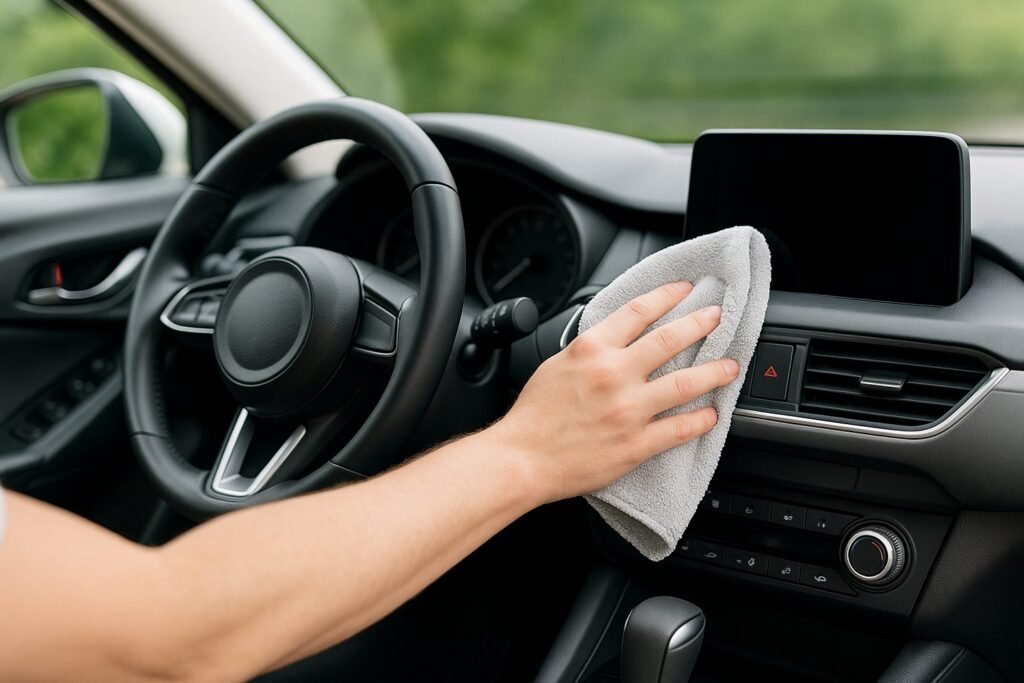
Figuring out how to keep a car smelling fresh without air fresheners is easier than most drivers expect, and the results last far longer than a cardboard tree or a vent clip. Store-bought air fresheners do not actually clean anything. They mask odors with a strong scent that fades within days, and many people find the chemical smell headache-inducing or irritating. A genuinely fresh car comes from removing the sources of odor, keeping the interior clean, and adding gentle natural scent only after the cleaning is done. This guide covers the full routine, from a deep clean to everyday habits, so your car smells good because it is clean, not because it is covered up.
Why Cars Start to Smell in the First Place
A car is a small, sealed space that traps everything. Food crumbs fall between seats, coffee spills soak into carpet, gym clothes and wet umbrellas add moisture, and pets leave hair and dander in the upholstery. In warm weather, heat bakes these residues into fabric and plastic, and the smell intensifies every time you close the doors. Air conditioning systems can add their own contribution, since moisture collects in the evaporator and vents, creating a musty smell when the system starts up.
Understanding this matters because it explains why masking never works for long. An air freshener adds a pleasant scent on top of the odor, but the source is still there, still releasing smell. As soon as the freshener fades, the original odor returns, often stronger because it has had more time to settle in. Removing the source, on the other hand, gives a lasting result. The first step to a fresh car is always cleaning, not scenting.
Step 1: Remove Everything and Declutter
Start by taking everything out of the car that does not belong there. Empty the glove box, door pockets, seat-back pockets, cup holders, and trunk. Throw away trash, old receipts, food wrappers, and forgotten items. Remove gym bags, sports gear, and anything that has been living in the trunk for weeks. You may be surprised how much of the smell leaves with the clutter.
Once the car is empty, shake out the floor mats outside the car and vacuum them thoroughly. Vacuum the seats, carpets, and crevices, using a crevice tool to reach between and under the seats where crumbs collect. If you have pets, use a rubber glove or a damp cloth to gather hair from upholstery before vacuuming, since vacuums often leave embedded hair behind. This single declutter-and-vacuum session often improves the smell noticeably on its own.
Step 2: Deep Clean the Surfaces That Hold Odor
Fabric seats and carpets are the biggest odor traps in a car. Sprinkle baking soda generously over fabric seats and carpeted areas, work it lightly into the fibers with a soft brush, and leave it for at least thirty minutes, or overnight for a stubborn smell. Baking soda absorbs odors rather than covering them. Vacuum it up thoroughly afterward. For a specific stain or spill, clean it with a mixture of warm water and a small amount of mild dish soap, blotting rather than rubbing, and let the area dry completely before closing the car up.
Leather seats need a different approach. Wipe them with a damp cloth and a leather cleaner, or a mild soap solution, then condition the leather so it does not dry out and crack. Hard surfaces, including the dashboard, door panels, console, and steering wheel, should be wiped with a damp microfiber cloth and a gentle all-purpose cleaner. Do not forget the cup holders, which collect sticky residue, and the area around the pedals, where dirt builds up. Clean the inside of the windows too, since a film on the glass can hold a stale smell and reduce visibility.
Pay special attention to the trunk. Spills, sports equipment, and forgotten groceries can leave odors that drift into the cabin. Remove the trunk liner if possible, vacuum underneath it, and wipe down the spare tire well. If the trunk smells musty, leave it open in the sun for an hour after cleaning, since sunlight and fresh air are natural deodorizers.
Step 3: Freshen the Air Conditioning System
If your car smells musty mainly when the air conditioning starts, the problem may be in the ventilation system. Moisture collects on the evaporator coil, and over time it can develop a mildew smell. One simple habit helps a great deal: turn off the air conditioning a few minutes before you reach your destination, but leave the fan running. This dries out the evaporator and prevents moisture from sitting in the system.
Replacing the cabin air filter is another easy win. Most cars have a cabin filter behind the glove box, and it is designed to trap dust, pollen, and odors. A clogged, dirty filter restricts airflow and can itself smell stale. Check your owner’s manual for the location, and replace the filter according to the recommended interval, or sooner if you drive in dusty conditions. A fresh filter often makes the air coming through the vents noticeably cleaner.
You can also freshen the vents by running the fan on high with the windows open for a few minutes, which flushes out stale air. If the musty smell persists after a filter change, a vent cleaning spray designed for cars, or a professional air conditioning service, may be needed. Avoid spraying household air freshener into the vents, since it coats the system without solving the moisture problem.
Step 4: Use Natural Scent the Right Way
Once the car is clean, a gentle natural scent can make it feel inviting without the chemical punch of a commercial freshener. The key is subtlety. A small cloth pouch of dried lavender, cedar shavings, or coffee beans tucked under a seat releases a mild scent for weeks. A few drops of essential oil on a wooden clothespin clipped to a vent, or on a felt pad placed in a cup holder, gives a light fragrance every time air flows through the car.
Activated charcoal bags are another excellent option, and they work differently from scented products. Charcoal absorbs odors and moisture from the air rather than adding fragrance, so the car smells like nothing at all, which is exactly what fresh should smell like. Place one under each front seat and recharge it occasionally by leaving it in direct sunlight for a few hours, which releases the trapped moisture and restores its absorbing power.
Fresh herbs and citrus can work too, but use them carefully. A small sachet of dried rosemary or mint smells lovely, but fresh fruit peels or cut citrus left in a hot car will rot and create a worse smell than the one you started with. Stick to dried materials, charcoal, or essential oils on a stable carrier, and replace them every few weeks before they fade or go stale.
Everyday Habits That Keep a Car Fresh
The deep clean sets the baseline, but daily habits keep it fresh. Eat in the car as rarely as possible, and if you do, clean up crumbs and wrappers the same day. Wipe up spills immediately rather than letting them soak into fabric. Keep a small trash bag in the car and empty it every time you fill up with fuel. Store gym clothes and sports gear in a sealed bag, not loose on the seat, and take wet items out of the car as soon as you get home.
Ventilation matters more than people realize. Whenever the weather allows, open the windows for a few minutes while driving to flush out stale air. On a sunny day, parking with the windows cracked slightly, where it is safe to do so, lets heat and trapped odors escape. If your car has been closed up for days, air it out for a few minutes before your first drive rather than immediately masking the smell.
Smoking in a car is the single hardest odor to remove, since smoke penetrates every fabric and plastic surface. If you smoke, keeping it outside the car is the most effective freshness strategy there is. Similarly, transporting pets regularly means more frequent vacuuming and a washable seat cover, which protects the upholstery and can be laundered easily. The same gentle, source-first approach works for other spaces too: our guide on How to Make an Apartment Smell Fresh Without Air Fresheners applies the same principles to a home, and Stop Shoes From Smelling Without Baking Soda covers another common odor source with the same baking soda method.
Seasonal and Situational Tips
Summer heat intensifies every odor, so summer is the time to be most diligent about crumbs, spills, and trash. Remove anything that can melt, leak, or spoil from a parked car, including sunscreen tubes, food, and drinks. In winter, road salt and slush get tracked onto mats, so use rubber all-weather mats and rinse them regularly. Wet floor mats left damp in a closed car are a common source of mildew smell.
After a road trip, a beach day, or a camping trip, give the car a quick once-over the same day. Sand, wet towels, and food packaging left in a hot car for days create odors that are much harder to remove later. A ten-minute vacuum and wipe-down after a trip saves an hour of deep cleaning later. If you regularly carry children, keep a pack of wipes in the glove box for instant spill cleanup, and check under the seats for forgotten snacks during your regular clean.
Mistakes to Avoid
- Masking instead of cleaning: Spraying air freshener over a dirty interior only delays the problem. Clean first, scent second.
- Using strong chemical fresheners: Overpowering scents can cause headaches and irritation, and they fade fast. Gentle natural options last longer and smell better.
- Leaving wet items in the car: Wet umbrellas, gym clothes, and towels breed mildew in a closed car. Take them out the same day.
- Forgetting the cabin air filter: A dirty filter can make even a clean car smell stale through the vents. Replace it on schedule.
- Soaking fabric seats: Too much water during cleaning soaks into the padding and creates mildew. Blot stains, use minimal moisture, and let everything dry fully.
- Leaving fresh food or peels in the car: Citrus peels and fresh herbs rot quickly in a hot car. Use dried sachets or charcoal instead.
- Ignoring the trunk: Odors from the trunk drift into the cabin. Clean it as part of the routine, not as an afterthought.
A Simple Maintenance Routine
Keeping a car fresh does not require a big effort once the deep clean is done. A practical routine looks like this: every week, remove trash and wipe the cup holders. Every month, vacuum the interior, shake out the mats, and check the scent sachet or charcoal bag. Every few months, wipe down all hard surfaces and clean the fabric or leather seats. Once or twice a year, replace the cabin air filter and give the car a full deep clean, including the trunk and vents.
Stick to this rhythm and your car will smell fresh because it is fresh, not because it is perfumed. Passengers will notice the difference, and so will you, every time you open the door. A clean car is also more pleasant to drive, easier to sell later, and healthier for everyone inside, since you are breathing cleaner air instead of a cloud of masking chemicals. Skip the hanging tree, clean the source, and let the freshness take care of itself.
FAQ
What is the best natural way to make a car smell good?
Clean the interior first, then use a subtle natural option such as a dried lavender sachet, a few drops of essential oil on a vent clothespin, or an activated charcoal bag. Charcoal absorbs odors without adding scent, while dried herbs and oils add a light fragrance.
Why does my car still smell after I clean it?
The odor source may be somewhere you missed, such as the trunk, the cabin air filter, or the air conditioning evaporator. Check those areas, replace the filter, and make sure fabrics dried fully after cleaning, since damp padding can smell musty.
Does baking soda really remove car odors?
Yes. Baking soda absorbs odors from fabric seats and carpets rather than covering them. Sprinkle it on, leave it for at least thirty minutes, and vacuum thoroughly. For stubborn smells, leave it overnight.
How often should I replace my cabin air filter?
Follow your owner’s manual, but a common interval is once a year or roughly every twelve thousand to fifteen thousand miles. Replace it sooner if you drive in dusty areas or notice reduced airflow or a stale smell from the vents.
Are commercial air fresheners bad for you?
They are not necessarily dangerous, but many people find strong synthetic fragrances irritating, and they only mask odors instead of removing them. A clean car with a gentle natural scent is a healthier and longer-lasting alternative.
How do I get rid of a musty air conditioning smell?
Turn off the air conditioning a few minutes before arriving, with the fan still running, to dry the evaporator. Replace the cabin air filter, and run the fan with the windows open to flush the system. If the smell persists, a vent cleaning service may be needed.