
A road was blocked. A traditional ritual was performed. And a message was sent — loud and clear.
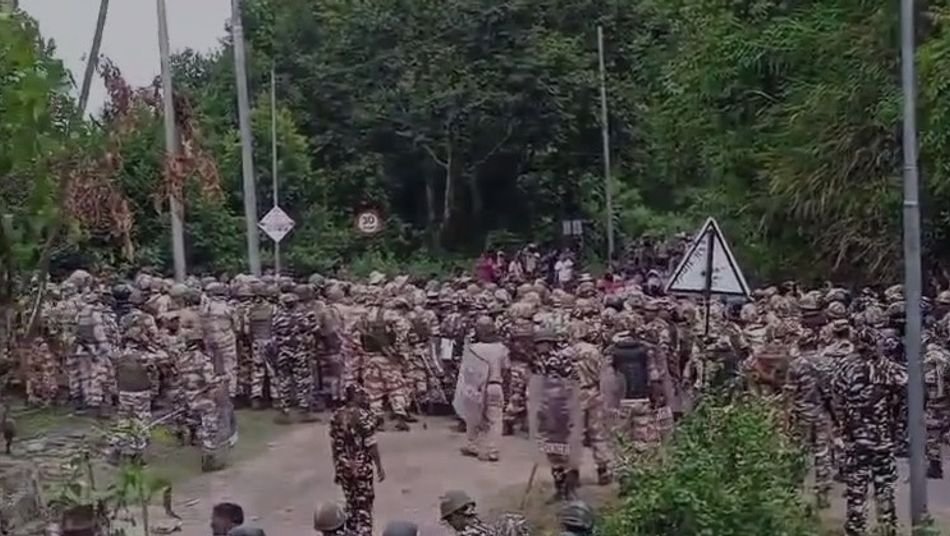
On September 14, residents of Ugeng village in Arunachal Pradesh came out in large numbers to physically stop vehicles from moving towards the Siang area, in what is the latest and most visible act of resistance against the proposed Siang Upper Multipurpose Project, commonly known as SUMP. The atmosphere was tense, but the people were resolute.
The protest was not just a demonstration — it carried the weight of something deeper. Villagers performed a traditional ritual right at the site of the blockade, a move that many in these communities understand as a sacred act of resistance. In the hills of Arunachal, such rituals are not ceremonies for the camera. They are solemn declarations. And this one made plain that the people of Ugeng are not going to watch quietly while decisions are made over their heads, about their land, their rivers, and their futures.
Police were deployed in significant numbers to maintain order. Despite the heavy security presence, the villagers held their ground. No one budged. The ritual continued. The road stayed blocked.
The SUMP has been a flashpoint in the Siang belt for some time now. It is a massive hydropower project proposed on the Siang river, and it has drawn fierce opposition from large sections of the indigenous communities who live along its banks. Their concerns are not abstract — they speak of land that will be submerged, of livelihoods that will vanish, of a landscape that has sustained their ancestors for generations. For them, the river is not just a resource. It is identity.
What the villagers said on September 14 echoed what communities across the region have been saying for months: any development activity that affects their land and natural resources must happen only with the free, prior, and informed consent of those who will bear its consequences. That is not a radical demand. It is a basic one. And yet, it keeps getting sidelined.
There is something quietly powerful about what happened at Ugeng. No slogans on banners, no political party flags waving — just people, their traditions, and a refusal to move. That image says more about the ground reality of the SUMP controversy than any official statement could.
The authorities have not yet responded with any concrete reassurances. Police deployment suggests the government is watching closely. But watching is not the same as listening.
The Siang project row is far from over. As long as the communities directly in its path feel unheard and unconsulted, scenes like the one at Ugeng will keep repeating. A river, after all, does not change course because someone draws a line on a map. And neither, it seems, will these villagers.