
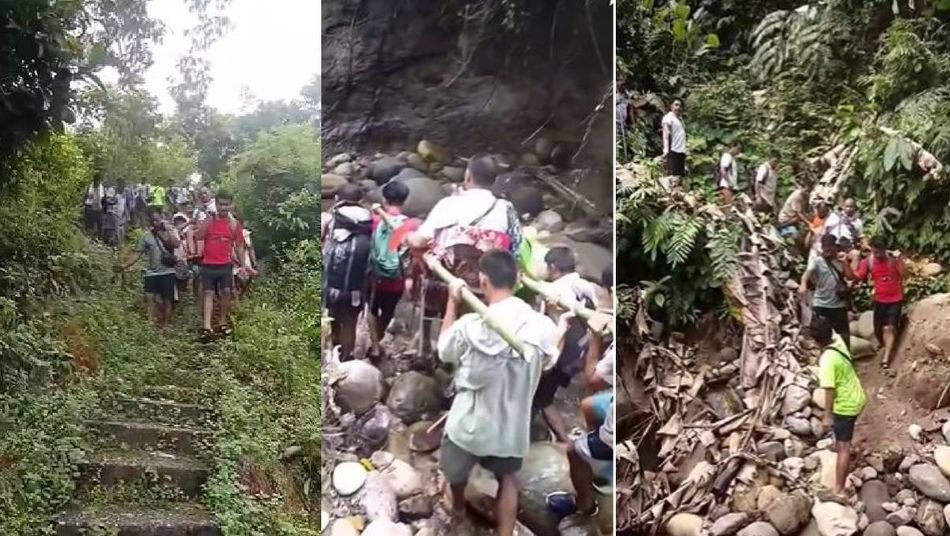
In one of the most heartbreaking images to emerge from Arunachal Pradesh this year, a group of villagers can be seen carrying a sick patient on their shoulders — trudging through rugged terrain, with no ambulance in sight, no road to drive on, and no other choice.
This is Mane village. And for its residents, this is not a rare moment of crisis. This is life.
Located under the 36th Nari-Koyu Assembly Constituency in Arunachal Pradesh’s Lower Siang district, Mane village has long been cut off from reliable road access. A video from the village — now making rounds on social media — has thrown a harsh spotlight on what residents have been quietly suffering for years. When someone falls sick, when a woman goes into labour, when an accident happens — there is no ambulance that can get in. So the community does what it has always been forced to do. People become the road. Shoulders become the stretcher.
Think about that for a moment. In 2026, in a country that just sent a mission to the moon, there are villages where a sick person’s only chance of reaching a hospital depends on how many neighbours are strong enough to carry them through the hills.
The absence of an all-weather motorable road is the root of the problem. Residents say it is a longstanding issue, not just in Mane but in other similarly situated villages across the region. The demands from the community are not extraordinary — roads, bridges, a functioning ambulance service, and at least a basic health sub-centre so that people don’t have to travel enormous distances just to get treated for something routine.
What makes this especially hard to look away from is the timing. Arunachal Pradesh is currently marking its Golden Jubilee year of statehood — fifty years of being a state, celebrated with ceremony and pride. And yet, here is Mane village, still waiting for the kind of infrastructure that most Indians take completely for granted. A road. An ambulance. A clinic. That’s all.
The video didn’t just go viral because it was shocking. It went viral because people recognised the injustice in it immediately. These are not people asking for luxury. They are asking for the basic right to not watch their family members suffer — or die — because there is no road to carry them to safety.
Residents have urged authorities to treat road connectivity, emergency transport, and primary healthcare facilities in Mane as priority infrastructure requirements, and ensure that the village is connected through a dependable all-weather road network.
The state government now has a choice. It can treat this as another news cycle — acknowledge it, issue a statement, and move on. Or it can treat it as the emergency it actually is. Because every day that Mane village stays cut off is another day where the next sick child, the next elderly patient, the next pregnant mother has to depend on the strength of their neighbours’ backs to survive.
That is not development. That is not dignity. And it cannot wait another fifty years.