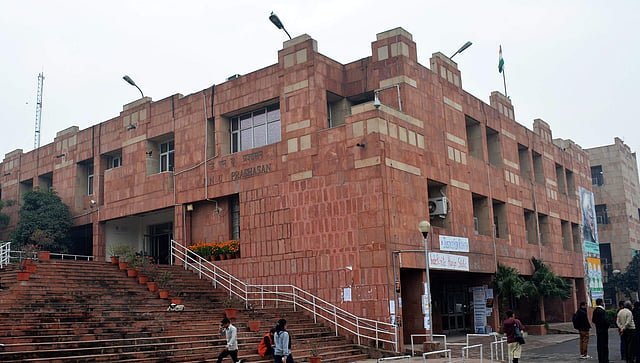
The National Commission for Scheduled Castes (NCSC) has intervened in a dispute over missing reserved seats at Jawaharlal Nehru University (JNU), directing the university administration to re-notify the seats before the viva-voce examinations or provide an explanation for why they are missing. The Commission has also asked the administration to appear for an inquiry, following a complaint by a Jawaharlal Nehru University Students’ Union (JNUSU) office bearer.
The National Commission for Scheduled Tribes (NCST) has also stepped in, directing the university’s Equal Opportunity Cell to look into the matter immediately. The tribes commission has assured that accountability will be sought from the Vice-Chancellor regarding concerns surrounding the reservation of Scheduled Tribe (ST) seats at JNU.
What the students’ union is demanding
JNUSU has demanded that the administration immediately clarify the status of the missing reserved seats, take corrective measures before the viva-voce examinations, and ensure the full implementation of reservation policies for Scheduled Caste (SC) and ST students. The core complaint is straightforward: seats meant to be reserved were not shown as available, and students fear that without correction before the viva-voce stage, eligible candidates could lose their chance in the current admission cycle.
The NCSC direction puts the burden back on the university: either restore the seats through re-notification, or explain the omission in a way that satisfies the Commission. That framing matters, because it treats the missing seats as a matter requiring a formal answer, not a clerical detail to be quietly adjusted later.
Why the timing matters
Viva-voce examinations are a decisive stage in the admission process. Once that stage passes with seats unfilled or unadvertised, correcting the record becomes far harder for affected candidates. By intervening before the examinations, both commissions have kept the possibility of a correction open — provided the university acts in time.
The dispute also touches a wider question about how reservation policy is implemented in practice. Rules on paper only protect access if the seats appear in notifications, are filled through the proper process, and are monitored when complaints arise. Concerns about disparities at JNU have been raised from Arunachal Pradesh before, and students elsewhere in the Northeast are being taught to assert their legal rights in the classroom. The JNU case will now be watched for whether the university re-notifies the seats, what explanation it offers if it does not, and how the commissions follow up on accountability.
#JNU #ReservedSeats #NCSC #NCST #JNUSU #VivaVoce #HigherEducation