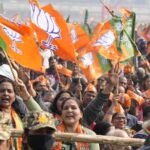
Congress workers in Itanagar didn’t sit quietly on Wednesday. They marched.
The Arunachal Pradesh Congress Committee (APCC) took to the streets on September 2, holding a protest march in the state capital demanding the withdrawal of the FIR registered against Leader of Opposition Rahul Gandhi — a case that has quickly snowballed into one of the more charged political flashpoints of the season.
The march kicked off from Rajiv Gandhi Bhawan, with Congress leaders, party workers, office-bearers, elected representatives and supporters joining in. It was one of those rare moments when you could feel the party’s frustration moving from behind closed doors to the open street.
Speaking to the media during the protest, APCC leaders Mina Toko, Kipa Kaha, Johny Yangfo, and Kon Jirjo Jotham came out swinging. They didn’t mince words — the FIR against Gandhi, they said, was nothing but a calculated attempt to silence the Opposition.
So what exactly triggered all of this?
The controversy goes back to August 10, when a group called Shri Ram Sena Dharmarth Seva Nyas Sangathan allegedly conducted a ‘Shuddhikaran Havan’ — a so-called purification ritual — at Ramlila Maidan in Haldwani, Nainital. The timing wasn’t incidental. The ritual came just two days after Congress president Mallikarjun Kharge had addressed a packed ‘Vijay Shankhnaad Rally’ at the very same venue, as part of the party’s campaign build-up for the 2027 Uttarakhand Assembly elections. According to the APCC, the ritual was conducted on the same stage Kharge had stood on.
Kharge raised the issue in the Rajya Sabha on August 13, calling the act humiliating and demanding legal action. Union Minister J P Nadda responded by distancing the BJP from the incident and promising an investigation.
That’s when Rahul Gandhi stepped in. On August 29, he publicly sought the filing of an FIR against those responsible, invoking the Scheduled Castes and Scheduled Tribes (Prevention of Atrocities) Act. He called the incident a blatant example of untouchability and discrimination — strong language, but language the Congress believes is entirely warranted given what they say was a deliberate targeting of a Dalit leader.
The very next day, August 30, the FIR came. Only it wasn’t against the organizers of the ritual. It was against Gandhi himself — for his remarks.
The irony was not lost on the Congress party. The APCC made clear they see this as political vendetta wrapped in legal process. They are calling for an impartial and time-bound investigation into the purification ritual alongside the withdrawal of the FIR against Gandhi. The BJP and the ritual organizers, for their part, have denied any caste-based motive or political connection.
What makes this episode more than a routine political spat is what it says about the larger battle being waged. The APCC framed it plainly — this is about whether the Constitution will hold its ground against the exercise of political power.
“This is not merely a Congress-versus-BJP issue,” the party stated. “This is a question of whether the Constitution will prevail over political power.”
That line, honestly, cuts through the noise. Because when an opposition leader gets an FIR for speaking out against what he calls an act of untouchability — and the people who allegedly carried out that act face no such consequence — the constitutional question becomes very real, very fast.