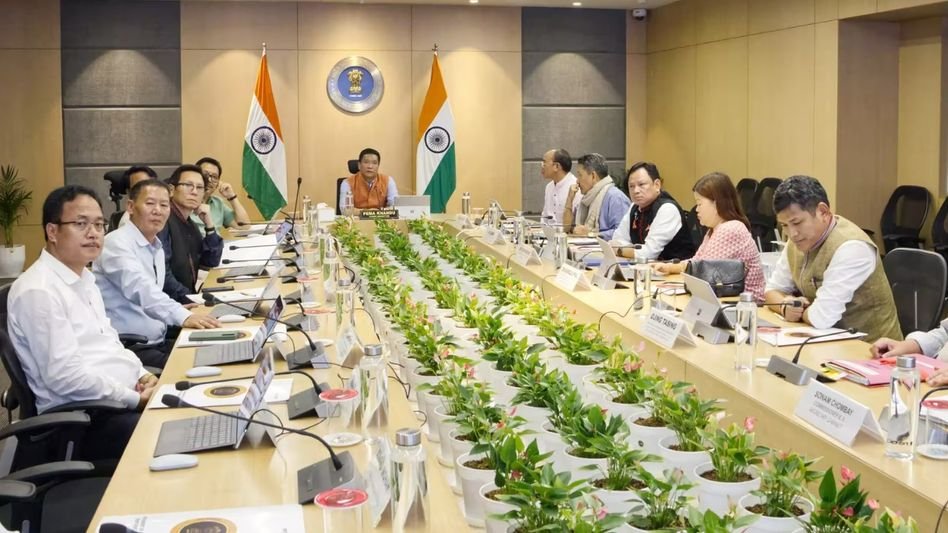
After months of consultations and groundwork, the Arunachal Pradesh Administrative Reforms Commission has handed in its first report — and the state government says it could reshape governance from the ground up.
Itanagar, September 2 — Something quiet but potentially consequential happened in Arunachal Pradesh on Tuesday. The state’s Administrative Reforms Commission, set up less than two years ago to diagnose what ails the government machinery, officially placed its first report on the table. No fanfare, no grand ceremony — just a document that, if taken seriously, could change how ordinary people in this mountainous frontier state experience their own government.
Chief Minister Pema Khandu took to X to mark the occasion, and his words were notably plain-spoken. Administrative reform, he said, is fundamentally about making government work better for ordinary citizens. That’s a refreshingly honest framing. Because too often, reform exercises in India end up being about reorganising org charts and renaming departments — while the person waiting at a government counter for a basic certificate goes home empty-handed, again.
The commission is headed by former IAS officer Pramod Kumar Jain, who was appointed chairman in July 2025. Jain’s team didn’t arrive at their conclusions sitting in some air-conditioned room in Itanagar. Since its formation, the commission has held consultations with government departments, district administrations and other stakeholders to identify administrative bottlenecks and gather suggestions for improving governance and service delivery. That kind of ground-up approach — actually talking to the people inside and outside the system — matters. It’s the difference between a reform report that gathers dust and one that has a shot at being implemented.
The commission was constituted by the state government in November 2024 to review the functioning and scope of the government and recommend reforms in view of changing socio-economic circumstances and the state’s contribution towards India Vision 2047. That’s an ambitious backdrop. India Vision 2047 — the centenary of independence — is the national aspirational target, and for Arunachal to align its internal governance architecture with that vision speaks to the scale of ambition here.
The scope of the commission’s mandate is broad. It includes reviewing the organisational structure of the state government, streamlining departments, manpower planning, process re-engineering, strengthening district administration, improving public service delivery, promoting participatory governance and expanding e-governance. In plain terms — who does what, how many people are doing it, whether services actually reach people, and whether technology is being used the way it should be. Each of those is its own can of worms.
The panel has also been tasked with examining whether the existing administrative system is aligned with Arunachal Pradesh’s developmental requirements and its unique socio-economic conditions. That last part — “unique socio-economic conditions” — is crucial. Arunachal is not Haryana. Governance models that work on the plains don’t simply transplant themselves to a state with remote valleys, diverse tribes, difficult terrain, and limited connectivity. Any meaningful reform here has to account for that reality.
Retired civil servant Hento Karga serves as a member of the commission, while the secretary of the Administrative Reforms and Training Department serves as member secretary.
Khandu acknowledged that the report represents an important stage in the state’s efforts to strengthen its administrative machinery. That’s measured language — and rightly so. A report being submitted is only the beginning. The harder work is what happens next: whether the recommendations get debated, adopted, and — most critically — actually implemented on the ground.
Arunachal has long deserved a government that keeps pace with its people’s aspirations. This first report is a step. But history is littered with reform commissions whose findings were filed away and forgotten. The real test of this commission’s worth won’t be in the document itself — it’ll be in the decisions that follow.