
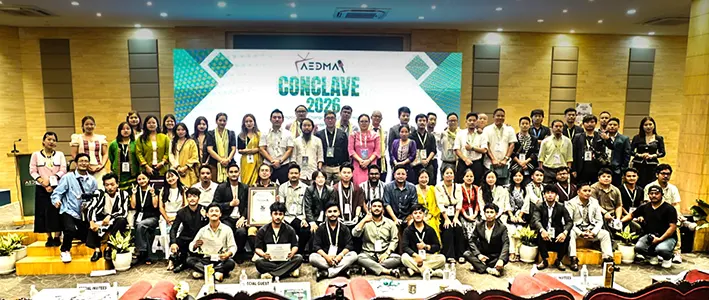
The room at Itanagar’s State Banquet Hall had journalists, police officers, academics, and politicians all sitting at the same table — and for once, nobody was pointing fingers. They were talking about truth.
The 4th edition of the AEDMA Conclave, organised by the Arunachal Electronic and Digital Media Association to mark its 14th foundation day, wrapped up on Wednesday with three packed panel discussions under the theme ‘Empowering Change through Information.’ It wasn’t just another media event. It felt more like a reckoning — one that Arunachal’s media landscape has been quietly needing for a while.
“Your Phone Doesn’t Make You a Journalist”
IPR Minister Nyato Dukam opened the day with words that nobody in the hall could brush off lightly. He urged media professionals to uphold ethical journalism with sincerity, discipline and responsibility, particularly as technology keeps reshaping the field at a pace that’s hard to keep up with. But what stood out most was his concern about the surge of unregulated mobile-based journalism. Anyone with a smartphone and a data connection is now a “reporter,” he pointed out — and that’s quietly chipping away at professional standards that took decades to build. It’s a fair point, and an uncomfortable one for many in the room.
Truth Over Traffic
The first panel, moderated by Capital News’ Theim Lhouvum, took on the big question: who really shapes the narrative today? Arunachal Press Club President Amar Sangno didn’t mince words — he pushed journalists to chase quality, not clicks, and to resist the pull of sensationalism. DIGP Tumme Amo echoed that, warning media professionals to verify before they publish and to stay alert to “vested interests” who know exactly how to use a careless reporter. These are not new concerns, of course. But hearing them from a senior police officer at a media conclave carries a certain weight.
Information as a Development Tool
The second session shifted gears, looking at how digital media and information technology can actively drive development across Arunachal Pradesh. Panelists including Koloriang SDO Nangram Pingkap and NIT Jote’s Assistant Professor Biri Arun discussed bridging knowledge gaps and creating real opportunities in a state where geography still keeps many communities disconnected from the information they deserve.
A Big Ask — and a Promising Answer
One of the most significant moments came quietly. AEDMA President Jotam Toko Tagam formally proposed to the IPR Minister the creation of a dedicated mass media institute — especially for video journalists with communication degrees. Dukam’s response was measured but meaningful: he assured that a meeting would be called to take the proposal forward. Whether that meeting happens and produces something real, only time will tell. A commemorative journal charting 14 years of AEDMA’s journey was also released during the event.
At its core, this conclave sent a message that’s simple but increasingly urgent — the press can only empower people if it first holds itself accountable. In an age where everyone can broadcast, the ones who choose to report responsibly are the ones who actually matter.
#AEDMA #ArunachalMedia #EthicalJournalism #DigitalMedia #ArunachalPradesh #MediaEthics #JournalismMatters #Itanagar #NyatoDukam #PressClub #MediaFreedom #DigitalGovernance #ResponsibleReporting #NortheastIndia #MediaTrends #CitizenJournalism #PressFreedom #MediaDevelopment #AbotaniTV #EmpoweringChange