
Tawang’s Old Market buzzed with more than the usual chaos of buyers and sellers on Wednesday — this time, it was the noise of change.
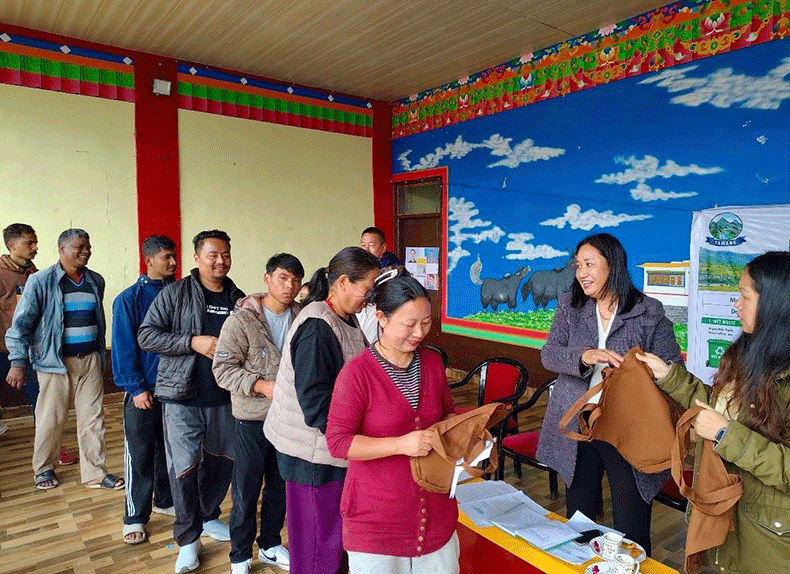
The district administration brought together shopkeepers, residents, market committee members, and government officials for an awareness programme on the Solid Waste Management (SWM) Guidelines 2026. The venue was deliberate — Old Market, one of the busiest commercial hubs in the town, where the problem of waste management is visible and real every single day.
“It Starts With You” — The Message From the Top
Assistant Commissioner Nawang Thutan addressed the gathering, stressing that effective solid waste management begins with individual responsibility. He didn’t mince words. Every shopkeeper, every business owner, every resident — he made it clear that no one gets to point fingers at the system while their own waste ends up in the wrong bin. He urged all stakeholders to strictly adopt source segregation and cooperate with the district administration in making Tawang a model town for cleanliness and sustainable waste management. That kind of direct ask from an official doesn’t always land, but given the turnout and the mood in the room, it seemed people were genuinely listening.
Four Ways to Sort Your Trash — And Why It Matters
The programme focused on the implementation of four-way waste segregation at source, covering biodegradable, recyclable, hazardous, and sanitary waste, while also highlighting the responsibilities of bulk waste generators under the SWM 2026 framework. For most people, sorting garbage into four different categories might sound like a lot of effort. But the logic is simple — when waste is mixed, it’s almost impossible to recycle, and everything ends up in a landfill. The participants were sensitised to scientific waste management practices aimed at reducing environmental pollution and improving public sanitation. Whether these lessons stick beyond the programme is the real test.
Traders Asked to Step Up, Plastic Must Go
Old Market Welfare Committee Secretary Dawa Tashi appealed to all traders to actively support the implementation of the SWM guidelines by ensuring proper segregation and reducing the use of single-use plastic. That last part — the plastic issue — is significant. Markets like Old Market are often the biggest contributors to plastic waste in towns like Tawang, where packaging and carry bags pile up fast. As part of the programme, cloth shopping bags were distributed among participants to encourage eco-friendly alternatives and support the campaign to eliminate single-use plastic from daily market activities. A small gesture, but a symbolic one.
Community at the Heart of It
Members of the Women’s Welfare Association, the Material Recovery Facility operator, and officials of the Urban Affairs Department also addressed the participants, emphasising community participation, responsible waste disposal, and efficient recycling for protecting the environment. What stood out about this programme is that it wasn’t a top-down lecture. It brought in different voices — women’s groups, market operators, government departments — which is exactly how these initiatives need to work if they’re going to last beyond a single event.
Tawang is one of Arunachal Pradesh’s most visited destinations. How the town manages its waste isn’t just an administrative concern — it shapes the experience of every visitor who walks through its markets and monasteries. The SWM 2026 drive is a step in the right direction. But real change will only come when the awareness on display Wednesday becomes a daily habit, not a one-time programme.
HASHTAGS
#Tawang #ArunachalPradesh #SolidWasteManagement #SWM2026 #WasteSegregation #CleanTawang #NorthEastIndia #EcoFriendly #PlasticFree #SingleUsePlastic #GreenArunachal #WasteManagement #CleanIndia #SwachhBharat #TawangDistrict #CommunityAction #SustainableLiving #RecycleIndia #WasteAwareness #AbotaniTV