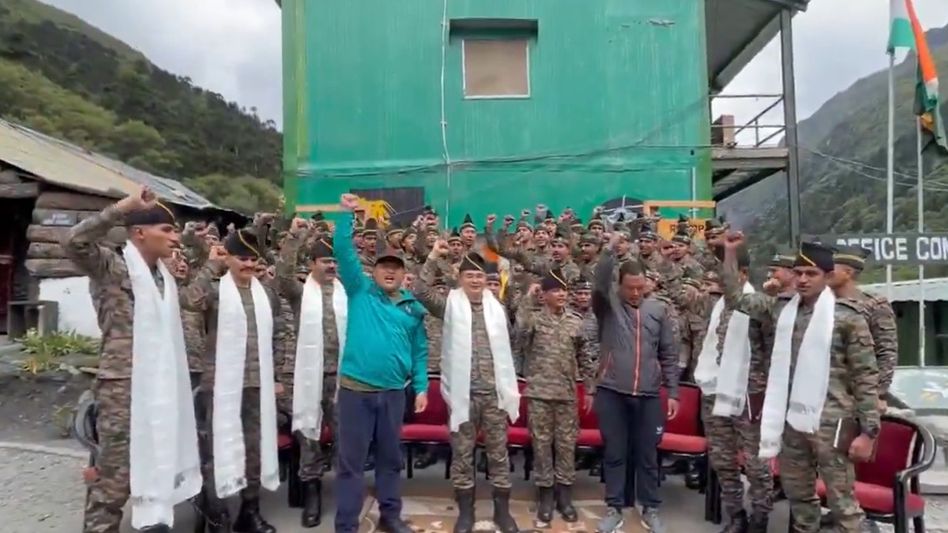
Three winters. Bone-chilling altitudes. And a commitment that never wavered. That’s the story of the 2/9 Gorkha Rifles, and Arunachal Pradesh Chief Minister Pema Khandu made sure the world heard it.
A Salute Well Earned
CM Pema Khandu publicly honoured the 2/9 Gorkha Rifles as the battalion concluded its deployment of over 33 months in the Mago–Chuna sector of Tawang district, before moving on to its next assignment. Khandu took to X to express his gratitude, and personally presented a Chief Minister’s Commendation Certificate to the unit. It’s not just a piece of paper — in a region as strategically sensitive as Tawang, recognition like this carries real weight. The Mago–Chuna sector sits right at the frontier, where the stakes are always high and the margin for error is zero.
Beyond Guns and Guard Posts
What makes this story stand out is not just what the battalion guarded, but what it built. The unit organised 49 medical camps that benefited over 1,240 people, implemented welfare projects under Operation Sadbhavana, and planted 986 saplings in high-altitude areas. For a battalion stationed at one of India’s most remote borders, that’s a remarkable level of community involvement. These soldiers weren’t just watching the boundary — they were healing, planting, and reaching out to people who often feel forgotten by the mainland.
When the Mountain Gave No Warning
One of the battalion’s most defining moments came in October 2025, when troops rescued 13 civilians following a road accident at Baisakhi. That kind of rapid response, at altitude, in conditions most of us will never experience, says everything about the character of these soldiers. It’s easy to honour a regiment with certificates. It’s harder to be the person who actually shows up when things go wrong on a mountain road at the edge of the country.
Opening the Frontier to the World
The battalion also did something quietly transformative — they helped put Tawang’s remote border areas on the map for tourism. Initiatives like the Shangri La Calling Festival, development of the Gongkar La Lake, the Tulung La Bike Rally, Yak Mela, and Losar celebrations were all part of the regiment’s effort to encourage border tourism and youth engagement. Think about that — soldiers running festivals and developing a lake while simultaneously guarding one of India’s most sensitive frontiers. That’s the kind of dual role that rarely gets enough credit.
A Legacy Carved in the Cold
CM Khandu’s words summed it up clearly — the battalion’s integrated approach to security, development, and humanitarian service has left a lasting mark on Arunachal Pradesh. He commended the Commanding Officer and all ranks, noting that the unit had significantly strengthened civil-military relations in the border region. These soldiers endured three brutal winters in the high Himalayas, not just defending India’s borders, but quietly weaving themselves into the lives of the communities there. That’s a legacy no certificate can fully capture — but it’s one that will remain in those mountains long after the battalion has marched on.
HASHTAGS
#ArunachalPradesh #PemaKhandu #GorkhaRifles #TawangDistrict #MagoChunaSector #IndianArmy #BorderSecurity #OperationSadbhavana #BorderTourism #GongkarLaLake #ShangriLaFestival #CivilMilitaryTies #NortheastIndia #ArmyOutreach #HighAltitude #ArunachalNews #AbotaniTV #IndianArmyHeroes #FrontierService #ArmyAndPeople