
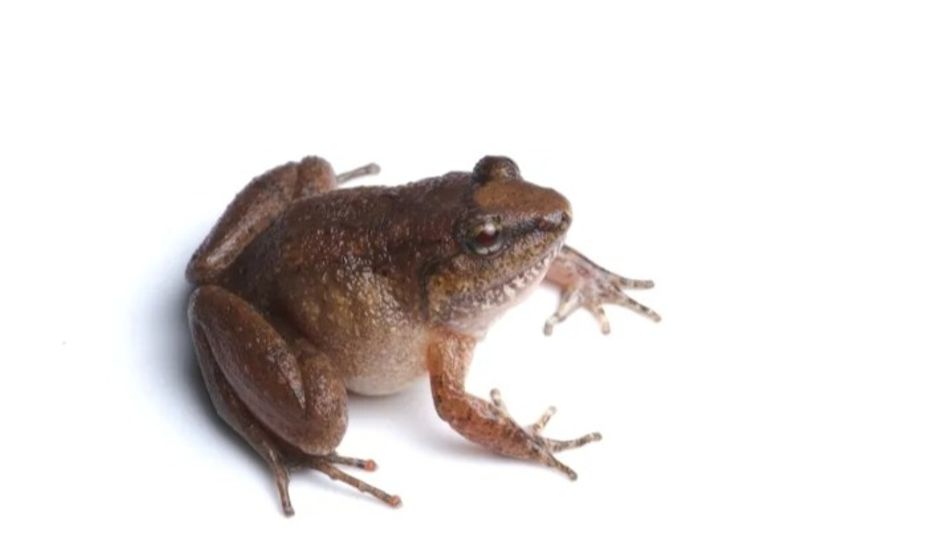
Itanagar: Scientists have discovered a new species of “fanged frog” deep inside the evergreen forests of Namdapha Tiger Reserve in Arunachal Pradesh, adding a remarkable chapter to the region’s rich biodiversity.
The newly identified amphibian, scientifically named Limnonectes motijheel, was recorded during field surveys conducted by researchers from the Wildlife Institute of India between 2022 and 2023. It belongs to the group of fanged frogs, distinguished by small, fang-like bony projections on the lower jaw of males.
What makes this species particularly unique is its rare mud-nesting behaviour. Unlike most frogs that breed in water, males of Limnonectes motijheel construct cup-shaped nests in moist soil beneath thick leaf litter on the forest floor. They call from these concealed nests with a distinctive “wooooak” sound, typically heard during April and May, to attract mates.
The discovery was confirmed through detailed genetic and morphological analysis, clearly separating it from closely related species. The surveys also recorded Limnonectes longchuanensis in India for the first time, raising the total number of known Limnonectes species in the country to six.
Named after Motijheel, a scenic wetland within the reserve, this mud-nesting frog highlights the hidden wonders of microhabitats in the Indo-Burma biodiversity hotspot. It reinforces Namdapha’s status as one of India’s most important biodiversity treasures and underscores the need for continued exploration and conservation of the Northeast’s fragile ecosystems.
Tags: New frog species Arunachal, Limnonectes motijheel, Namdapha Tiger Reserve, Fanged frog discovery, Wildlife Institute of India, Mud nesting frog, Arunachal biodiversity, Northeast India wildlife, Amphibian discovery India, Motijheel frog
Hashtags: #NewFrogSpecies #NamdaphaTigerReserve #ArunachalPradesh #FangedFrog #LimnonectesMotijheel #BiodiversityHotspot #NortheastIndia #WildlifeDiscovery #AmphibianConservation #IndiaWildlife