Black spots creeping along your grout lines or around the base of the tub are one of the most common bathroom problems, and you do not need bleach to fix them. Learning how to get rid of mold in the shower without bleach is actually good news: bleach is a poor tool for this job anyway, because it cannot reach mold growing inside porous grout. This guide covers the bleach-free methods that really work — white vinegar, baking soda, hydrogen peroxide, and tea tree oil — plus which method suits each surface, how to clean grout lines step by step, and how to keep mold from coming back.
Why Bleach Is a Poor Fix for Shower Mold
Bleach seems like the obvious answer, but it has real limits in a shower. Bleach works on hard, non-porous surfaces, yet grout and caulk are porous. The water in bleach soaks into grout while the active ingredient stays on the surface, so the stain may look lighter while the mold underneath survives and regrows. Bleach also gives off strong fumes in a small, steamy bathroom, can damage grout and sealant over time, and can discolor some tiles and fixtures. Most importantly, bleach only kills surface mold — it does not remove the moisture problem that lets mold grow in the first place. The methods in this guide go deeper: vinegar and hydrogen peroxide penetrate porous surfaces better, and they are safer to use in a closed bathroom.
Safety First: Gear, Ventilation, and One Golden Rule
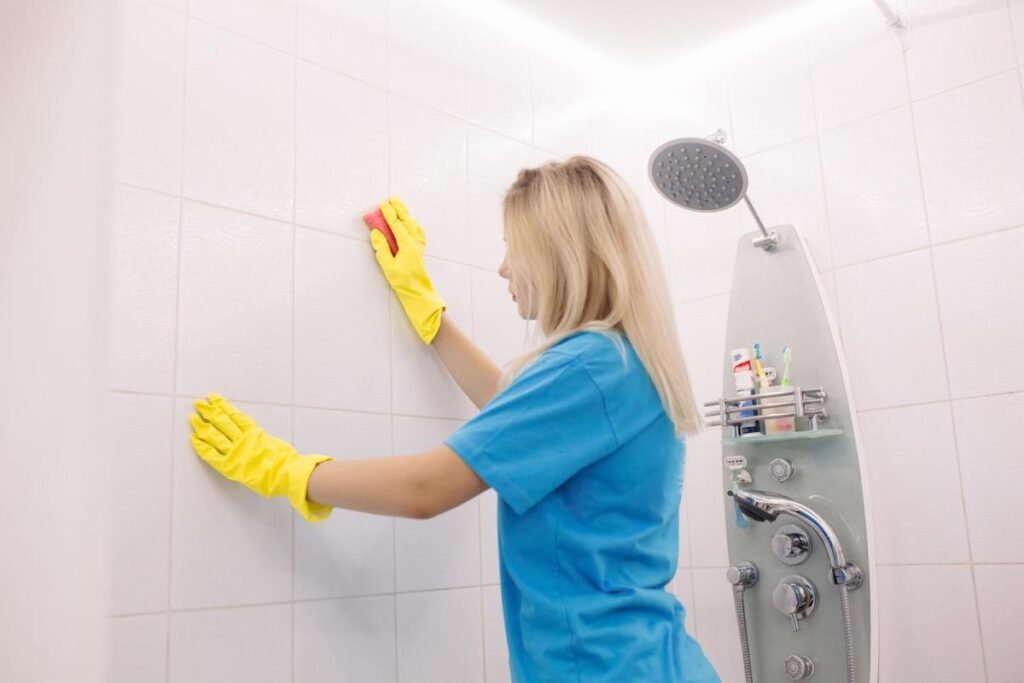
Before you start cleaning mold, protect yourself. Wear rubber gloves, and if the mold patch is large or you are sensitive to it, wear a mask and eye protection. Open the bathroom door and window if there is one, and run the exhaust fan while you work. Never mix cleaning products. The most important safety rule in this entire guide is this: never mix cleaners, especially never mix anything containing ammonia with anything containing bleach, and never mix vinegar with hydrogen peroxide in the same bottle or on the same surface at the same time. Each cleaner in this guide is used on its own, with a rinse in between if you switch from one to another. Keep pets and children out of the bathroom while you clean, and wash your hands well when you finish.
Method 1: White Vinegar Spray
Undiluted white vinegar is the simplest and most reliable bleach-free mold remover for showers. Vinegar is mildly acidic, and most household mold cannot survive contact with it. Pour plain white distilled vinegar into a spray bottle — do not dilute it with water, since dilution weakens it. Spray the moldy area generously until it is visibly wet, and let it sit for at least one hour. For stubborn grout stains, let it sit longer, even overnight. After soaking, scrub with an old toothbrush or a grout brush, then rinse with warm water and wipe dry. Vinegar works on tile, grout, caulk, glass, and plastic fixtures. The smell is strong while you work, but it fades within an hour or two, especially with the fan running. Vinegar alone handles most light to moderate shower mold, and it is the best first method to try.
Method 2: Baking Soda Paste
Baking soda is a gentle abrasive and a natural deodorizer, which makes it ideal for scrubbing mold off grout lines without damaging them. Mix baking soda with a small amount of water until you have a thick paste. Spread the paste over the moldy grout or caulk with an old toothbrush and let it sit for 15 to 30 minutes. Scrub firmly along the grout line, then rinse with warm water. For extra power, spray vinegar over the baking soda paste — it will fizz, which helps lift grime out of the grout. This fizzing combination is safe on tile and grout, but do not use it on natural stone such as marble, since vinegar can etch stone surfaces. Baking soda paste is best for surface mold and staining on grout; for deeper mold, follow up with the hydrogen peroxide method below.
Method 3: 3% Hydrogen Peroxide
Regular 3% hydrogen peroxide, the kind sold at any drugstore, is one of the strongest bleach-free mold killers you can buy. It works by breaking down mold on contact, and it reaches deeper into porous grout than vinegar can. Pour it into a dark spray bottle (light breaks peroxide down, so store it in its original dark bottle and only pour out what you need). Spray the moldy area until wet, let it sit for 10 to 15 minutes, then scrub with a brush and rinse. On white grout, peroxide has a bonus effect: it lightens stains and brightens the grout as it cleans. Test it on a small, hidden spot first if your grout or caulk is colored, since peroxide can lighten some dyes. Do not mix peroxide with vinegar in the same spray or on the same surface — use one, rinse, and only then use the other if needed.
Method 4: Tea Tree Oil Solution
Tea tree oil is a natural antifungal that works well as a maintenance cleaner and a follow-up treatment after a deeper clean. Mix one teaspoon of tea tree oil with one cup of water in a spray bottle, shake well, and spray the moldy area. Let it sit for several hours or overnight, then wipe with a damp cloth — there is no need to rinse, since the thin residue keeps working against regrowth. Tea tree oil is the most expensive option on this list, so it makes more sense as a preventive spray used once or twice a week than as your main cleaner for a heavy mold problem. Use it after a vinegar or peroxide clean to slow mold from returning. Some people find the smell strong; if you are sensitive to it, stick with vinegar instead.
Which Method for Which Surface
Different shower surfaces respond best to different methods. For ceramic or porcelain tile, any of the four methods works — start with vinegar, and use peroxide for stubborn stains. For grout lines, vinegar and hydrogen peroxide are the best choices because they penetrate; baking soda paste helps with surface stains. For caulk, vinegar is the safest first try, but note that mold growing inside old, cracked caulk often cannot be cleaned away — the caulk itself may need replacing. For glass shower doors, vinegar spray with a quick wipe leaves glass streak-free. For natural stone tile, such as marble or travertine, avoid vinegar and use baking soda paste or a stone-safe cleaner instead, since acids can damage stone. For plastic fixtures and shower curtains, vinegar or a baking soda scrub works well. Always test a new cleaner on a small hidden spot first if you are unsure about the material.
Step-by-Step: Deep-Cleaning Grout Lines
Grout lines are where shower mold is toughest, so here is a reliable routine that combines the best methods in the right order. First, put on gloves and run the exhaust fan. Spray the grout lines with undiluted white vinegar and let them soak for one hour. Next, scrub each grout line with a stiff grout brush or an old toothbrush, working in short strokes along the line rather than across it. Rinse the area with warm water and wipe it dry with a towel. Now look closely: if dark stains remain, spray 3% hydrogen peroxide on the stained lines, wait 10 to 15 minutes, scrub again, and rinse. For the final step, make a baking soda paste and work it into any remaining stained spots, scrub once more, and rinse. Dry the shower completely with a towel when you finish — mold needs moisture, and a dry shower is a hostile place for it. This routine takes about 30 minutes of active work plus soaking time, and it handles most mold problems in a single session.
Mistakes to Avoid When Cleaning Shower Mold
A few common mistakes make the job harder or even dangerous. Never mix cleaners, especially bleach with anything else — mixing creates toxic fumes. Do not scrub mold dry with a brush before wetting it, since dry scrubbing can scatter mold spores into the air. Do not rely on a quick spray and wipe; mold cleaners need soaking time to work, and skipping the soak is the most common reason a treatment seems to fail. Do not paint over moldy caulk or grout to hide it — the mold keeps growing underneath. Do not use steel wool or harsh abrasive pads on tile, since they scratch the glaze and give mold more places to grip. And do not ignore the exhaust fan: cleaning mold in a closed, steamy bathroom with no ventilation exposes you to more spores and fumes than necessary.
How to Prevent Mold From Coming Back
Removing mold is only half the job; keeping the shower dry is what stops it from returning. Use a squeegee on the walls and glass after every shower — this takes less than a minute and removes most of the water mold needs. Run the exhaust fan during your shower and for at least 20 minutes afterward to pull humid air out of the room. If your fan is weak or noisy, it may need cleaning: our guide on how to clean a bathroom exhaust fan without removing it shows how to restore its airflow. Keep the bathroom humidity below 60% — a small hygrometer costs little and tells you whether your fan is doing enough. Leave the shower door or curtain partly open after use so air can circulate, and fix dripping taps or leaking grout promptly. A weekly spray of vinegar on the grout lines, left for a few minutes before your normal shower, keeps new mold from getting a foothold. If your grout stays damp for hours after every shower, the sealant may be worn — resealing grout once a year is a simple job that makes a real difference.
When Mold Is Too Big for DIY
Most shower mold is a do-it-yourself job, but some situations need a professional. Call a mold remediation specialist if the mold covers a large area — roughly more than 10 square feet — or if it keeps returning within days of a thorough cleaning, which can mean mold is growing behind the tiles or inside the wall. Also seek professional help if anyone in the household develops breathing problems, persistent coughing, or worsening allergy symptoms that seem linked to the bathroom, or if you find mold after a leak or flooding. A professional can test for hidden moisture, remove affected materials safely, and fix the source. Do not try to tear out tiles or open up a wall yourself to chase mold — that can spread spores through the house and expose you to much higher levels than a surface clean ever would. For ordinary surface mold on tile and grout, the methods in this guide are safe and effective; for anything bigger, getting help is the smart move.
Frequently Asked Questions
Does vinegar really kill mold in the shower?
Yes. Undiluted white vinegar kills most common household mold on contact, and it penetrates porous grout better than bleach does. Spray it on, let it soak for at least an hour, scrub, and rinse.
How do I remove black mold from shower grout?
Spray the grout with undiluted vinegar, let it soak for an hour, and scrub with a grout brush. If stains remain, follow up with 3% hydrogen peroxide, let it sit for 10 to 15 minutes, scrub again, and rinse. For more bleach-free grout cleaning ideas, see our guide on how to clean grout without bleach.
Can I use baking soda and vinegar together on mold?
Yes, you can use baking soda paste first, then spray vinegar over it — the fizzing helps lift grime. Just do not use this combination on natural stone such as marble, since vinegar can damage it.
Why does mold keep coming back in my shower?
Mold returns when the shower stays damp. Squeegee the walls after every shower, run the exhaust fan for at least 20 minutes, and keep humidity below 60%. Also check for leaks and reseal worn grout, since constant moisture feeds regrowth.
Is it safe to clean shower mold myself?
Small patches are safe to clean yourself with gloves, ventilation, and one cleaner at a time. Call a professional if the area is large, mold returns within days, or anyone in the home has breathing problems linked to the bathroom. And if odors linger in the bathroom even after cleaning, our article on how to keep a toilet from smelling without bleach covers other bleach-free fixes for bathroom smells.
Can I mix vinegar and hydrogen peroxide to make a stronger cleaner?
No. Never mix vinegar and hydrogen peroxide in the same bottle or on the same surface, and never mix any cleaners together. Use one cleaner, rinse the surface, and only then use another if needed.