Learning how to remove stickers from glass without Goo Gone is a useful skill for anyone who reuses jars, cleans windows, or peels labels off bottles. Store-bought adhesive removers work well, but you do not need one to get residue-free glass. Heat, hot soapy water, vinegar, cooking oil, and baking soda can all do the job, and most of them are already in your kitchen. The trick is matching the method to the sticker: a paper label on a jam jar needs a different approach than a vinyl decal on a window. This guide explains why stickers stick, walks through six methods step by step, and shows you which method to use on jars, windows, mirrors, and bottles.
Why Stickers Stick to Glass
A sticker is a sandwich of three layers: a printed top layer, a sticky adhesive layer, and a backing paper that you peel away. When you peel a sticker off glass, the top layer often comes away while the adhesive stays behind, leaving that familiar tacky patch that collects dust and lint. Heat softens the adhesive, water weakens paper labels, and oil dissolves the sticky residue — which is why the methods in this guide work on different parts of the problem. Paper labels are the easiest to remove because water can soak through the paper and reach the glue underneath. Vinyl decals and plastic-coated labels resist water, so heat or oil works better on them. Knowing what kind of sticker you are dealing with saves time: start with the gentlest method that fits the label type, and only move to a stronger method if the first one fails.
Method 1: Heat With a Hair Dryer
Heat is the best first step for vinyl decals, bumper stickers, and any sticker with a plastic or coated surface. Set a hair dryer to medium heat and hold it about six inches from the sticker. Move it slowly back and forth for 30 to 60 seconds so the heat spreads evenly across the whole sticker. The warmth softens the adhesive underneath, which loosens its grip on the glass. Once the sticker feels warm to the touch, lift one corner with your fingernail or a plastic card and peel it back slowly, keeping the dryer aimed at the edge as you go so the adhesive stays soft.
Peel at a low angle, close to the surface, rather than pulling straight up — a low angle puts less stress on the glass and leaves less adhesive behind. If the sticker starts to resist, stop peeling and heat that spot again for a few seconds. Most decals come off in one piece with this method, leaving only a faint sticky film that you can wipe away with a drop of oil or a cloth dampened with soapy water. This method also works well on car windows, and the same peeling technique helps with related jobs such as removing sticker residue from a car without Goo Gone, where heat and patience beat scraping.
Method 2: Hot Soapy Water Soak for Jars
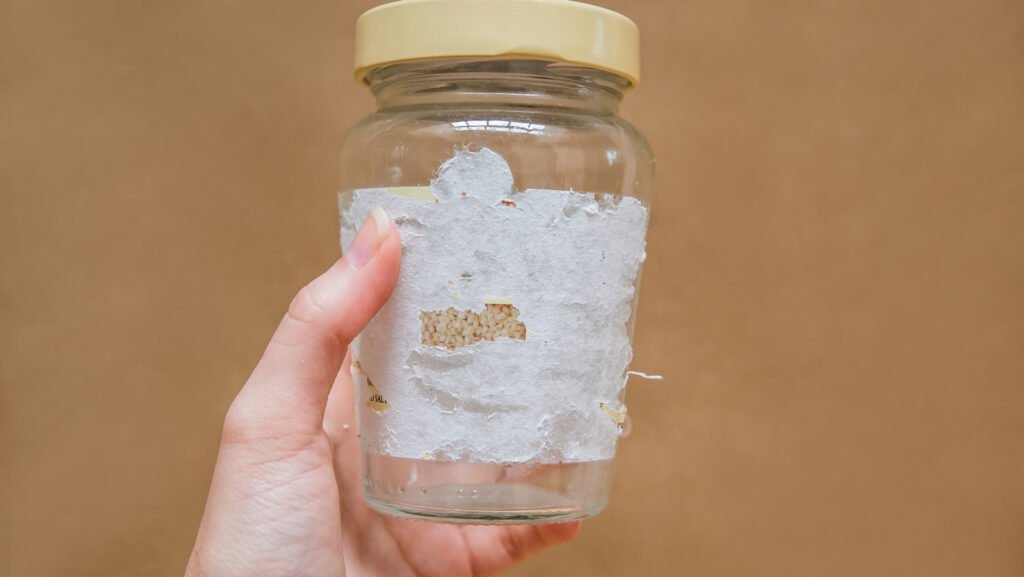
For glass jars, bottles, and other containers that fit in a sink, a hot soapy water soak is the simplest method. Fill the sink or a large bowl with hot water — as hot as your tap provides — and add a squirt of dish soap. Submerge the jar completely and let it soak for 20 to 30 minutes. The hot water softens the paper label and dissolves the water-based glue that most food labels use. After soaking, the label should slide off easily, or peel away with a gentle pull. Rub any remaining paper with a cloth or a non-scratch sponge, and the residue usually comes off with it.
If the label is stubborn, refill the sink with fresh hot water and soak for another 15 minutes. A second soak often finishes what the first one started, because the water needs time to work through thick paper and heavy glue. This method is ideal when you are cleaning several jars at once, since you can soak a whole batch together. It is also the safest method for glass, because there is no scraping and no heat shock. The only limit is size: a large window or a fixed mirror cannot be soaked, so those need one of the methods below instead.
Method 3: Vinegar Soak
White vinegar is a good choice when hot soapy water leaves a sticky film behind. Soak a cloth in undiluted white vinegar and lay it over the sticker or the residue, pressing it flat against the glass so the vinegar stays in contact. Leave it in place for 10 to 15 minutes. The acid in the vinegar breaks down the adhesive and softens the paper, so the label lifts off easily when you peel it. For a jar, you can also fill it with warm vinegar and let it stand, or soak the whole jar in a bowl of vinegar and warm water mixed in equal parts.
After the soak, peel the label away and wipe the glass with a clean cloth. If a thin sticky layer remains, rub it with the vinegar-soaked cloth until it rolls off. Vinegar works best on paper labels and on the glue left behind after a label is peeled. It is less effective on vinyl decals, which block the vinegar from reaching the adhesive — use heat on those first, then vinegar for the leftover residue. Rinse the glass with warm water and dry it with a lint-free cloth to prevent water spots. The vinegar smell disappears as the glass dries.
Method 4: The Oil Method
Cooking oil dissolves adhesive residue better than almost anything else in the kitchen, and it works on the sticky film that other methods leave behind. Put a few drops of vegetable oil, coconut oil, or olive oil on a cloth and rub it over the sticker residue in small circles. Let the oil sit for 5 to 10 minutes so it can break down the glue, then wipe the area with a clean cloth. The residue should roll off in small clumps. For a stubborn patch, apply a little more oil and let it sit longer before wiping again.
Oil is especially useful on glass jars that will be reused for food, because it is safe and leaves no chemical smell — just wash the jar with hot soapy water afterward to remove the oily film. It also works on mirrors, windows, and bottles. The main drawback is the mess: oil can drip and smear, so work over a sink or a towel, and always wash the glass afterward. Do not use oil on glass that has a special coating, such as a low-emissivity window coating, without checking the manufacturer’s guidance first. For most plain glass, though, oil is one of the fastest ways to get a perfectly clean, residue-free surface.
Method 5: Baking Soda Paste
A paste of baking soda and oil combines gentle scrubbing power with adhesive-dissolving action, and it is excellent for stubborn residue on jars. Mix two parts baking soda with one part vegetable or coconut oil to form a thick paste. Spread the paste over the sticker or the sticky patch and rub it in small circles with a soft cloth or your fingers. The baking soda acts as a mild abrasive that lifts the residue, while the oil dissolves the glue underneath. Let the paste sit for 10 minutes on tough spots, then wipe it away and wash the glass with hot soapy water.
This method is safe for plain glass because baking soda is soft enough not to scratch it. It works well on the glue rings left around the necks of bottles and on the stubborn patches that survive a soak. You can also use a paste of baking soda and water for a purely water-based option, though it is less effective on heavy adhesive — the oil version does the heavy lifting. Keep the paste away from any printed measurement markings on the glass, since repeated scrubbing can fade them over time.
Method 6: Plastic Scraper and Old Card Technique
Sometimes the best tool is a thin, flexible edge. An old credit card, a plastic putty knife, or a plastic razor scraper can lift a sticker edge and scrape away residue without scratching glass. Start by softening the sticker with heat or a soak, then slide the edge of the card under one corner at a shallow angle. Push gently forward, keeping the card flat against the glass, and lift the sticker a little at a time. For leftover residue, scrape lightly with the card edge while the surface is still damp with soapy water or oil.
Always use plastic, never metal, on glass that you care about. A metal razor blade can work on plain, uncoated glass in skilled hands, but it scratches easily, and on coated or tinted glass it will damage the coating permanently. A plastic card is slower but far safer, and it costs nothing. If the card edge dulls, switch to a fresh card or a plastic scraper. The same gentle scraping habit applies to other cleaning jobs — for example, removing permanent marker from a whiteboard works best when you lift the mark rather than grind it into the surface.
Which Method to Use by Surface
Different glass surfaces call for different methods. For jars and bottles, start with a hot soapy water soak, then use oil or baking soda paste on any leftover residue. For windows, use the hair dryer method on decals, then wipe the remaining film with vinegar or oil, and finish with a glass cleaner for a streak-free shine. For mirrors, avoid heavy scraping and use heat or oil, because the reflective coating on the back of a mirror is easily damaged by aggressive tools. For drinking glasses and food containers, stick to food-safe methods — hot soapy water, vinegar, oil, and baking soda — and wash thoroughly afterward.
On car windows, heat works well, but avoid pouring boiling water on cold glass, which can cause a crack. On antique or decorative glass, use the gentlest method first — a vinegar soak or a light oil rub — and test on a small, hidden area before treating the whole piece. The goal is always the same: soften the adhesive first, then remove it, rather than fighting a dry sticker with force.
Coated and Tinted Glass Cautions
Not all glass is plain glass. Windows with low-emissivity coatings, tinted car windows, and mirrors with special finishes can be damaged by the wrong method. On coated glass, avoid razors, steel wool, and harsh solvents entirely — they can scratch or strip the coating, and the damage is usually permanent. Stick to heat, soapy water, and gentle oil on a soft cloth. On tinted windows, the tint film is usually applied to the inside surface, so be extra careful on that side and test any method on a small corner first. If you are unsure whether a piece of glass is coated, look for a slight color tint or a faint rainbow sheen when you hold it at an angle. When in doubt, use the gentlest method and stop if you see any change in the surface.
Mistakes to Avoid
The most common mistake is scraping dry glass with a metal blade, which scratches the surface and can ruin coated or tinted glass. Never pour boiling water over a cold glass jar or window — the sudden temperature change can crack it. Avoid steel wool and abrasive pads, which leave fine scratches that catch the light. Do not use acetone, nail polish remover, or paint thinner on glass near plastic frames or seals, because solvents can melt or discolor them. Never rush a sticker off by pulling hard; a slow peel after softening the adhesive leaves far less residue. Wash with hot soapy water and dry with a lint-free cloth for a clean, clear finish.
FAQ
What removes sticker residue from glass the fastest?
Heat is fastest for vinyl decals, and oil is fastest for leftover sticky residue. Warm the sticker with a hair dryer, peel it off, then rub the remaining glue with a few drops of cooking oil and wash the glass with hot soapy water.
Can I use vinegar to remove stickers from glass?
Yes. Lay a vinegar-soaked cloth over the sticker for 10 to 15 minutes, then peel it off and wipe away the residue. Vinegar works best on paper labels and leftover glue, and less well on vinyl decals that block it from reaching the adhesive.
How do I remove a label from a glass jar without residue?
Soak the jar in hot soapy water for 20 to 30 minutes, then peel the label off. Rub any remaining glue with oil or a baking soda and oil paste, then wash the jar with hot soapy water and dry it with a lint-free cloth.
Will a razor blade scratch glass?
A metal razor can scratch glass, especially coated or tinted glass, so use a plastic card or plastic scraper instead. Keep the edge flat against the surface and work on damp glass to reduce the risk of scratches.
Can I use cooking oil on a mirror?
Yes, a small amount of cooking oil on a soft cloth removes sticker residue from a mirror safely. Wipe gently, then clean the mirror with glass cleaner to remove the oily film. Avoid scraping the back of the mirror, where the reflective coating sits.
Why does my sticker leave a sticky patch behind?
The adhesive layer stays on the glass when the top layer peels away. Heat, oil, or vinegar breaks the adhesive down so it can be wiped off. Softening the sticker before peeling leaves far less residue than pulling it off dry.